Historical Background
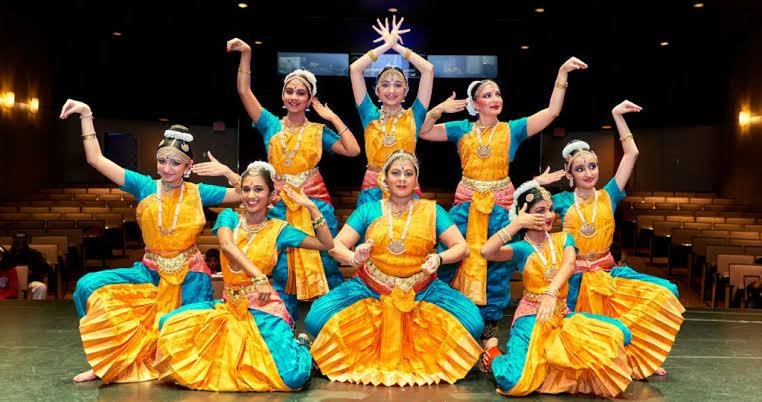
- Bharatanatyam is a major classical dance form of Tamil Nadu, rooted in South Indian temple traditions.
- It was traditionally performed by Devadasis as part of devotional, ritual and storytelling practices and was known as Sadir/Sadirattam.
- Pallava and Chola rulers patronised temple-based dance and music traditions.
- Its themes and movements have strong Shaivite influences, especially Nataraja, the dancing form of Shiva symbolising the cosmic cycle of creation, preservation and destruction.
Major Elements of Bharatanatyam
- Nritta: Pure dance focused on rhythm, movement and technique.
- Nritya: Expressive dance conveying meaning and emotions.
- Natya: Dramatic storytelling through dance.
- Bhava: Expression of emotions such as love, devotion and compassion.
- Raga: Melodic framework of the accompanying music.
- Tala: Rhythmic cycle guiding movements and footwork.
- Abhinaya: Expression through face, eyes, gestures and body movements.
- Mudras: Symbolic hand gestures used to convey meaning and emotions.
Bharatanatyam in Ancient Texts and Inscriptions
- Natya Shastra (Bharata Muni): Describes Tandava, Rasa, Bhava, Abhinaya, Mudras and 108 Karanas, forming the theoretical basis of Indian dance.
- Abhinaya Darpana (Nandikeshvara): Explains gestures, body movements and facial expressions used in dance.
- Silappadikaram and Manimekalai: Provide references to Sadir/Devadasi dance traditions, including training and performances.
- Temple Evidence: Chidambaram, Badami, Kanchipuram and Thanjavur contain sculptures depicting Karanas, dance poses and Nataraja, showing the continuity of dance traditions in temple art.
- Arachalur Cave Inscription: The 200–250 CE inscription records rhythmic syllables associated with dance and musical practice.
UNESCO and Global Recognition
- Bharatanatyam is not currently inscribed on UNESCO’s Intangible Cultural Heritage List.
- It has gained global recognition as a major Indian classical dance, with institutions such as the Sangeet Natak Akademi supporting its promotion.
Key Features
- Aramandi: Characteristic half-sitting posture with bent knees.
- Adavus: Basic movement units combining posture, footwork and rhythm.
- Sculpturesque Style: Uses sharp, precise and geometric movements, often resembling temple sculptures.
- Ekaharya: A solo dancer can portray multiple characters in one performance.
- Margam: Traditionally follows a structured sequence such as Alarippu, Jatiswaram, Shabdam, Varnam, Padam and Tillana.
- Music and Orchestra: Accompanied by Carnatic music, with instruments such as Mridangam, violin, veena and flute; the Nattuvanar conducts the rhythmic recitation.
- Traditional Gender Association: Historically associated with female Devadasi performers, but Bharatanatyam today is performed by both men and women.
Modern Revival and Important Exponents
- Rukmini Devi Arundale: Revived Bharatanatyam and founded Kalakshetra, Chennai.
- T. Balasaraswati: Renowned for Abhinaya and its devotional tradition.
- Yamini Krishnamurti: Known for strong technique and stage presence.
- Padma Subrahmanyam: Researched and reconstructed 108 Karanas described in the Natya Shastra.
- Mallika Sarabhai: Promoted Bharatanatyam internationally and introduced contemporary themes.
UPSC FAQs
Q1. What was Bharatanatyam traditionally known as?
Ans. It was traditionally known as Sadir or Sadirattam. It developed within the temple-based dance traditions of South India.
Q2. Which religious tradition has strongly influenced Bharatanatyam?
Ans. Shaivism has had a major influence. The image of Nataraja, or Shiva as the cosmic dancer, is closely associated with the dance tradition.
Q3. What is the difference between Nritta and Nritya?
Ans. Nritta refers to pure rhythmic dance without a specific narrative. Nritya combines dance movements with expression and meaning.
Q4. What is Abhinaya in Bharatanatyam?
Ans. Abhinaya is the technique of communicating meaning and emotions through facial expressions, eye movements, hand gestures and body language.
Q5. What are Karanas in Indian dance?
Ans. Karanas are specific dance movements described in the Natya Shastra. Padma Subrahmanyam made significant contributions to their research and reconstruction.