Context
Shri Guru Golaknath Community Reserve in Kajalheri village, Fatehabad, Haryana, is in the news over sewage pollution of its pond and its impact on the turtle population.
Shri Guru Gorakhnath Community Reserve
- Location & Area: Located in Kajalheri village, Fatehabad, Haryana, the reserve covers about 2.92 hectares and was notified in 2019 by the Haryana Government.
- Conservation Purpose: It was created to protect fauna, flora and traditional/cultural conservation values and practices, particularly the freshwater turtle habitat.
- Community Participation: Local communities, particularly the Bishnoi community, have traditionally helped conserve turtles in the village pond.
Community Reserves
- Community Reserves are protected areas under Sections 36C–36D of the Wildlife (Protection) Act, 1972, introduced through the 2002 Amendment.
- The State Government may notify private or community land as a Community Reserve when owners voluntarily agree to conserve wildlife and its habitat. Ownership remains with the individuals/community.
- A Community Reserve Management Committee (CRMC) manages the reserve, prepares its management plan and oversees conservation.
- Hunting and agricultural activities, including shifting (jhum) cultivation, are not permitted after notification. However, local communities may collect non-timber forest produce (NTFP), subject to conservation regulations.
Conservation Concern
- Sewage Pollution: The pond is contaminated by sewage discharge, affecting the health of turtles.
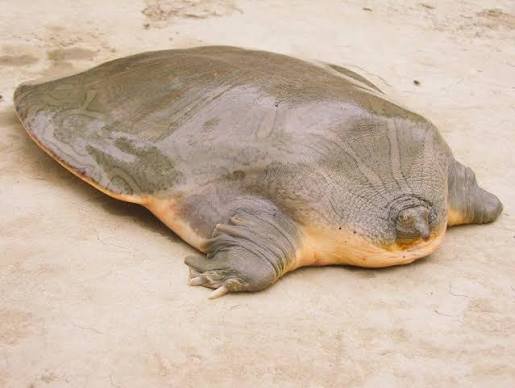
- Affected Population: Around 150–200 turtles inhabit the pond.
- Health Impact: Polluted water has been linked to skin lesions and other health problems in turtles.
Turtle Species Found
Three important turtle species reported from the reserve are:
| Species | IUCN Status | Wildlife Protection Act, 1972 |
| Indian Softshell Turtle | Critically Endangered | Schedule I |
| Red-crowned Roofed Turtle | Endangered | Schedule I |
| Indian Peacock Softshell Turtle | Endangered | Schedule I |
Conservation Reserve vs Community Reserve
| Basis | Conservation Reserve | Community Reserve |
| Legal provision | Section 36A | Sections 36C–36D |
| Land ownership | Government land | Private or community land |
| Declaration | State Government after consulting local communities | State Government based on voluntary conservation by individuals/community |
| Main purpose | Protect wildlife habitats and corridors, often adjoining or connecting protected areas | Conserve wildlife and habitats on private/community land |
| Management | Conservation Reserve Management Committee advises the Chief Wildlife Warden | Community Reserve Management Committee manages the reserve |
| Hunting | Prohibited | Prohibited |
| Resource use | Regulated according to conservation requirements | Certain NTFP/traditional resource use may continue subject to regulations |
| Land-use change | Regulated under the applicable conservation framework | Requires Committee resolution and State Government approval |
UPSC FAQs
Q1. Who declares a Community Reserve?
Ans. Community Reserves are notified by the State Government under the Wildlife (Protection) Act, 1972.
Q2. Can a Community Reserve be established on private land?
Ans. Yes. Community Reserves can be established on private as well as community land, subject to the legal provisions of the Act.
Q3. When was Shri Guru Golaknath Community Reserve notified?
Ans. It was notified by the Haryana Government in 2019 and is located in Kajalheri village, Fatehabad district.