Context
NASA has invited ISRO to participate in its Moon Base programme, marking a new phase in India–US cooperation in lunar exploration and human spaceflight.
About the Moon Base Programme
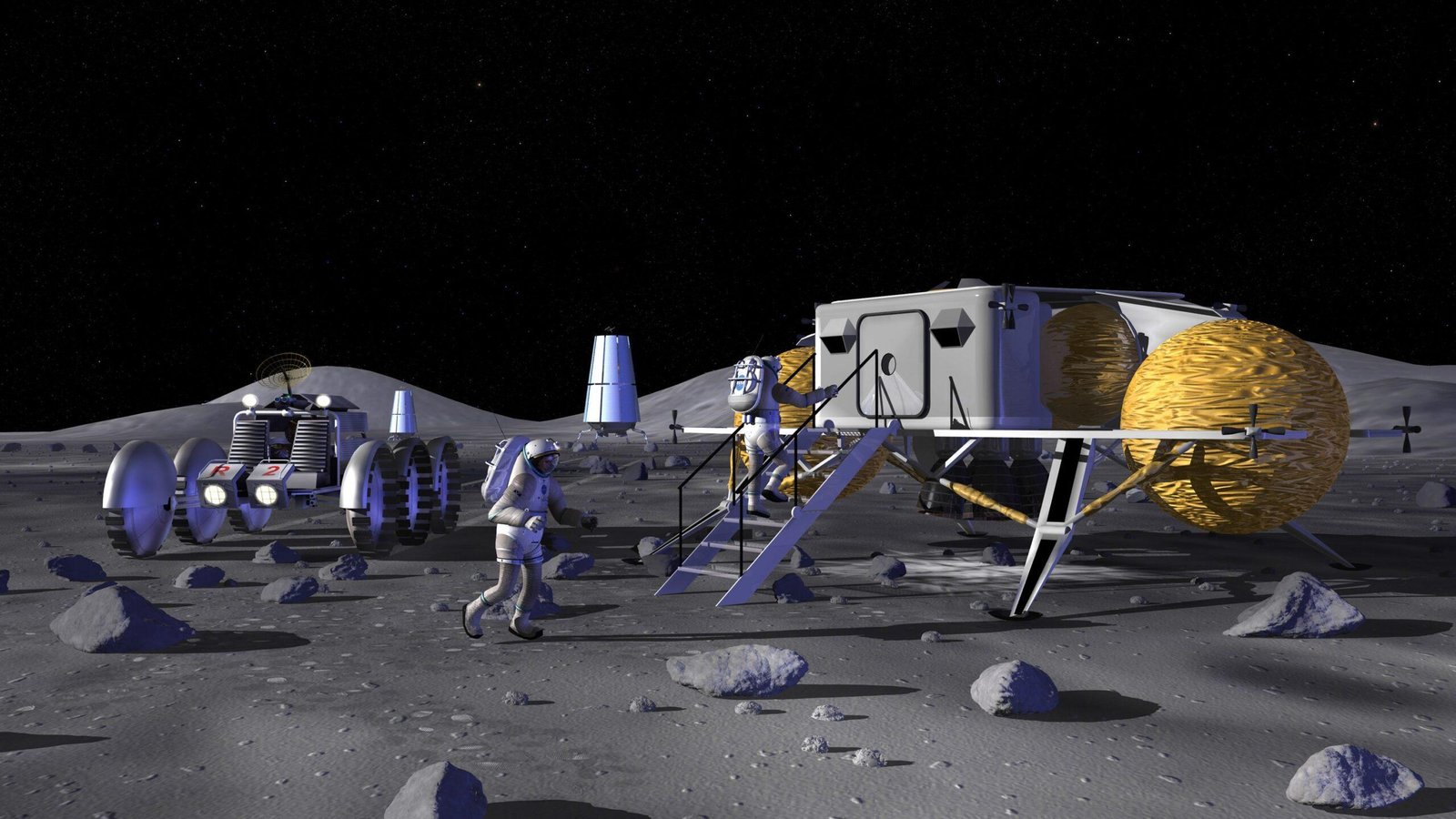
- NASA’s Moon Base is a phased initiative to develop the infrastructure needed for an enduring human presence on the Moon.
- The lunar South Pole is the focus because of its scientific importance and the presence of water ice in permanently shadowed regions.
- NASA plans to develop the base in three phases:
- Phase I – Experiment and Learn (Present day –2029): Robotic missions, technology demonstrations and site studies.
- Phase II – Build and Expand (2029–2032): Deployment of initial power, communications, mobility and logistics infrastructure.
- Phase III – Live and Work (2032 onwards): Development of systems to support extended human operations on the lunar surface.
Significance for India
- Chandrayaan-3 demonstrated India’s capability for soft landing and surface exploration in the lunar southern high-latitude region in August 2023.
- Participation could strengthen India’s capabilities in lunar science, surface exploration, human spaceflight and long-duration space operations.
- It can also deepen India’s cooperation with the US in lunar exploration and future deep-space missions.
Challenges
- The lunar South Pole has rugged terrain, extreme temperatures, difficult lighting conditions and permanently shadowed areas, creating challenges for power generation, mobility, communication and habitation.
- Although water ice is a major attraction, its economically viable extraction and utilisation remain technological challenges.
FAQs
- What is NASA’s Moon Base Programme?
It is a phased initiative to develop infrastructure for an enduring human presence near the lunar South Pole.
- Which Indian organisation has been invited to join the programme?
The Indian Space Research Organisation (ISRO) has been invited by NASA to participate in the programme.
- Why is the lunar South Pole important?
The region contains permanently shadowed areas that may hold water ice and offers significant opportunities for lunar scientific research.
- What are the three phases of the Moon Base programme?
They are Experiment and Learn (Now–2029), Build and Expand (2029–2032), and Live and Work (2032 onwards).
- What was the significance of Chandrayaan-3?
Chandrayaan-3 demonstrated India’s capability to soft-land and operate a rover in the Moon’s southern high-latitude region in August 2023.
- How can India benefit from participation?
It can enhance India’s capabilities in lunar exploration, human spaceflight, space technologies and international deep-space cooperation.