Context
The Ministry of New and Renewable Energy (MNRE) is preparing a dedicated Production Linked Incentive (PLI) scheme for polysilicon manufacturing. The proposed scheme aims to address a major gap in India’s solar manufacturing chain, where domestic polysilicon production is currently negligible and imports meet almost the entire requirement.
About Polysilicon
Polysilicon is a high-purity form of silicon. It is the basic raw material used to manufacture crystalline-silicon solar cells and is also relevant to the semiconductor industry.
Solar Photovoltaic Manufacturing Process
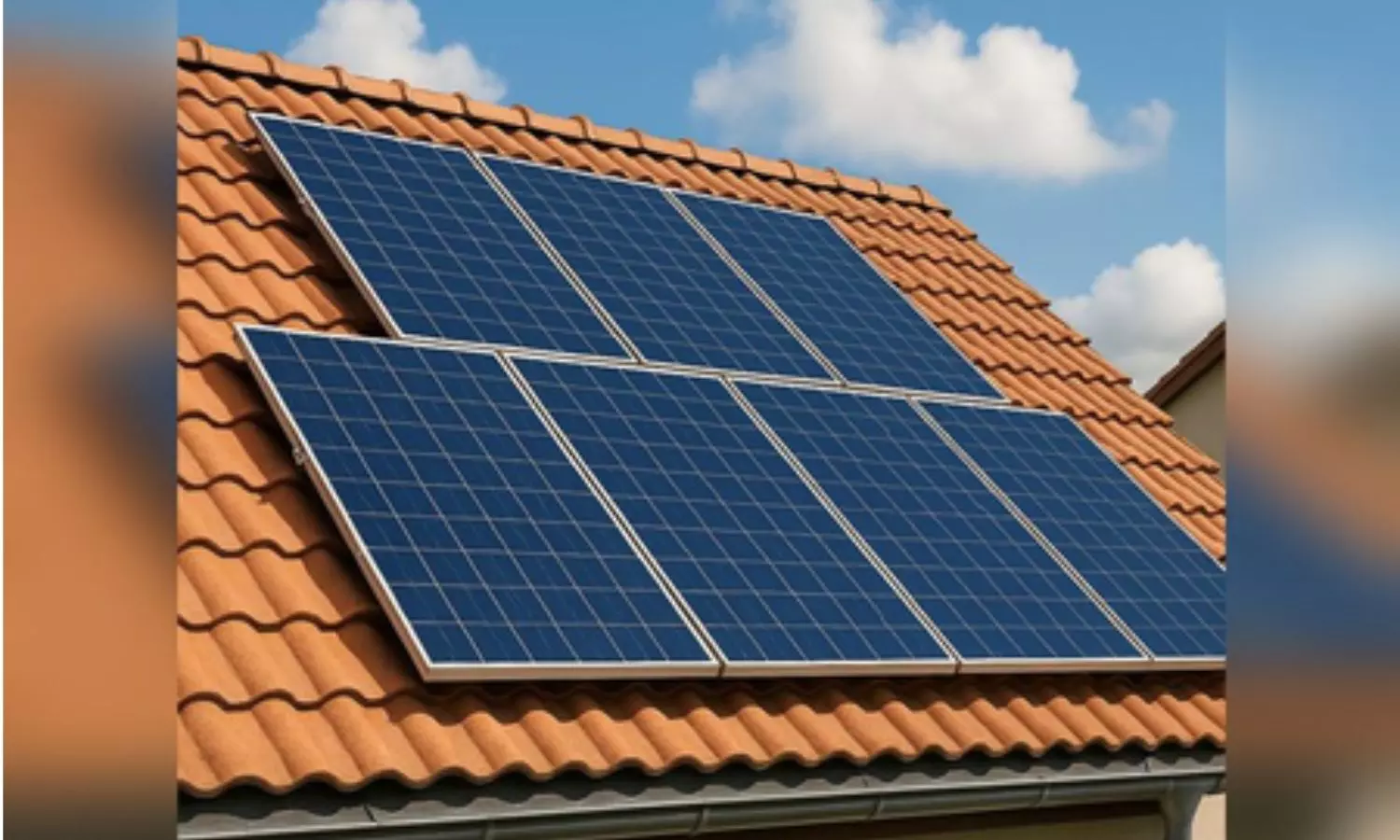
Photovoltaic (PV) technology converts sunlight directly into electricity through solar cells.
The manufacturing process involves several stages:
- Polysilicon: High-purity silicon that serves as the basic raw material.
- Ingots: Polysilicon is melted and formed into large solid blocks.
- Wafers: Ingots are cut into very thin slices called wafers.
- Solar Cells: Wafers are processed into cells that convert sunlight into electricity.
- Solar Modules: Multiple solar cells are connected and assembled into a finished solar panel or module.
The first three stages—polysilicon, ingots and wafers—form the upstream segment, while solar cells and modules constitute the downstream segment.
India’s Solar Manufacturing Position
India has expanded rapidly in downstream solar manufacturing but remains dependent on imports for critical upstream inputs.
- Solar module manufacturing capacity: More than 213 GW per year.
- Solar cell manufacturing capacity: Around 32 GW.
- Ingot and wafer capacity: Limited, but projected to reach about 80 GW by June 2028.
- Polysilicon capacity: Effectively nil, resulting in near-total import dependence, mainly on China.
This imbalance leaves India’s expanding solar manufacturing base vulnerable to disruptions in international supply chains.
Proposed Polysilicon PLI
The proposed scheme is being considered separately from the existing solar PV PLI because polysilicon production involves high-purity chemical refining, substantial capital investment and high energy consumption.
It seeks to:
- Support more than 10 GW of polysilicon manufacturing capacity.
- Encourage investment in a segment where commercial-scale production has not yet materialised.
- Strengthen India’s upstream solar manufacturing ecosystem.
- Reduce dependence on imported polysilicon.
The size and detailed structure of the proposed scheme have not yet been disclosed.
Significance
The proposed policy could strengthen India’s clean-energy manufacturing capabilities through:
- Supply-chain resilience: Reducing exposure to external disruptions and geopolitical risks.
- Import substitution: Lowering dependence on imported polysilicon.
- Domestic value addition: Retaining a larger share of the solar manufacturing value chain within India.
- Energy security: Strengthening the domestic manufacturing base for India’s solar expansion.
- Semiconductor ecosystem: Building capabilities in high-purity silicon processing that could also support India’s semiconductor ambitions.
The move assumes greater importance as India’s solar cell manufacturing capacity is expected to rise from around 32 GW to nearly 100 GW within a year, while ingot and wafer capacity is projected to reach at least 80 GW by June 2028. An Approved List of Models and Manufacturers (ALMM) has also been introduced for ingots and wafers.
Challenges and Way Forward
| Challenges | Way Forward |
| High capital requirement: Polysilicon plants require large investments and long gestation periods. | Provide stable, long-term policy support and encourage large-scale investment. |
| High energy consumption: Purification is energy-intensive and increases production costs | Integrate manufacturing with reliable and competitively priced renewable energy. |
| Technology dependence: Advanced purification technologies are concentrated among a limited number of global players. | Promote technology partnerships, domestic R&D and skill development. |
| Competition from China: Large-scale production provides significant cost advantages. | Improve economies of scale, efficiency and domestic value addition. |
| Environmental concerns: Chemical processing can generate hazardous by-products and emissions | Strengthen environmental safeguards, waste management and cleaner production technologies. |
Conclusion
India’s expansion in solar cells and modules needs to be supported by stronger upstream capabilities. A dedicated polysilicon PLI scheme could help address this gap and improve the resilience of India’s solar supply chain. Its long-term success will depend on technological capability, competitive production costs, reliable clean energy and effective environmental management.
Frequently Asked Questions
Q1. What is polysilicon?
Ans: Polysilicon is a high-purity form of silicon used as the basic raw material for crystalline-silicon solar cells. It is also important for the semiconductor industry.
Q2. Why is India proposing a separate PLI scheme for polysilicon?
Ans: Commercial-scale polysilicon manufacturing has not developed despite existing incentives. Its capital-intensive, energy-intensive and specialised refining process has prompted consideration of a dedicated policy.
Q3. What capacity could the proposed polysilicon PLI support?
Ans: The proposed scheme is expected to support more than 10 GW of polysilicon manufacturing capacity. Its final size and structure have not yet been disclosed.
Q4. What is India’s present position in polysilicon manufacturing?
Ans: India’s polysilicon manufacturing capacity is currently effectively nil, leaving the country almost entirely dependent on imports, mainly from China.
Q5. What is the solar PV manufacturing value chain?
Ans: The main sequence is polysilicon → ingots → wafers → solar cells → modules. Polysilicon, ingots and wafers constitute the upstream segment.
Q6. Why is polysilicon important for India’s semiconductor ambitions?
Ans: High-purity silicon is also relevant to semiconductor manufacturing. Domestic capabilities in this area can therefore support both India’s solar and semiconductor ecosystems.
Q7. What are the major challenges in developing domestic polysilicon production?
Ans: Key challenges include high capital and energy requirements, technology dependence, competition from established producers and environmental concerns associated with chemical processing.