Context
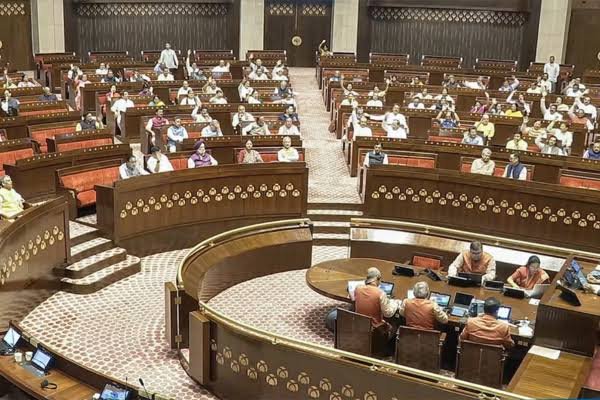
Parliament has passed the Public Examination (Prevention of Unfair Means) Amendment Bill, 2026, strengthening the Public Examination (Prevention of Unfair Means) Act, 2024.
Background
- The Public Examination (Prevention of Unfair Means) Act, 2024 is India’s first dedicated central law to prevent question paper leaks, organised cheating, and examination fraud, while safeguarding the fairness, transparency, and credibility of public examinations.
- It applies to examinations conducted by major central recruitment and testing agencies, including:
- Union Public Service Commission (UPSC)
- Staff Selection Commission (SSC)
- Railway Recruitment Boards (RRBs)
- Institute of Banking Personnel Selection (IBPS)
- National Testing Agency (NTA), including NEET
- The NEET-UG 2026 paper leak exposed shortcomings in the existing legal framework, particularly regarding deterrence, investigation, and timely disposal of cases. This led to the introduction of the Public Examination (Prevention of Unfair Means) Amendment Bill, 2026.
Key Features of the Amendment Bill, 2026
- Stricter Punishments
- Punishment for individuals using unfair means has been enhanced from 3–5 years’ imprisonment and a fine up to ₹10 lakh to 5–10 years’ imprisonment and a fine up to ₹50 lakh.
- Offences earlier punishable with a fine up to ₹1 crore and a four-year ban now attract a fine up to ₹5 crore and an eight-year ban.
- Organised examination fraud now carries a minimum imprisonment of five years and a fine up to ₹5 crore.
- The gravest offences are punishable with a minimum of seven years’ imprisonment and a fine up to ₹10 crore.
- Statutory Fast-Track Courts
- The amendment provides statutory backing for fast-track courts to try offences under the Act.
- Initially, such courts are proposed in the four High Courts handling NEET-related cases, ensuring faster disposal of cases.
- Time-bound Investigation and Disposal of Cases
- Investigation must be completed within two months.
- Trial must be completed within three months.
- The law seeks to ensure that paper leak cases are concluded within five months.
- Special Task Force (STF)
- The Union Government is empowered to establish a Special Task Force (STF) to investigate offences under the Act.
- The STF will strengthen coordination in cases involving inter-state paper leak networks and organised examination fraud.
Challenges and Way Forward
| Challenges | Way Forward |
| Time-bound investigation: Completing investigations within the prescribed two-month period may be difficult in complex or inter-state paper leak cases. | Strengthen investigation capacity: Enhance coordination among the Centre, States, investigating agencies, and examination authorities to ensure timely and effective investigations. |
| Capacity of fast-track courts: Fast-track courts may face delays if adequate judicial infrastructure, manpower, and resources are not available. | Expand judicial infrastructure: Provide sufficient judges, staff, and infrastructure to enable fast-track courts to function efficiently and meet statutory timelines. |
| Inter-agency coordination: Tackling organised examination fraud requires seamless cooperation between multiple agencies across states. | Strengthen institutional coordination: Establish robust information-sharing mechanisms and coordinated action among enforcement agencies to dismantle organised paper leak |
| Digital vulnerabilities: Legal reforms alone cannot prevent paper leaks unless weaknesses in examination technology and security systems are addressed. | Enhance examination security: Adopt secure digital technologies, strengthen cybersecurity, conduct regular security audits, and upgrade examination management systems to prevent leaks and malpractice. |
Conclusion
The Amendment Bill strengthens India’s legal framework against examination fraud. Its success, however, will depend on effective implementation, institutional coordination, and secure examination systems that uphold merit and fairness.
UPSC FAQs
Q1. What is the Public Examination (Prevention of Unfair Means) Amendment Bill, 2026?
Ans: It amends the Public Examination (Prevention of Unfair Means) Act, 2024 by introducing stricter punishments, statutory fast-track courts, time-bound investigation and trial, and provisions for a Special Task Force (STF) to tackle paper leaks and organised examination fraud.
Q2. Which examinations are covered under the Public Examination (Prevention of Unfair Means) Act, 2024?
Ans: The Act applies to public examinations conducted by agencies such as the UPSC, SSC, RRBs, IBPS, and the NTA, including the NEET examination.
Q3. What is the maximum punishment under the amended law?
Ans: Depending on the nature of the offence, the amended law prescribes a minimum imprisonment of seven years and fines up to ₹10 crore for the most serious cases involving organised examination fraud.
Q4. What timelines have been prescribed for investigation and trial?
Ans: The amendment mandates completion of investigation within two months and trial within three months, with the objective of concluding paper leak cases within five months.
Q5. Why is statutory backing for fast-track courts important?
Ans: It gives legal recognition to fast-track courts under the Act, enabling quicker adjudication of paper leak cases and reducing delays in the justice delivery process.
Q6. What is the role of the Special Task Force (STF)?
Ans: The STF is empowered to investigate offences under the Act and improve coordination in cases involving inter-state paper leak networks and organised examination fraud.
Q7. Why was the Amendment Bill, 2026 introduced?
Ans: The Bill was introduced after the NEET-UG 2026 paper leak highlighted shortcomings in the existing law, particularly in deterrence, investigation, and the timely disposal of paper leak cases.