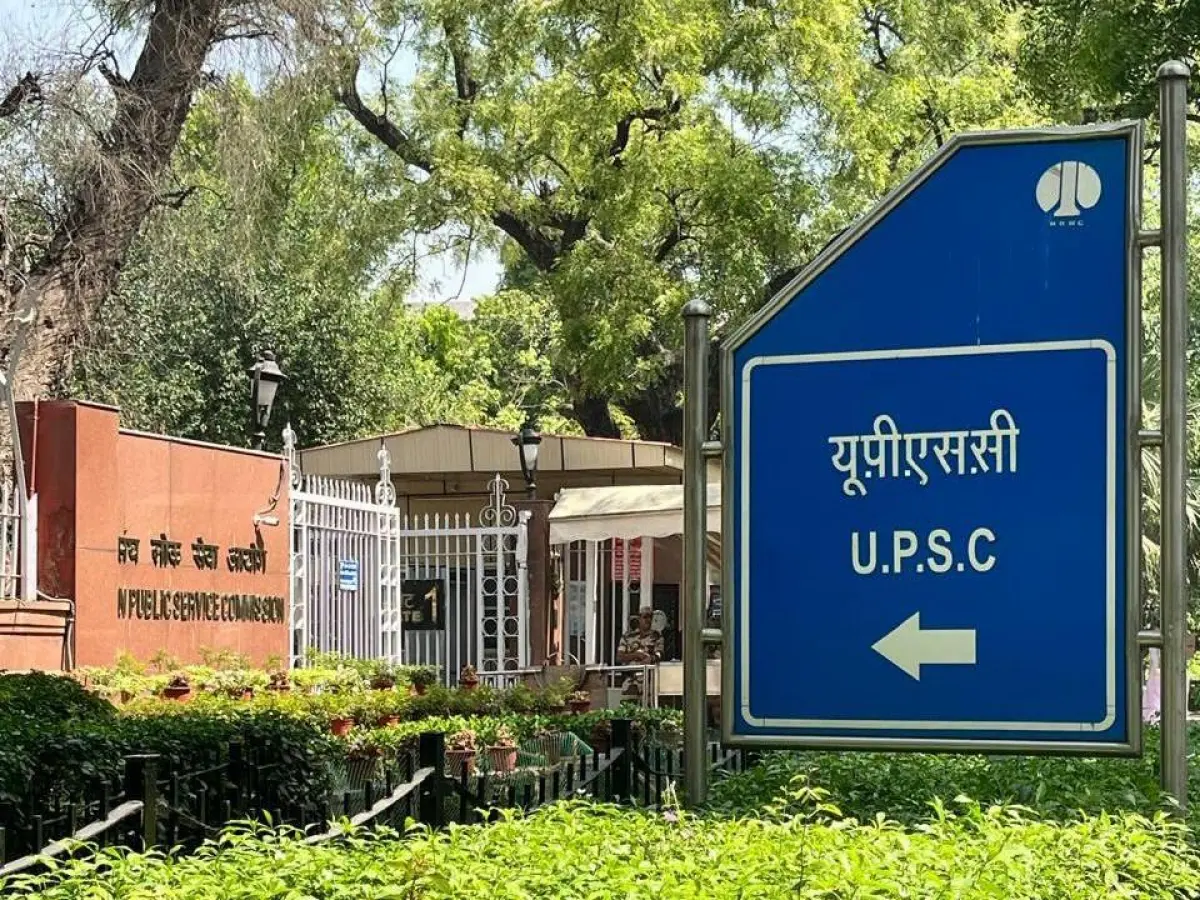
Choosing the best optional subject for UPSC Civil Services Examination (CSE) is one of the most important decisions in your preparation journey. The optional paper carries 500 marks (Paper I & Paper II) in the UPSC Mains examination and often becomes the deciding factor in securing a top rank.
Contrary to popular belief, there is no universally “best” optional subject. The ideal optional depends on your educational background, interest, availability of resources, overlap with the General Studies syllabus, and scoring potential.
In this detailed guide, we will discuss everything you need to know before selecting an optional subject for UPSC.
What is the UPSC Optional Subject?
The UPSC Mains Examination consists of nine papers, out of which two papers belong to one Optional Subject chosen by the candidate.
- Paper VI – Optional Subject Paper I (250 Marks)
- Paper VII – Optional Subject Paper II (250 Marks)
Total Marks: 500
Since these papers carry significant weightage, a good optional subject can substantially improve your final rank.
Why is Choosing the Right Optional Important?
Your optional subject can influence:
- Mains score
- Interview shortlist
- Final rank
- Service allocation
Many candidates score:
- 230–260 Marks in average optional performance
- 280–320+ Marks with excellent preparation
The difference can decide whether you become an IAS, IPS, IFS, IRS, or miss the final list.
Factors to Consider Before Choosing an Optional
1. Personal Interest
Interest is the most important criterion.
UPSC preparation lasts for nearly one year or more. If you dislike your optional subject, maintaining consistency becomes difficult.
Choose a subject you genuinely enjoy studying.
2. Educational Background
Candidates often prefer subjects studied during graduation.
Examples:
- Engineering → Mathematics
- Commerce → Commerce & Accountancy
- MBBS → Medical Science
- Law → Law
- Agriculture → Agriculture
However, many toppers have successfully chosen completely different optional subjects.
3. Syllabus Size
Some optional subjects have shorter syllabi.
Examples:
- Philosophy
- Anthropology
- PSIR
- Sociology
Others have comparatively larger syllabi:
- Geography
- History
- Public Administration
Smaller syllabus generally means quicker completion.
4. General Studies Overlap
Subjects overlapping with GS reduce preparation time.
Examples:
High Overlap
- Political Science
- Sociology
- History
- Geography
- Public Administration
- Economics
5. Availability of Guidance
Good coaching, notes, PYQs and answer-writing support are important.
Popular optionals generally have:
- Better books
- Better test series
- More toppers’ copies
- More mentorship
6. Previous Performance
Instead of blindly following trends, analyze:
- Marks of toppers
- Success stories
- Your own comfort level
Remember:
Every optional has produced UPSC toppers.
List of UPSC Optional Subjects
UPSC offers 48 optional subjects, including literature subjects.
Some popular ones are:
- Anthropology
- Sociology
- Political Science & International Relations (PSIR)
- Geography
- History
- Public Administration
- Philosophy
- Psychology
- Economics
- Mathematics
- Law
- Agriculture
- Medical Science
- Commerce & Accountancy
- Zoology
- Botany
- Physics
- Chemistry
- Civil Engineering
- Mechanical Engineering
- Electrical Engineering
- Literature subjects
Best Optional Subjects for UPSC
1. Sociology
Why Choose Sociology?
Sociology is among the most popular UPSC optionals.
Advantages
- Easy language
- Short syllabus
- Good GS overlap
- Essay overlap
- Ethics overlap
- Useful for Interview
Difficulty Level
Moderate
Best For
- Beginners
- Working professionals
- Humanities students
- Engineers
2. Anthropology
Anthropology has become one of the fastest-growing optionals.
Advantages
- Compact syllabus
- Scientific approach
- Diagrams improve answers
- High scoring in many years
Best For
- Science students
- Engineers
- Medical graduates
3. Political Science & International Relations (PSIR)
PSIR remains one of the most preferred subjects.
Advantages
- Excellent GS overlap
- Current affairs integration
- Essay overlap
- Interview usefulness
Best For
- Political science students
- UPSC aspirants interested in governance
4. Geography
One of the oldest UPSC optionals.
Advantages
- Useful diagrams
- Good GS overlap
- Helpful in Environment
- Useful for Mapping
Challenges
- Large syllabus
- Dynamic preparation
5. History
Excellent for candidates interested in India’s past.
Covers
- Ancient
- Medieval
- Modern
- World History
Advantages
- Strong GS overlap
- Essay support
Challenge
Very lengthy syllabus.
6. Public Administration
Earlier considered among the most popular optionals.
Advantages
- Governance understanding
- GS-II overlap
- Administration concepts
Challenge
Requires conceptual clarity.
Known for its shortest syllabus.
Advantages
- Quick completion
- Good Essay support
- Ethics overlap
Best For
Candidates comfortable with abstract thinking.
8. Psychology
Growing popularity among UPSC aspirants.
Advantages
- Interesting concepts
- Scientific nature
- Useful in Essay
9. Economics
Ideal for candidates interested in economic policy.
Advantages
- GS overlap
- Budget
- Economic Survey
- Current affairs integration
10. Mathematics
One of the most scoring optionals for mathematically strong students.
Advantages
- Objective answers
- No interpretation bias
- Consistent scoring
Challenge
Requires strong mathematical foundation.
Comparison of Popular UPSC Optional Subjects
| Optional | Syllabus | GS Overlap | Scoring Potential | Difficulty |
|---|---|---|---|---|
| Sociology | Short | High | High | Moderate |
| Anthropology | Short | Moderate | High | Moderate |
| PSIR | Medium | Very High | High | Moderate |
| Geography | Large | High | Good | Moderate |
| History | Large | High | Good | Moderate |
| Philosophy | Short | Moderate | High | Moderate |
| Public Administration | Medium | High | Good | Moderate |
| Psychology | Medium | Moderate | Good | Moderate |
| Economics | Medium | High | Good | High |
| Mathematics | Medium | Low | Very High | High |
Most Popular UPSC Optional Subjects Among Toppers
Frequently chosen by successful candidates:
- Sociology
- Anthropology
- PSIR
- Geography
- History
- Philosophy
- Mathematics
However, toppers have succeeded with almost every optional subject.
Common Myths About UPSC Optional Subjects
Myth 1: Some Optional Subjects Are Always Scoring
Reality:
UPSC does not officially declare any subject as permanently high-scoring.
Myth 2: Science Students Must Choose Science Optionals
Reality:
Many engineers have topped UPSC with Sociology, Anthropology, PSIR, and Philosophy.
Myth 3: Short Syllabus Means Easy Marks
Reality:
Short syllabus only reduces preparation time. Answer quality still determines marks.
Myth 4: Coaching is Mandatory
Reality:
Many toppers prepare optional subjects through self-study using standard books, previous year papers, and test series.
How to Choose the Best Optional Subject
Follow these steps:
- Read the complete UPSC syllabus of shortlisted subjects.
- Go through 3–5 years of previous year question papers.
- Watch introductory lectures or read a few chapters.
- Evaluate your genuine interest and aptitude.
- Compare the syllabus with GS overlap.
- Check the availability of books, notes, and mentorship.
- Finalize one subject and stick with it.
Avoid changing your optional repeatedly after starting preparation.
Books and Resources
Regardless of your optional:
- Read the official UPSC syllabus carefully.
- Solve previous year question papers.
- Practice answer writing regularly.
- Join a quality test series if needed.
- Revise multiple times.
Frequently Asked Questions (FAQs)
Q1. Which is the best optional subject for UPSC?
There is no single best optional subject. The right choice depends on your interest, educational background, aptitude, syllabus comfort, and availability of study resources. Popular choices include Sociology, Anthropology, PSIR, Geography, and Philosophy.
Q2. Which optional subject has the highest success rate?
UPSC does not officially publish success rates for optional subjects. Every optional has produced successful candidates, and performance depends more on preparation quality than on the subject itself.
Q3. Which optional has the shortest syllabus?
Philosophy, Anthropology, and Sociology are generally considered to have comparatively shorter syllabi than subjects like Geography and History.
Q4. Which optional is best for engineering students?
Many engineering graduates choose Mathematics due to their academic background, while others perform exceptionally well with Sociology, Anthropology, PSIR, or Philosophy because of their GS overlap and manageable syllabus.
Q5. Can I choose an optional subject outside my graduation stream?
Yes. UPSC allows candidates to choose any optional subject regardless of their academic background. Many toppers have selected optionals unrelated to their graduation discipline.
Q6. Which optional has the maximum overlap with General Studies?
Political Science & International Relations (PSIR), Sociology, History, Geography, Public Administration, and Economics have significant overlap with various General Studies papers, Essay, and the Interview.
Q7. Is coaching necessary for optional subject preparation?
No. Coaching is optional. With the official syllabus, standard reference books, previous year question papers, quality test series, and consistent answer writing practice, many aspirants successfully prepare through self-study.
Q8. Should I choose an optional based on trends or topper recommendations?
No. Trends change over time, and what works for one candidate may not suit another. Your interest, aptitude, and commitment to the subject should be the primary deciding factors.
Conclusion
Selecting the right UPSC optional subject is a strategic decision that can significantly impact your Mains score and final rank. Instead of chasing perceived “high-scoring” subjects, focus on choosing one that aligns with your interest, strengths, and long-term preparation strategy. Once selected, stay consistent, master the syllabus, practice answer writing regularly, and revise thoroughly. A well-prepared optional can become one of the strongest pillars of your UPSC success.