Context
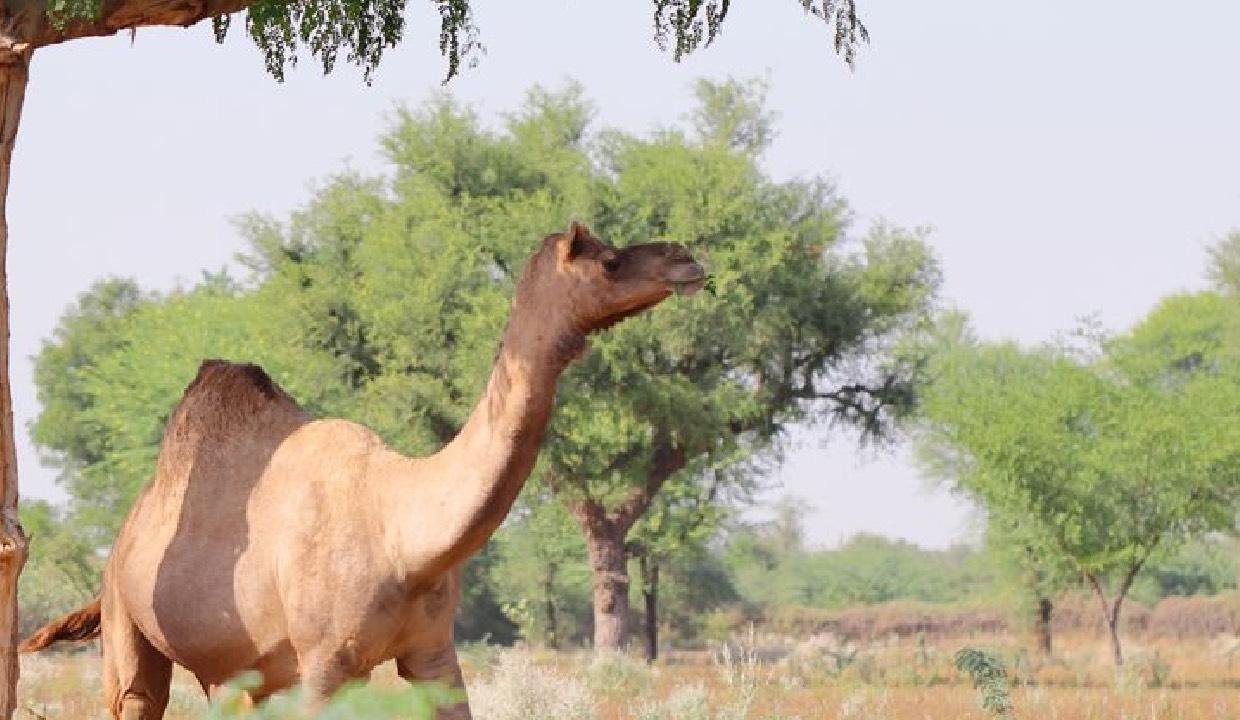
The Malvi camel is one of the nine recognised camel breeds in India and is facing the risk of extinction. To conserve the breed, the National Research Centre on Camel (NRCC) has launched a dedicated conservation programme. These efforts aim to preserve India’s indigenous livestock genetic resources and promote climate-resilient animal husbandry.
About Malvi Camel
- It is primarily found in the Malwa region of Madhya Pradesh, including Mandsaur, Neemuch, Ratlam, and Gwalior, and in adjoining districts of Rajasthan, namely Kota, Bundi, Jhalawar, and Baran.
- It is recognised as the smallest camel breed in India and is characterised by a strong body, a well-developed hump, and a light brown to reddish-brown coat. White-coloured individuals are also found.
- The breed is well adapted to semi-arid as well as moderately humid climatic conditions, making it suitable for diverse agro-climatic regions.
- Known for its strength, endurance, and load-carrying capacity, the Malvi camel is widely used for transportation, agricultural operations, and milk production. A female produces about 4–5 kg of milk per lactation cycle.
- As an indigenous breed, it enriches India’s livestock genetic diversity and supports the livelihoods of pastoral communities.
FAQs
Q1. Why is the Malvi camel in the news?
Ans: The Malvi camel is facing the risk of extinction, and the National Research Centre on Camel (NRCC) has launched a conservation programme to protect the breed.
Q2. Where is the Malvi camel mainly found?
Ans: It is mainly found in the Malwa region of Madhya Pradesh and adjoining districts of Rajasthan, including Kota, Bundi, Jhalawar, and Baran.
Q3. What are the key characteristics of the Malvi camel?
Ans: It is the smallest recognised camel breed in India, known for its strong build, endurance, adaptability to semi-arid and moderately humid climates, and milk-producing ability.
Q4. Why is the Malvi camel important?
Ans: The breed supports transportation, agriculture, and milk production, while contributing to the conservation of India’s indigenous livestock genetic resources.
Q5. What is the role of the National Research Centre on Camel (NRCC)?
Ans: The NRCC undertakes research, conservation, genetic improvement, and sustainable development of camel breeds to protect and promote India’s camel genetic resources.
Q6. Why is the conservation of indigenous livestock breeds important?
Ans: Indigenous breeds possess valuable genetic traits, are well adapted to local environments, and contribute to biodiversity conservation, sustainable agriculture, and rural livelihoods.
Q7. How many recognised camel breeds are there in India?
Ans: India has nine recognised camel breeds, including the Malvi camel, which are important for transportation, agriculture, milk production, and the conservation of livestock genetic diversity.