Context
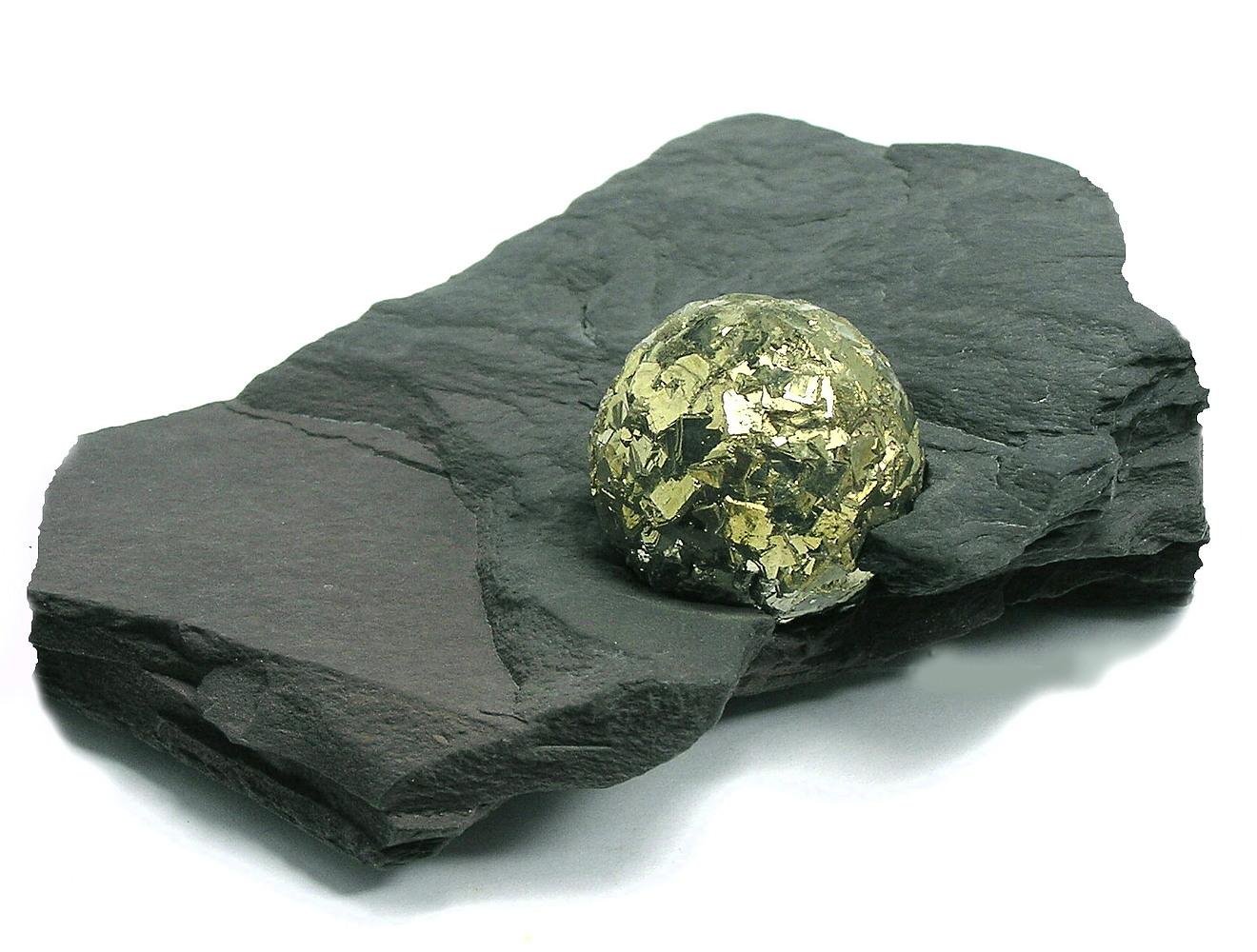
A rare microscopic sunflower-shaped form of pyrite, also known as “fool’s gold”, has recently been discovered in the lignite deposits of Gujarat.
About Pyrite
Characteristics
- Pyrite is a naturally occurring iron disulfide mineral with the chemical formula FeS₂ and is the most abundant sulphide mineral.
- The mineral is brass-yellow in colour and has a metallic lustre.
- The term pyrite originates from the Greek word pyr, meaning “fire”, as it produces sparks when struck against metal.
- Findings from prehistoric burial sites indicate that pyrite nodules were once used for fire generation.
Occurrence and Formation
- Pyrite occurs in igneous, sedimentary, and metamorphic rocks, hydrothermal deposits, coal beds, and fossils.
- It generally forms in oxygen-deficient environments rich in iron and sulphur, particularly in coal deposits and black shales.
- Depending on the depositional environment, pyrite may occur either as dispersed grains or concentrated layers within rocks.
- The mineral can replace plant remains and shells, resulting in pyrite fossils and flattened structures called “pyrite dollars”.
- In calcite and quartz veins, pyrite oxidizes into iron oxides or hydroxides such as limonite, forming rusty surface zones known as “gossans”.
Major Producers
Italy and China are currently among the leading producers, followed by Russia and Peru.
Uses
- Pyrite serves as an important source of iron and sulphur and is used in the manufacture of sulfuric acid.
- Iron sulphate obtained from pyrite is used in nutritional supplements, water treatment, ink production, lawn conditioners, and treatment of iron-deficiency anaemia.
- Certain forms of pyrite contain microscopic quantities of gold and can therefore be mined as gold ore.