Context
Nauradehi Wildlife Sanctuary in Madhya Pradesh (MP) will soon receive cheetahs under India’s Cheetah Reintroduction Project, helping ease the pressure on Kuno National Park.
Q1. Where is Nauradehi Wildlife Sanctuary located?
- The sanctuary is situated in MP and covers an area of about 1187 square km, making it the largest wildlife sanctuary there.
- Geographically, it lies on a plateau in the upper Vindhyan mountain range and acts as an important ecological corridor, linking the Panna, Satpura and Bandhavgarh Tiger Reserve.
- Biogeographically, it falls under the Deccan Peninsula region.
Q2. What are the drainage features of the sanctuary?
- Around three-fourths of the sanctuary lies in the Yamuna (Ganga) river basin, while the remaining one-fourth falls in the Narmada basin.
- Important Rivers: Kopra, Bamner, and Bearma rivers (Tributaries of the Ken River).
Q3. What type of vegetation is found in the sanctuary?
- The sanctuary contains extensive green vegetation, grasslands, and dense tropical dry and mixed deciduous forests.
- Important plant species include teak, saja, dhaora, bhirra, ber, bel, mahua, tendu, gunja, & amla.
- Teak trees dominate the forest landscape of the sanctuary.
Q4. What wildlife is found in Nauradehi Wildlife Sanctuary?
- The sanctuary supports a diverse range of wildlife.
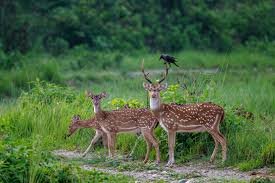
- Examples: Sloth bear, Indian wolf, Bengal tiger, Sambar deer, Leopard, Nilgai and Chinkara.
- Several bird species also inhabit the sanctuary.
Conclusion
The Nauradehi Wildlife Sanctuary is an ecologically important protected area in MP, known for its rich biodiversity and strategic location connecting major tiger reserves, and it is now emerging as a key site for cheetah reintroduction in India.
FAQs
Q1. Where is Nauradehi Wildlife Sanctuary located and why is it important?
Situated in MP, it spans 1187 sq km, making it the largest sanctuary in the state. It lies in the Vindhyan mountain range & serves as an ecological corridor linking Panna, Satpura, & Bandhavgarh Tiger Reserves.
Q2. What are the key geographical and ecological features of Nauradehi Sanctuary?
It falls under the Deccan Peninsula biogeographic zone, with drainage into both Yamuna (Ganga) basin & Narmada basin. Rivers like Kopra, Bamner, and Bearma flow through it, supporting diverse ecosystems.
Q3. What type of vegetation and wildlife are found in Nauradehi Sanctuary?
The sanctuary hosts tropical dry & mixed deciduous forests, dominated by teak & species like saja, amla, mahua, etc. Wildlife includes sloth bear, Indian wolf, Bengal tiger, etc., along with rich bird diversity.
Q4. How does Nauradehi contribute to biodiversity conservation in Madhya Pradesh?
By connecting major tiger reserves, supporting varied flora and fauna, and now hosting cheetahs, it strengthens wildlife corridors, ecological balance, and conservation efforts in central India.