Context
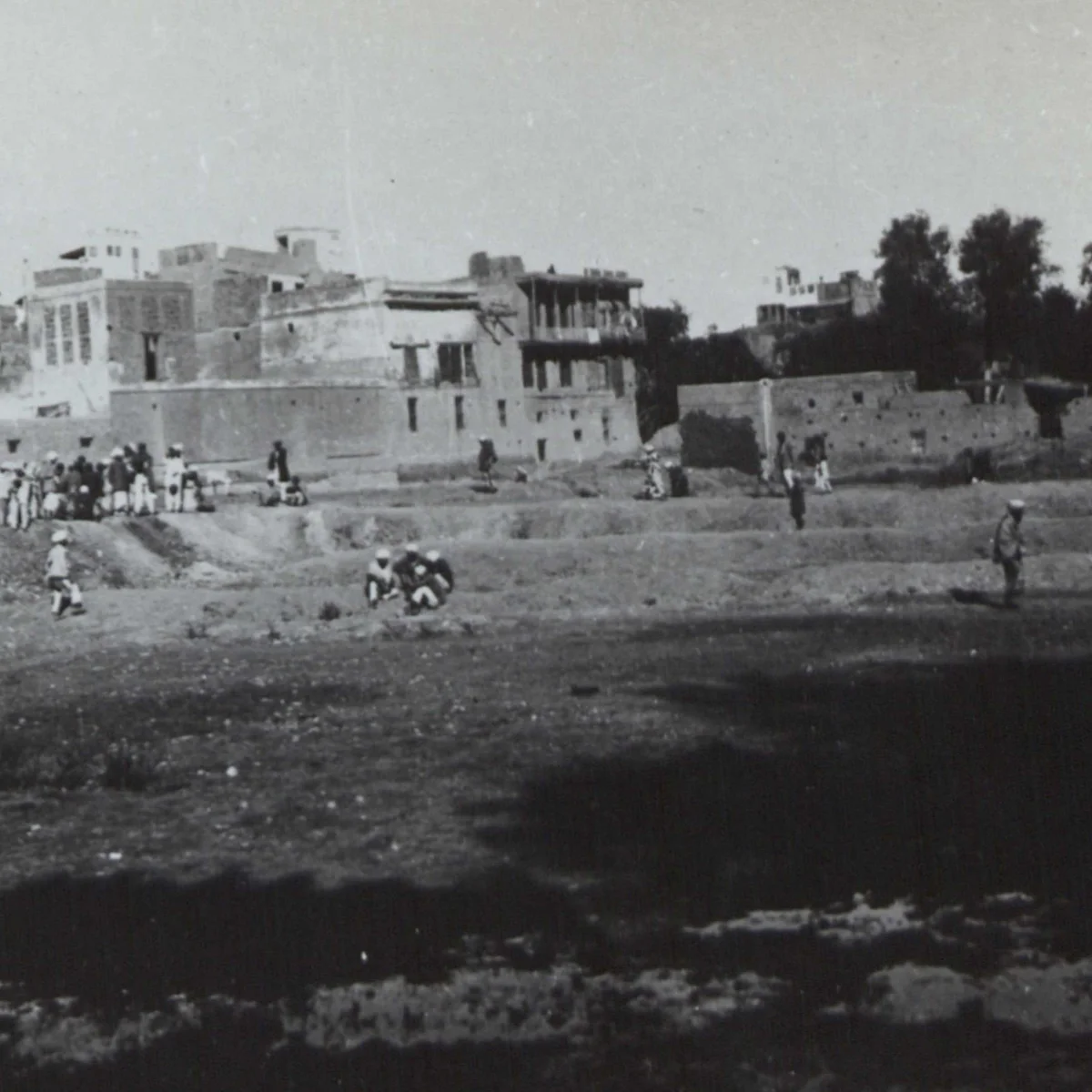
The Jallianwala Bagh Massacre took place on 13th April 1919 (Baisakhi) at Amritsar, Punjab, during widespread protests against the Rowlatt Act, 1919. It marked a decisive turning point in India’s freedom struggle, transforming the national movement and strengthening the demand for Swaraj (self-rule).
Prelude to the Massacre
- The Rowlatt Act, 1919 (officially the Anarchical and Revolutionary Crimes Act, 1919) was enacted on the recommendations of the Sedition Committee to suppress revolutionary activities.
- The Act authorised preventive detention without trial, trials by special courts, and effectively denied detainees the protection of the writ of Habeas Corpus, restricting their ability to challenge unlawful detention before a court.
- Condemning the legislation as the “Black Law”, Mahatma Gandhi launched the Rowlatt Satyagraha, beginning with a nationwide hartal on 6 April 1919, observed as Black Day.
- As protests spread, violence erupted in several places despite Gandhi’s emphasis on non-violent satyagraha. He later acknowledged that launching the movement before adequately preparing the people for disciplined non-violent resistance was a “Himalayan Blunder” and subsequently suspended the agitation.
- In Punjab, public resentment intensified after the arrest of Dr. Saifuddin Kitchlew and Dr. Satyapal on 10 April 1919, leading to widespread protests in Amritsar.
- To restore order, the British administration placed Brigadier General Reginald Edward Harry Dyer in charge of the city. He prohibited public meetings and imposed strict restrictions.
Jallianwala Bagh Massacre
- On 13 April 1919, thousands of people gathered at Jallianwala Bagh to celebrate Baisakhi, while many others assembled to protest peacefully against the Rowlatt Act. Many were unaware of the ban on public meetings.
- The ground was enclosed by high walls with only a few narrow entrances and exits, making escape extremely difficult.
- Brigadier General Dyer entered the Bagh with about 50 soldiers drawn from the Gurkha, Baluchi, Sikh, and Rajput regiments and positioned them near the main entrance.
- Without issuing any warning or asking the crowd to disperse, he ordered his troops to open fire on the unarmed gathering.
- The troops fired approximately 1,650 rounds over about 10 minutes, stopping only when their ammunition was nearly exhausted.
- According to official British records, 379 people were killed and about 1,200 were injured, whereas the Indian National Congress estimated that more than 1,000 people lost their lives.
Investigations
- Hunter Commission (Disorders Inquiry Committee)
- The Hunter Commission was constituted in 1919 to investigate the Punjab disturbances, including the Jallianwala Bagh Massacre.
- It concluded that General Dyer had exceeded his authority by ordering indiscriminate firing without warning.
- Although Dyer was removed from active command and retired from military service, the Commission did not recommend criminal prosecution against him.
- Indian National Congress Inquiry
- Rejecting the official inquiry, the Indian National Congress constituted an independent committee comprising Mahatma Gandhi, Motilal Nehru, C.R. Das, and Abbas Tyabji.
- The committee described the massacre as a deliberate, unjustified, and inhuman act of colonial repression and held the Punjab administration responsible.
Consequences
- Rabindranath Tagore renounced his Knighthood, while Mahatma Gandhi returned the Kaiser-i-Hind Medal in protest against the massacre.
- Sir Chettur Sankaran Nair resigned from the Viceroy’s Executive Council. In his book Gandhi and Anarchy (1922), he held Sir Michael O’Dwyer, the Lieutenant Governor of Punjab, responsible for the Punjab atrocities. Although he lost the defamation case filed against him in London, the trial attracted international attention to British policies in India.
- The widespread public outrage generated by the massacre, together with the Khilafat Movement, created the conditions for the launch of the Non-Cooperation Movement (1920–1922).
- The massacre deeply influenced a generation of revolutionaries, particularly Bhagat Singh, and gave fresh impetus to revolutionary nationalism.
- On 13 March 1940, Udham Singh assassinated Sir Michael O’Dwyer at Caxton Hall, London, describing the act as retribution for the victims of Jallianwala Bagh.
Significance
- Marked a decisive shift from limited political protest to a broad-based national movement against British rule.
- Permanently weakened Indian faith in the justice and legitimacy of the colonial administration.
- Strengthened the demand for Swaraj (self-rule) and accelerated the growth of mass nationalism.
- Encouraged the Indian National Congress to adopt a more mass-oriented approach to the freedom movement.
- Inspired both constitutional and revolutionary approaches in India’s struggle for independence.
- Continues to symbolise the importance of civil liberties, the rule of law, and accountable governance.
Conclusion
The Jallianwala Bagh Massacre remains one of the defining events of India’s freedom struggle. It exposed the brutality of colonial rule, transformed the Indian national movement into a broad-based struggle for self-government, and strengthened the resolve to achieve independence. The incident continues to stand as a powerful reminder of the importance of civil liberties, democratic rights, and accountable governance.