Context
After a diplomatic stalemate and vetoes at the UN Security Council, the 35-year-old UN peacekeeping mission in Western Sahara (MINURSO) ended on 31 October 2026, launching an orderly wind-down.
About Western Sahara
- Location: A sparsely populated desert territory in Northwest Africa, forming part of the Maghreb region.
- Boundaries: Morocco to the north, Algeria to the northeast and east, and Mauritania to the east and south.
- Water body: Bordered by the Atlantic Ocean in the west.
- Natural resources: Rich in phosphates, fisheries and other mineral resources.
- Political status: A Non-Self-Governing Territory listed by the United Nations, with its final status unresolved.
- Major city: Laayoune (El Aaiún).
Background of the Western Sahara Dispute
- Spanish colonial rule: Western Sahara remained under Spanish colonial administration until Spain withdrew in 1975.
- Morocco’s claim: Morocco claims sovereignty over the territory and considers it an integral part of its national territory.
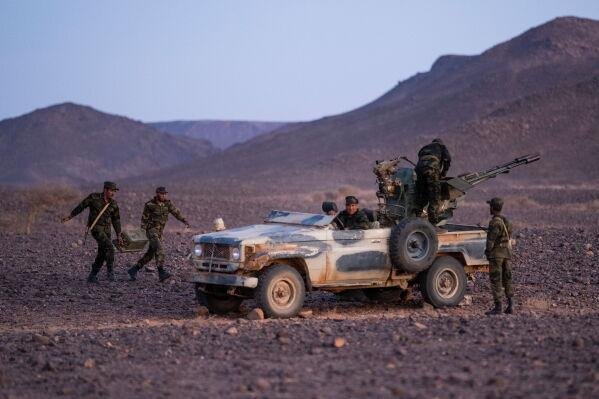
- Polisario Front: The Frente Polisario (Popular Front for the Liberation of Saguia el-Hamra and Río de Oro) seeks independence and self-determination for the Sahrawi people.
- 1975 Madrid Accords: Spain transferred administrative control to Morocco and Mauritania, without resolving the question of sovereignty.
- Armed conflict: Fighting broke out between Morocco and the Polisario Front. Mauritania subsequently withdrew from its claim in 1979.
- Ceasefire (1991): A UN-brokered ceasefire created the basis for a referendum on self-determination, but disagreement over voter eligibility and the territory’s political future prevented its implementation.
United Nations Mission for the Referendum in Western Sahara (MINURSO)
- Establishment: Created on 29 April 1991 through UN Security Council Resolution 690, following a ceasefire agreement between Morocco and the Polisario Front.
- Objective: To facilitate a referendum through which the people of Western Sahara could choose between independence and integration with Morocco.
- Headquarters: Laayoune, the principal city in Western Sahara.
- Major functions:
- Monitor the ceasefire between Morocco and the Polisario Front.
- Support efforts towards a peaceful political settlement.
- Monitor and report developments affecting peace and security.
- Contribute to creating conditions for the implementation of a self-determination process.
Reasons behind failure of referendum
- Disagreement over the identification of eligible voters.
- Differences between Morocco and the Polisario Front over the political future of the territory.
- Lack of consensus on the referendum’s implementation and modalities.
Consequently, MINURSO continued monitoring the ceasefire and supporting diplomatic efforts for more than three decades, without fulfilling its original referendum objective.
End of MINURSO
- Mandate Expiry: Its mandate expired on 31 October 2026.
- Security Council Deadlock: Members failed to agree on its renewal.
- US-Russia Differences: The US-backed resolution was vetoed by Russia, while the Russian proposal for a one-year extension failed to secure sufficient support.
- Result: MINURSO began winding down from 1 November 2026.
Conclusion
The Western Sahara dispute demonstrates that establishing a ceasefire is only the first step towards sustainable peace; lasting resolution requires political consensus, respect for international law and recognition of people’s aspirations. The end of MINURSO should not mean the end of international responsibility. The UN must continue facilitating an inclusive and mutually acceptable settlement that balances regional stability with the Sahrawi people’s right to self-determination.
FAQs
Q1. What is MINURSO?
Ans: It is the UN Mission for the Referendum in Western Sahara, set up in 1991 to monitor a ceasefire and prepare a vote on the territory’s future.
Q2. What is the Polisario Front?
Ans: It is the Sahrawi movement that seeks an independent state in Western Sahara. It is backed by Algeria.
Q3. What is Morocco’s Autonomy Plan?
Ans: It is a 2007 proposal for self-government in Western Sahara under Moroccan sovereignty.
Q4. What is a Non-Self-Governing Territory?
Ans: It is a territory whose people have not yet attained full self-government. The UN keeps such territories on a list for decolonisation.
Q5. What is a veto?
Ans: A permanent member of the Security Council (US, UK, France, Russia, China) can block a resolution by voting no, even if others support it.
Q6. What is a penholder?
Ans: It is the Council member that drafts resolutions on a topic. The US is the penholder on Western Sahara.