Context
The Western Ghats Ecologically Sensitive Area (ESA) proposal has once again come under discussion as differences persist between the Centre and the six Western Ghats states over the finalisation of ESA boundaries. With the current notification valid until July 2026, efforts are ongoing to achieve a consensus that balances ecological conservation with developmental and livelihood concerns.
Significance of the Western Ghats
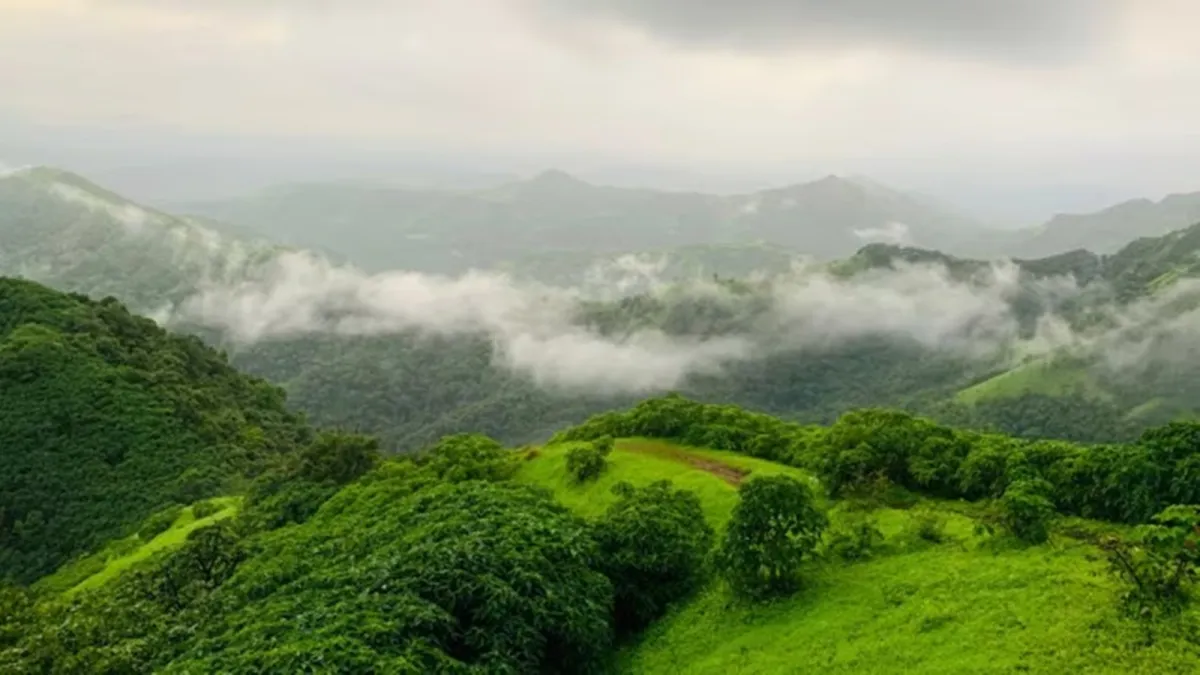
- The Western Ghats are a mountain chain extending about 1,500 km along India’s western coast.
- They are recognised as one of the world’s eight biodiversity hotspots and harbour a large number of endemic plant and animal species.
- The Ghats act as a major climatic barrier influencing the southwest monsoon and serve as the source of major rivers such as the Godavari, Krishna, Cauvery, and Periyar.
- Spread across Gujarat, Maharashtra, Goa, Karnataka, Kerala, and Tamil Nadu, the region supports agriculture, plantations, and the livelihoods of millions of people.
- Owing to their exceptional ecological value, the Western Ghats were inscribed as a UNESCO World Heritage Site in 2012.
Ecologically Sensitive Area (ESA)
- An Ecologically Sensitive Area (ESA) is notified under the Environment (Protection) Act, 1986 to protect ecologically fragile regions.
- ESAs seek to minimise ecological degradation by regulating activities that may adversely affect biodiversity and ecosystem stability.
- Activities such as mining, quarrying, thermal power projects, highly polluting industries, and large-scale construction are either prohibited or subject to strict regulation.
Gadgil Committee (2011)
- The Western Ghats Ecology Expert Panel (WGEEP), chaired by Madhav Gadgil, recommended ESA status for the entire 1,29,037 sq km Western Ghats region.
- It advocated a conservation-centric approach with stringent restrictions on developmental activities.
- The recommendations faced opposition owing to concerns regarding their impact on livelihoods and economic activities.
Kasturirangan Committee (2013)
- The committee headed by K. Kasturirangan proposed a more balanced approach towards conservation.
- It classified the Western Ghats into natural landscapes and human-use landscapes.
- Out of the total 1,64,280 sq km area, nearly 60,000 sq km of ecologically significant natural landscapes were recommended for ESA status.
- Areas with significant human presence, including settlements, farmlands, and plantations, were largely kept outside the proposed ESA zone.
- The recommendations sought to balance environmental protection with livelihood and developmental needs.
Evolution of the ESA Proposal
- The first draft ESA notification was issued in 2014 based on the Kasturirangan Committee’s recommendations.
- The proposed ESA area was reduced to approximately 56,826 sq km.
- Persistent differences between the Centre and the states have delayed finalisation of ESA boundaries for more than a decade.
- The latest notification, issued in July 2024, remains valid until July 2026.
- It introduced a state-wise implementation mechanism, enabling progress in states where consensus has been achieved.
Challenges in ESA Implementation
- Several states have raised concerns regarding restrictions on mining, quarrying, industries, infrastructure projects, and construction activities.
- Karnataka has strongly opposed the proposed demarcation, while Kerala and Maharashtra have sought exclusion of certain villages and plantation areas.
- Concerns primarily relate to livelihood security, plantation-based economies, and infrastructure development.
Sanjay Kumar Committee (2022)
- The Centre constituted an expert committee under Sanjay Kumar, former Director General of Forests, to examine state-level objections to the ESA proposal.
- The committee is reviewing village records, satellite imagery, and field-level data to facilitate consensus on ESA boundaries.
Payment for Ecosystem Services (PES)
- Payment for Ecosystem Services (PES) is a proposed mechanism to compensate states for conserving ecologically important regions.
- It recognises ecosystem benefits such as water security, carbon sequestration, climate regulation, and biodiversity conservation.
- The mechanism is being explored to support long-term conservation efforts while addressing developmental concerns.
Way Forward
- ESA boundaries should be finalised through scientific assessment, reliable ground-level data, and stakeholder consultation.
- Financial mechanisms such as Payment for Ecosystem Services (PES) can encourage states to undertake conservation measures.
- Greater cooperation among the Centre, states, and local communities is essential for effective implementation.
- Conservation measures should be aligned with local livelihood requirements to ensure sustainable and inclusive development.
Conclusion
The Western Ghats ESA issue highlights the challenge of balancing ecological conservation with developmental needs. A science-based, participatory, and sustainable approach is essential for protecting this ecologically significant region while ensuring the well-being of local communities.