Context
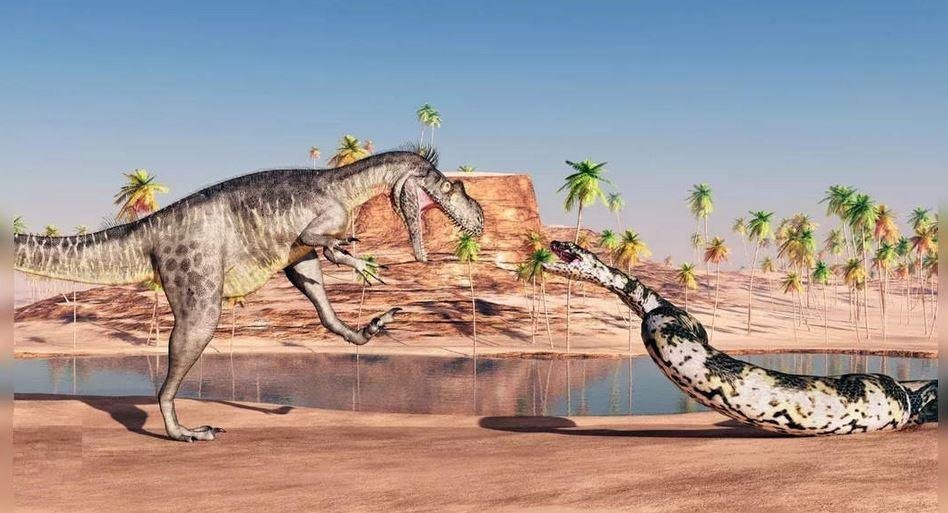
The prehistoric snake Vasuki indicus, discovered in India, has attracted attention for its enormous estimated size, potentially rivaling the largest snakes known to have existed.
About Vasuki indicus
- Type: An extinct species of giant, non-venomous snake.
- Fossil Discovery: Fossils were unearthed in 2005 at the Panandhro Lignite Mine in Kutch district, Gujarat.
- Identification: Scientifically described as a new genus and species in 2024.
- Name: Named after Vasuki, the mythical serpent associated with Lord Shiva.
- Family: Madtsoiidae, an extinct family of large snakes.
- Geological Period: Middle Eocene, approximately 47.8–38 million years ago.
Physical Characteristics
- Estimated Length: Approximately 49 feet, based on fossil evidence.
- Vertebrae: Individual vertebrae measured 37.5–62.7 mm in length and 62.4–111.4 mm in width.
- Body Structure: The broad vertebrae suggest a thick, cylindrical body capable of supporting a large body mass.
- Movement and Hunting: Its skeletal structure suggests that it may have been a slow-moving ambush predator, broadly comparable to modern pythons and anacondas.
Significance
- Giant Snake Evolution: Provides evidence of the evolution of exceptionally large snakes during the warm Eocene period.
- Comparison with Titanoboa: Vasuki indicus may have reached around 49 feet, potentially exceeding Titanoboa, an extinct snake estimated to have reached approximately 42 feet and known from fossils in South America.
Frequently Asked Questions (FAQs)
Q1. What is Vasuki indicus?
Vasuki indicus is an extinct, giant, non-venomous snake belonging to the family Madtsoiidae, which lived during the Middle Eocene, approximately 47.8–38 million years ago.
Q2. Where were the fossils of Vasuki indicus discovered?
Its fossils were unearthed in 2005 at the Panandhro Lignite Mine in Kutch district, Gujarat, and the species was scientifically described in 2024.
Q3. How large was Vasuki indicus?
Its estimated length was approximately 49 feet, based on fossil evidence. Its broad vertebrae suggest a thick, cylindrical body.
Q4. How did Vasuki indicus move and hunt?
Its skeletal structure suggests that it may have been a slow-moving ambush predator, broadly comparable to modern pythons and anacondas.