Context
Recently, Uttarakhand officials reviewed proposed eco-sensitive zones (ESZs) around Rajaji National Park and Valley of Flowers National Park.
About Valley of Flowers National Park
- Location: Uttarakhand, in the Western Himalayas.
- UNESCO Status: A UNESCO World Heritage Site, recognised along with Nanda Devi National Park.
- Biosphere Reserve: Forms one of the two core zones of the Nanda Devi Biosphere Reserve, the other being Nanda Devi National Park.
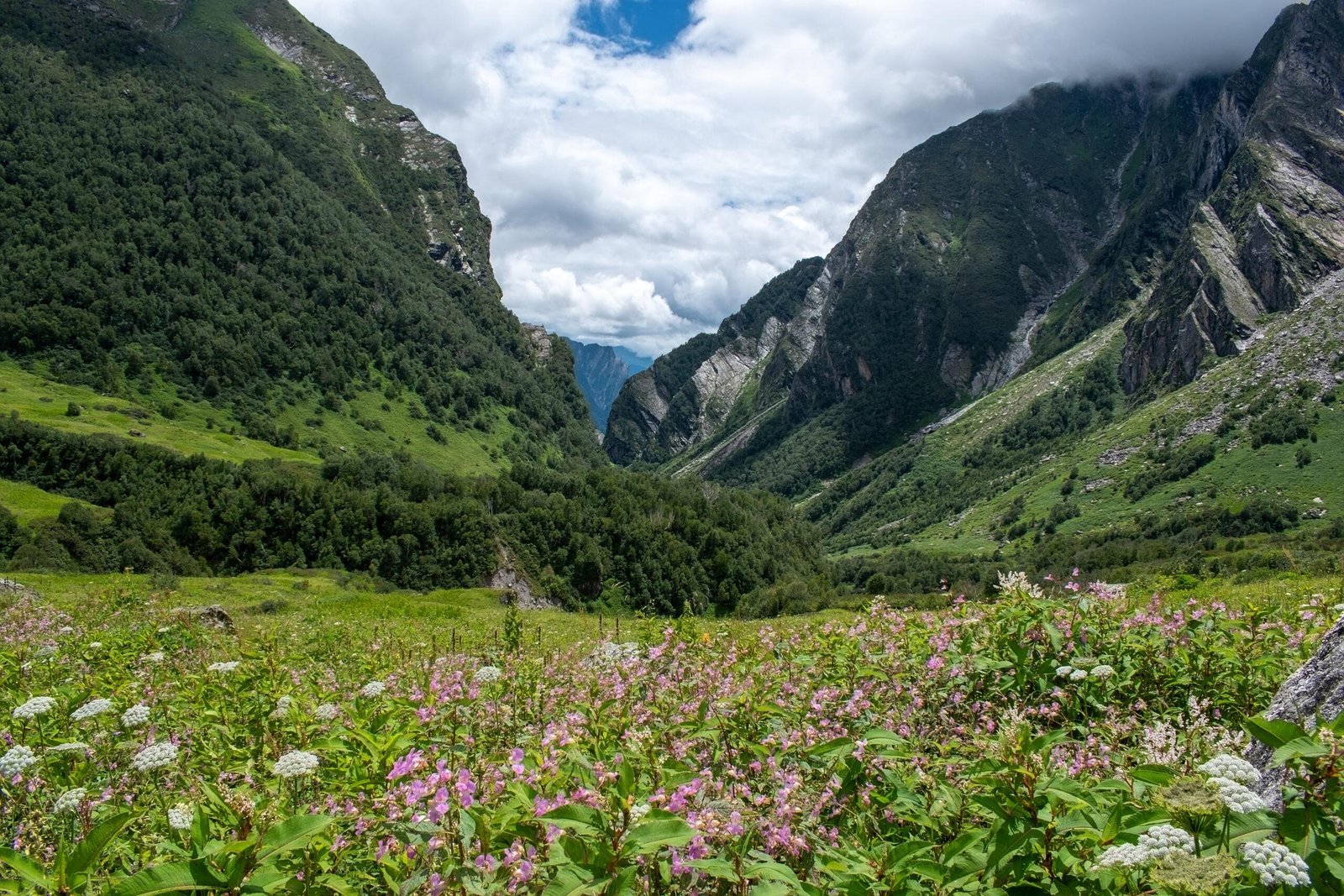
- Landscape: Its gentle alpine meadows complement the rugged mountain wilderness of Nanda Devi National Park.
- Geographical Significance: The two parks together represent a transition zone between the Zanskar and Great Himalayan ranges.
- Key Feature: Famous for its alpine meadows, colourful flowering plants and rich biodiversity.
Flora
- Flowering Plants: Supports over 600 species of flowering plants, including orchids, poppies, primulas, marigolds, daisies and anemones.
- Forests: Sub-alpine forests of birch and rhododendron cover parts of the park.
Fauna
Important wildlife includes:
- Mammals: Grey langur, flying squirrel, Himalayan weasel, Himalayan black bear, red fox and snow leopard.
- Insects: Lime butterfly and other butterfly species.
Frequently Asked Questions (FAQs)
Q1. Where is Valley of Flowers National Park located?
It is located in the Western Himalayas of Uttarakhand and is famous for its alpine meadows, colourful flowering plants and rich biodiversity.
Q2. What is the UNESCO status of Valley of Flowers National Park?
It is a UNESCO World Heritage Site, recognised together with Nanda Devi National Park.
Q3. What is the relationship between Valley of Flowers National Park and Nanda Devi Biosphere Reserve?
Valley of Flowers National Park is one of the two core zones of the Nanda Devi Biosphere Reserve, the other being Nanda Devi National Park.
Q4. What are the major floral species found in Valley of Flowers National Park?
The park supports over 600 species of flowering plants, including orchids, poppies, primulas, marigolds, daisies and anemones, along with birch and rhododendron forests.
Q5. Which important wildlife species are found in Valley of Flowers National Park?
Important species include the snow leopard, Himalayan black bear, red fox, grey langur, flying squirrel and Himalayan weasel, along with butterflies such as the lime butterfly.