Context
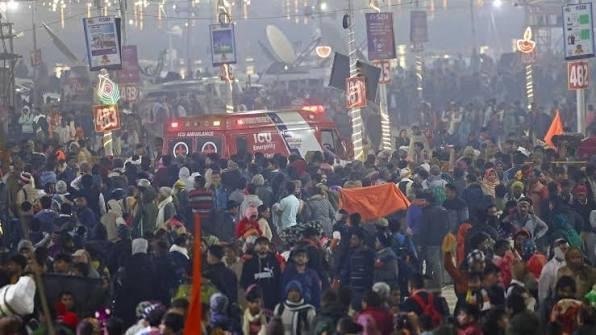
A crowd crush (stampede) at the Chorbagan Sarbojanin Durga Puja pandal in north Kolkata reportedly killed 19 people and injured around 25 others.
What is a Crowd Disaster and a Stampede?
- A crowd disaster is an incident in which excessive crowd density, uncontrolled movement or a sudden emergency causes injuries, deaths or serious disruption during a gathering.
- A stampede is a sudden, uncontrolled rush of a large crowd of people or animals, often causing injuries, deaths, and damage, usually triggered by panic, fear, or overcrowding. It is classified as a crowd disaster.
- Major triggers: Panic, rumours, sudden changes in crowd movement, fire, electrical failures, blocked exits and poorly managed announcements can turn an already congested gathering into a deadly incident.
- Examples: The Karur crowd disaster (September 2025), the Mahakumbh Mela incident (January 2025), the Hathras religious gathering tragedy (July 2024) and the Chorbagan incident in Kolkata.
- As per NCRB, approximately 3000 lives were lost in stampedes between 2000-2022.
What are the factors leading to Crowd Disasters/Stampedes?
- Structural Factors: Weak or temporary structures, narrow or blocked exits, slippery roads, steep terrain, poor lighting, and unauthorized construction that blocks evacuation.
- Fire and Electrical Hazards: Fires in temporary structures, short circuits, illegal wiring, electricity failures causing panic, and lack of fire safety measures.
- Crowd Control Failures: Overcrowding, blocked exits, poor queue management, lack of Public Address (PA) systems, inadequate partitions, and traffic mismanagement.
- Crowd Behaviour: Sudden rushes, collisions, panic due to rumours, delays, disasters, or free distribution, and overcrowding during events like celebrity appearances or promotions.
- Security Lapses: Insufficient or untrained security personnel, poor surveillance (CCTV, PA systems, observation towers), weak communication, and misuse of force.
- Lack of Coordination Among Stakeholders: Poor coordination between police, administration, fire, medical, and transport services; delayed key personnel; inadequate emergency services.
- Weak emergency preparedness: Delayed ambulance services, insufficient first-aid facilities, unclear evacuation routes and a lack of mock drills can increase casualties once an incident begins.
What went wrong at Chorbagan?
- Sudden weather change: Heavy rainfall reportedly coincided with a large number of pandal visitors, increasing the difficulty of managing movement in the crowded area.
- Uncontrolled movement: Preliminary accounts suggest that as some people fell, those behind continued moving forward, potentially increasing pressure on people caught in the crowd.
- Possible communication failure: A public-address announcement may have contributed to the rush. This illustrates how even a warning intended to improve safety can create confusion if it triggers simultaneous movement without a managed evacuation plan.
- Accountability concerns: Pandal committee members and private security personnel were detained, and a Special Investigation Team (SIT) was formed to investigate the incident. These are reported investigative steps, not proof of individual guilt.
- Preventive action: Authorities asked other crowded pandals to temporarily stop admitting visitors. This highlights the importance of controlling entry when crowd density becomes unsafe rather than focusing only on total attendance.
What are the consequences of Crowd Disasters/Stampedes?
- Loss of human life: Crowd crushes can cause multiple deaths within minutes, particularly when people cannot breathe or escape from a densely packed area.
- Physical and psychological harm: Survivors may suffer crush injuries, fractures, long-term disabilities and psychological trauma, while families experience lasting emotional distress.
- Administrative & governance failures: Such incidents expose weaknesses in planning, enforcement & emergency preparedness, reducing public confidence.
- Economic burden: Governments and families incur expenditure on medical treatment, rescue operations, compensation, rehabilitation and the restoration of damaged infrastructure.
- Disruption of public activities: Religious events, transport services & local businesses may face closures or restrictions following a disaster, affecting both visitors & the surrounding community.
- Reputational damage: Repeated failures to manage large gatherings can undermine India’s image as a safe destination for religious tourism and major public events.
Role of Technology and Law Enforcement in reducing these cases
- Role of Technology
- Real-time crowd monitoring: CCTV, drones, thermal imaging track crowd density & identify risks.
- Effective Communication: PA systems, mobile alerts, digital signage guide crowds & coordinate staff.
- Early warning and prediction: AI analytics, crowd simulation, digital ticketing help control inflow and prevent surges.
- Emergency Preparedness: IoT sensors, smart alarms, and apps aid early hazard detection and first-aid response.
- Role of Law Enforcement
- Pre-event Planning: Coordination with organizers, municipal authorities, and intelligence gathering reduce risks.
- Crowd Control: Trained personnel, barricades, snake-line queues, and emergency routes manage inflow/outflow.
- During Event: Continuous monitoring, tactical interventions, and traffic control prevent accidents.
- Post-event Response: Rapid evacuation, ambulances, mock drills, and audits improve safety and preparedness.
What are the NDMA Guidelines for Crowd Management in India?
The NDMA guidelines emphasise advance planning, risk assessment, crowd-flow management and coordinated emergency response.
- Integrated Planning: Assess expected attendance, venue conditions, weather risks and possible emergencies before the event.
- Capacity Assessment: Calculate safe capacity, identify bottlenecks and restrict entry when limits are reached.
- Controlled Movement: Ensure separate entry and exit routes, one-way movement, organised queues and staggered admission.
- Emergency Preparedness: Prepare evacuation plans for fires, crowd surges, structural failures and medical emergencies.
- Stakeholder Coordination: Establish a unified command system with clearly defined roles for police, organisers and emergency services.
- Technology Integration: Use CCTV, public-address systems, drones and real-time monitoring to detect congestion.
- Essential Facilities: Provide adequate lighting, drinking water, sanitation, medical aid and firefighting equipment.
- Public Awareness: Inform visitors about safe routes, restricted areas and emergency procedures.
- Training and Compliance: Conduct mock drills, train personnel and enforce safety rules and permission requirements.
- Safe Waiting Arrangements: Provide designated holding areas and communicate calmly when entry restrictions are necessary.
Crowd management must balance expected demand with the safe carrying capacity of the venue, while ensuring that any emergency can be handled without creating additional congestion.
Frequently Asked Questions (FAQs)
Q1. What is a crowd disaster?
A crowd disaster occurs when excessive crowd density, uncontrolled movement or a sudden emergency causes injuries or deaths.
Q2. What are the major causes of crowd disasters in India?
Major causes include overcrowding, blocked exits, poor crowd control, fire hazards, rumours, communication failures, inadequate emergency services and poor coordination among authorities.
Q3. What are the major NDMA guidelines for crowd management?
The NDMA emphasises risk assessment, safe venue capacity, separate entry and exit routes, organised queues, emergency evacuation plans, stakeholder coordination, real-time monitoring and mock drills.
Q4. How can technology help prevent crowd disasters?
CCTV, drones, AI-based crowd monitoring, digital ticketing, public-address systems and real-time alerts can help detect congestion, regulate entry and guide people safely during emergencies.
Q5. What are the major consequences of crowd disasters?
They cause loss of life, physical injuries, psychological trauma, economic losses and disruption of public activities. They can also expose governance failures and reduce public confidence in event safety.