Context
A recent report by the United Nations Economic and Social Commission for Asia and the Pacific (UNESCAP) has highlighted that developing economies in the Asia-Pacific region face an annual climate finance gap of nearly USD 800 billion.
About United Nations Economic and Social Commission for Asia and the Pacific (UNESCAP)
- The United Nations Economic and Social Commission for Asia and the Pacific (UNESCAP) was established in 1947 and is one of the five regional commissions of the United Nations.
- It is the most inclusive intergovernmental platform in the Asia-Pacific region, comprising 53 member States and 9 associate members.
- Its mandate is to promote economic and social development through regional and subregional cooperation among its members.
- It supports member countries through policy dialogue, technical cooperation, and knowledge sharing to address sustainable development challenges.
- Its work spans macroeconomic policy, poverty reduction and financing for development, trade, investment and innovation, transport, environment and development, information and communications technology (ICT), disaster risk reduction, and social development.
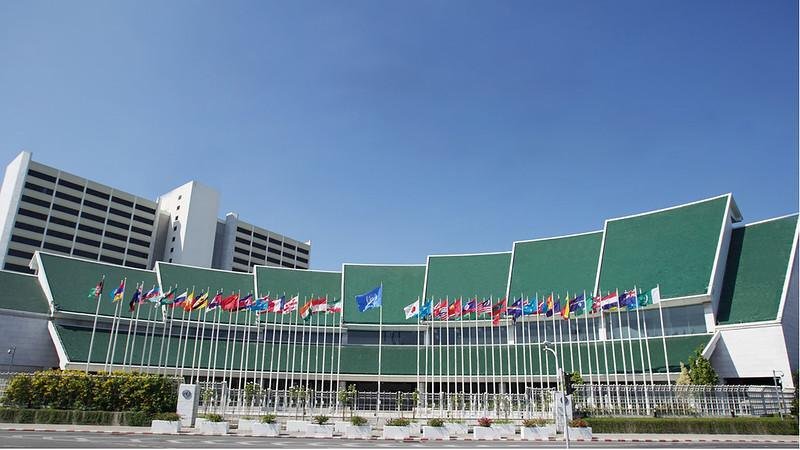
- Headquarters: Bangkok, Thailand.