Context
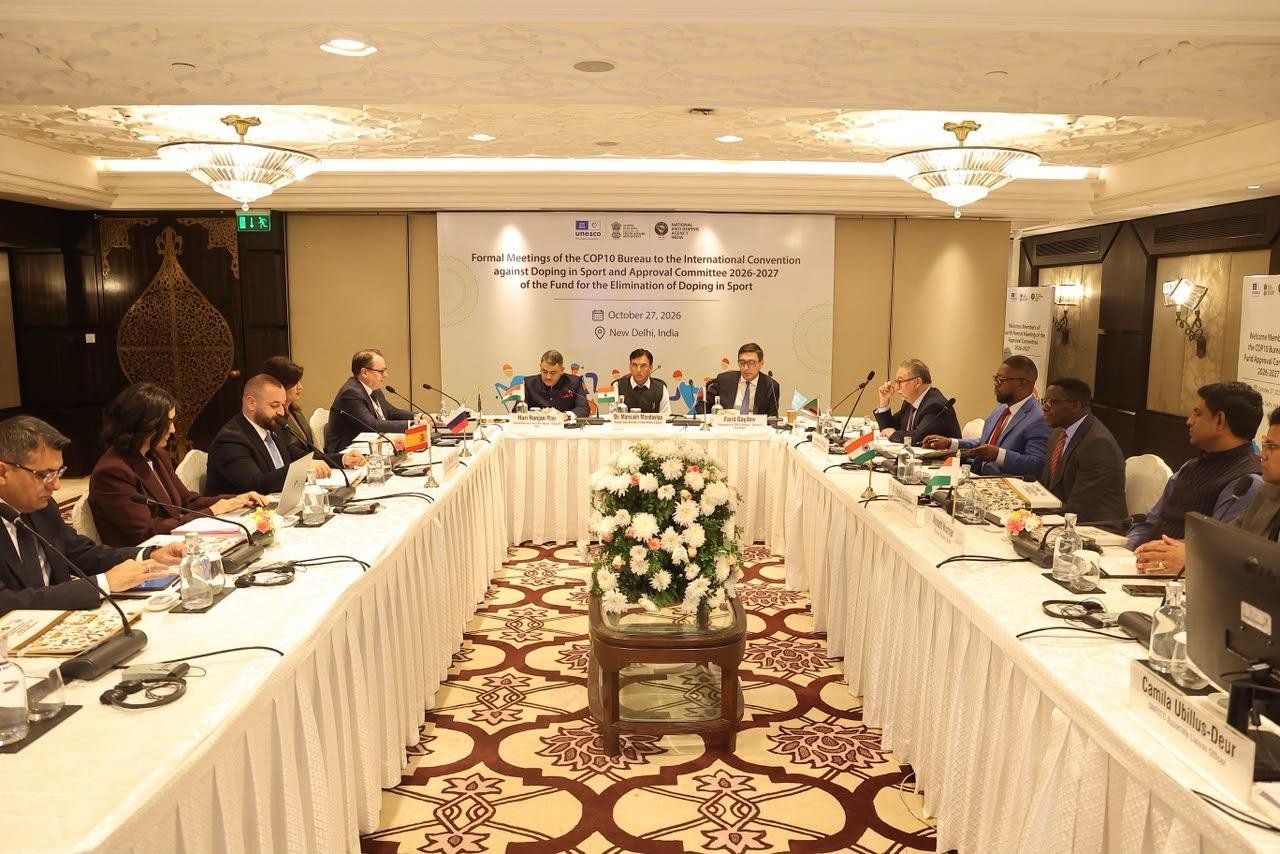
India hosted the third formal meeting of the COP10 Bureau and the fourth formal meeting of the Fund Approval Committee for 2026–27 in New Delhi. India currently represents the Asia-Pacific Group (Group IV) as Vice-Chairperson of the COP10 Bureau for 2025–27.
International Convention against Doping in Sport
- UNESCO treaty: Adopted on 19 October 2005 and in force since 1 February 2007, it is the only legally binding global treaty specifically devoted to combating doping in sport.
- Wide membership: With 192 States Parties, it is UNESCO’s second most ratified treaty, providing a broad governmental framework for international anti-doping cooperation.
- Core objective: It seeks to harmonise anti-doping laws, policies and regulations, helping create more consistent standards for fair and safe sporting competition.
- India: India ratified the Convention on 7 November 2007, formally joining the international anti-doping framework.
How the Convention Strengthens Anti-Doping Action
- Link with WADA: The Convention enables governments to support the principles of the World Anti-Doping Code, connecting State policy with internationally accepted sporting rules.
- National implementation: States undertake measures relating to anti-doping education, research, control of prohibited substances and cooperation with anti-doping organisations, translating treaty commitments into domestic action.
- Compliance monitoring: UNESCO monitors implementation by States Parties, helping identify institutional and policy gaps that require corrective action.
- Common standards: The WADA Prohibited List and Therapeutic Use Exemption standards are linked with the Convention, helping maintain consistency in global anti-doping rules.
Governance and Funding
- Conference of Parties (COP): The COP is the Convention’s sovereign decision-making body and meets every two years to review implementation and determine future priorities.
- COP Bureau: It supports the work of the COP between sessions and includes representatives from UNESCO’s geographical groups; India serves as a Vice-Chairperson for Group IV during 2025–27.
- Fund for the Elimination of Doping in Sport: Established in 2008, it supports States Parties through education, policy advice, mentoring and capacity-building, particularly where implementation capacity is limited.
- Approval Committee: A six-member committee representing different geographical groups evaluates proposals and allocates Fund resources for approved anti-doping projects.
India’s Role and Relevance
- Global participation: India’s Bureau position gives it direct involvement in discussions on compliance, financing and capacity-building within international anti-doping governance.
- Domestic legal framework: The National Anti-Doping Act, 2022, strengthened through the 2025 amendment, provides the statutory basis for India’s anti-doping system and aligns it with international obligations.
- Implementation focus: The 2026 New Delhi meetings discussed resource mobilisation, compliance, capacity-building and the Fund’s 2026–31 Operational Strategy, emphasising practical implementation of the Convention.
- Sporting integrity: India’s engagement with UNESCO, WADA and other States strengthens cooperation on fair competition, athlete protection and clean sport.
FAQs
Q1. What is the International Convention against Doping in Sport?
It is a UNESCO treaty requiring States to adopt measures to prevent and eliminate doping in sport.
Q2. When did the Convention enter into force?
It entered into force on 1 February 2007.
Q3. What is the Conference of Parties?
The COP is the sovereign decision-making body of the Convention.
Q4. What is India’s present role under the Convention?
India serves as Vice-Chairperson of the COP10 Bureau for Group IV (Asia-Pacific) for 2025–27.
Q5. What does the Fund for the Elimination of Doping in Sport support?
It supports education, policy advice, mentoring and anti-doping capacity-building.