Context
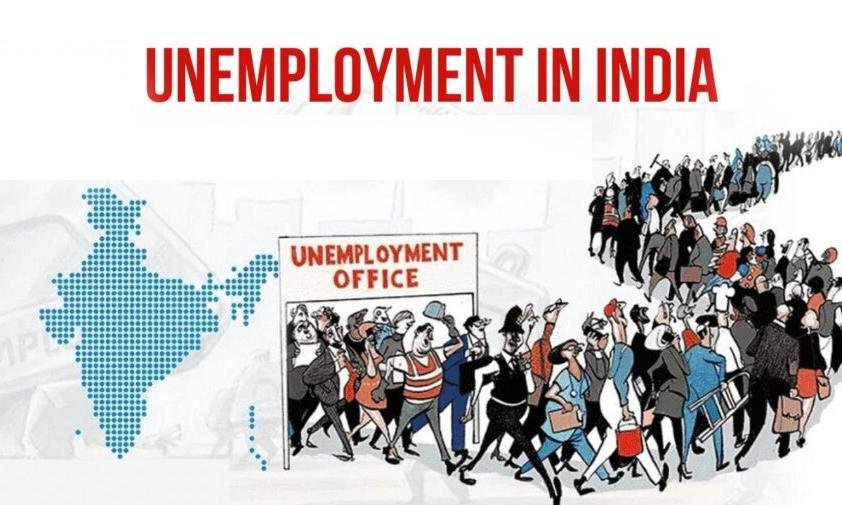
India’s unemployment rate fell to 5% in August 2026 from 5.1% in July, reaching a six-month low, according to the Monthly Periodic Labour Force Survey (PLFS). Urban unemployment remained higher than rural unemployment, while the gender gap stood at about 0.2 percentage points.
Key Factors Affecting Employment
- Economic cycles: Slow growth or weak demand can reduce production and hiring, increasing job losses.
- Skill mismatch: Limited industry-relevant skills can prevent workers from accessing available jobs.
- Technological change: AI and automation can replace some routine tasks while creating demand for new skills.
- Agriculture dependence: A large share of workers, particularly women, remains concentrated in agriculture, limiting movement towards higher-productivity sectors.
- Low female participation: Care work, workplace conditions and limited employment opportunities can constrain women’s participation in the labour market.
- Global disruptions: Geopolitical tensions and supply-chain disruptions can affect investment, production and labour demand.
Government Initiatives
- Employment Linked Incentive (ELI) Scheme: Promotes formal job creation through EPFO-linked incentives.
- First-time employees: Up to ₹15,000 (one month’s wage) through DBT in three instalments.
- Employee support: EPFO-linked incentives for both employees and employers during the first four years.
- Employers: Up to ₹3,000/month for two years for each additional employee.
- Pradhan Mantri Kaushal Vikas Yojana (PMKVY): Provides industry-oriented skill training to improve youth employability.
- Rural Employment: The Viksit Bharat–Guarantee for Rozgar and Ajeevika Mission (Gramin) provides up to 125 days of employment to strengthen rural livelihoods.
- Agriculture Entrepreneurship: The Agriculture Accelerator Programme promotes agri-start-ups, innovation and rural enterprises.
- Rural Self-Employment Training Institutes (RSETIs): Provide training and support for self-employment and entrepreneurship among rural youth.
- Manufacturing and Investment: Free Trade Agreements (FTAs), Make in India and the PLI Scheme promote exports, domestic production, investment and employment generation.
Significance
- Formal Employment: EPFO-linked incentives promote formal job creation and labour-market participation.
- Skill Development: Skill programmes improve employability and reduce industry–skill gaps.
- Rural Diversification: Entrepreneurship and self-employment create non-farm livelihood opportunities.
- Manufacturing Jobs: PLI and Make in India can link higher production with employment generation.
- Women’s Participation: Reduced gender disparity in unemployment can support greater female workforce participation.
Way Forward
- Industry-Linked Skills: Align training with emerging sectors such as AI, electronics, manufacturing and green technologies.
- Job-Rich Growth: Promote sectors with high potential for large-scale employment generation.
- Training-to-Jobs: Strengthen apprenticeships and industry partnerships to improve job placement.
- Women’s Employment: Ensure safe workplaces, childcare support and flexible work to increase female participation.
- Rural Non-Farm Jobs: Expand rural enterprises and entrepreneurship to diversify employment beyond agriculture.
- Policy Convergence: Integrate trade, manufacturing and investment policies to translate economic growth into sustained jobs.
FAQs
Q1. How does the ELI Scheme promote employment?
Ans. The Employment Linked Incentive Scheme encourages formal job creation through EPFO-linked incentives for eligible employees and employers.
Q2. How can manufacturing contribute to employment generation?
Ans. Make in India and PLI can increase production and investment, creating direct and indirect employment opportunities.
Q3. What measures can strengthen employment generation in India?
Ans. Greater focus is needed on industry-linked skills, job-rich sectors, women’s employment, rural non-farm jobs and apprenticeships.