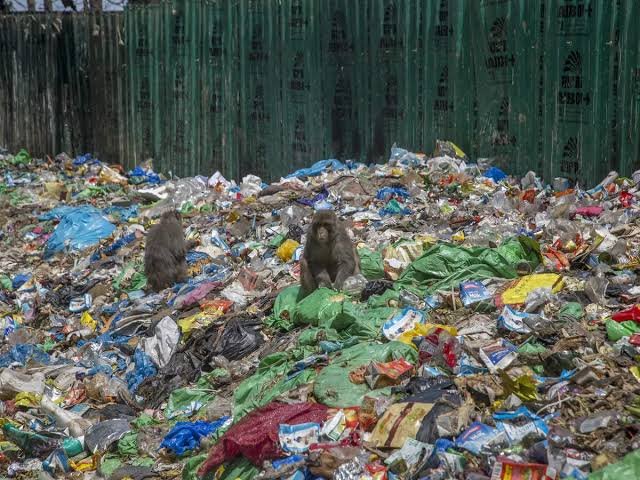
India generates around 26,000 tonnes of plastic waste daily, while inadequate waste management poses risks to human health, biodiversity, soil, water and climate, highlighting the need to strengthen waste segregation, recycling and circular-economy practices.
Global and India’s Plastic Waste Trends
- Global plastic consumption doubled between 2000 and 2019, with production reaching about 460 million tonnes and plastic waste around 353 million tonnes, according to the OECD Global Plastics Outlook 2025.
- Packaging is the largest source of plastic waste (40%), followed by consumer goods (12%) and textiles (11%).
- Only about 9% of plastic waste is recycled globally; 19% is incinerated, nearly 50% goes to landfills and around 22% escapes formal waste-management systems.
- Global plastic production could reach 1.2 billion tonnes by 2060, nearly three times current levels.
- India accounts for nearly 7% of global plastic use and generates about 9.5 million tonnes of plastic waste annually.
Environmental and Health Impacts
- Microplastics: Plastics can break down into particles below 5 mm, which may enter food, water and air.
- Human Health: Microplastic exposure raises concerns over cardiovascular, neurological and reproductive health.
- Ecosystems and Biodiversity: Plastic pollution threatens marine life, wildlife and habitats through ingestion and entanglement, as seen in areas such as the Great Pacific Garbage Patch.
- Soil and Water: Plastic accumulation can degrade soil quality and alter aquatic conditions, including dissolved oxygen levels.
- Climate Change: Plastic production and waste incineration generate greenhouse-gas emissions.
India’s Measures
- Regulatory Framework
- Plastic Waste Management Rules, 2021 prohibited several Single-Use Plastics (SUPs), including specified thin plastic bags, plastic-stemmed earbuds, balloon/candy/ice-cream sticks, thermocol decoration items, disposable plastic crockery, certain packaging films and PVC banners below 100 microns.
- Extended Producer Responsibility (EPR) makes producers responsible for the collection, segregation and recycling of plastic packaging waste, with the framework strengthened through subsequent amendments.
- Plastic Waste Management Rules, 2025 introduced category-wise recycling targets, including 30% for rigid plastic packaging (rising to 60% by 2029), 10% for flexible plastic (20% by 2029) and 10% for multi-layered plastic by 2029.
- Institutional and Consumer Measures
- Central Pollution Control Board (CPCB) oversees certification and labelling of biodegradable plastics, while State Pollution Control Boards (SPCBs)/Pollution Control Committees can act against producers of banned plastic items.
- Petrochemical industries have been directed to restrict raw-material supply for prohibited plastic products; environmental compensation can be imposed under the Environment (Protection) Act, 1986.
- The National Action for Mechanised Sanitation Ecosystem (NAMASTE) promotes safer and more formal waste-management systems for sanitation and waste workers.
- The Advertising Standards Council of India (ASCI) requires evidence for environmental claims, while the Consumer Protection Act, 2019 addresses deceptive greenwashing claims.
- Technological and Research Initiatives
- Indian Institute of Science (IISc) researchers have developed a hydrogel-based method for removing microplastics from water.
- Research on plastic-degrading bacteria and hydrogen extraction from plastic waste offers potential pathways for biological recycling and waste-to-energy applications.
Key Challenges
- Persistent Pollution: Conventional plastics are difficult to biodegrade, while weak collection, segregation and recycling systems allow large volumes to escape formal management.
- Economic Dependence: Plastic production is closely linked to the petrochemical industry, making rapid production cuts economically difficult, particularly for developing countries.
- Unequal Capacity: Developing countries and Small Island Developing States (SIDS) often face limited financial and institutional capacity to manage plastic waste.
- Global Policy Divide: UNEP negotiations on a legally binding global agreement face differences over plastic production phase-out versus gradual phase-down.
- Low Recycling Capacity: Limited recycling infrastructure, collection and segregation results in a large share of plastic waste remaining unrecycled or outside formal waste-management systems.
Way Forward
- Promote Circular Economy: Shift from “produce-use-dispose” towards reuse, repair, recycling and resource recovery through better product design and procurement.
- Improve Waste Management: Strengthen waste segregation, collection and recycling while promoting responsible disposal.
- Promote Safe Innovation: Support plastic-degrading microorganisms, enzymes and waste-to-energy technologies, including hydrogen recovery, where environmentally viable.
- Encourage Public Participation: Promote reduced plastic consumption, segregation and reuse through behavioural-change campaigns.
- Adopt Global Best Practices: Learn from zero-waste models and effective single-use plastic restrictions.
- Strengthen International Cooperation: Build a coordinated global framework balancing environmental protection, technology and developmental needs.
FAQs
Q1. What are microplastics?
Ans. Microplastics are plastic particles smaller than 5 mm, formed by plastic breakdown and capable of entering air, water and food chains.
Q2. What is Extended Producer Responsibility (EPR)?
Ans. EPR makes producers responsible for managing the post-consumer waste generated by their products. In plastic management, it covers activities such as collection, segregation and recycling.
Q3. What is greenwashing?
Ans. Greenwashing refers to misleading environmental claims that portray a product or company as more environmentally friendly than it actually is.
Q4. What are the major sources of global plastic waste?
Ans. Packaging is the largest source, accounting for about 40%, followed by consumer goods at 12% and textiles at 11%.