Context
In January 2026, the Ministry of Education released new works in Classical Indian Languages, including a Tirukkural series in Indian Sign Language prepared by the Central Institute of Classical Tamil. The initiative renewed attention to the Tirukkural as a major work of Classical Tamil ethical and philosophical literature.
Literary Profile and Structure
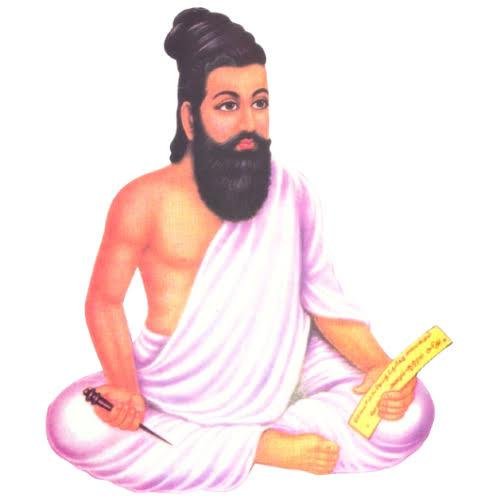
- The Tirukkural is traditionally attributed to the Tamil poet-philosopher Tiruvalluvar.
- Its exact date is debated; it is generally associated with the late Sangam/post-Sangam literary tradition.
- It forms part of the Pathinenkilkanakku, or Eighteen Lesser Texts, a group of mainly didactic works.
- The text contains 1,330 couplets arranged in 133 chapters, with ten couplets in each chapter.
- Each couplet is composed in Kural Venba metre, with four metrical feet in the first line and three in the second.
Three Books of the Tirukkural
- Aram – Virtue: 38 chapters on righteous conduct, family life, compassion and self-discipline.
- Porul – Wealth/Polity: 70 chapters on kingship, administration, justice, diplomacy, friendship and economic life.
- Inbam/Kamam – Love: 25 chapters on love, union, separation and emotional relationships.
- Together, the three books cover individual conduct, public life and personal relationships.
Ethical and Political Ideas
- Moral conduct: Tiruvalluvar stresses truthfulness, compassion, gratitude, restraint and non-violence as essential virtues.
- Good governance: Porul discusses the qualities of rulers and ministers, justice, defence, diplomacy and responsible administration.
- Social responsibility: The text values friendship, hospitality, family duties and humane treatment of others.
- Universal ethics: Although the opening chapter, Kadavul Vazhthu (Praise of God), invokes the divine, much of the work expresses ethical ideas in broadly universal terms.
- The text therefore links personal virtue with responsible social and political life.
Historical and Literary Significance
- The Tirukkural is a major work of Tamil didactic literature and an important source for understanding early Tamil ethical and political thought.
- Its treatment of virtue, governance, economy and love gives it a wider scope than a purely religious or literary text.
- Its concise poetic form encouraged an extensive commentary tradition, including the influential commentary of Parimelazhagar.
- Its continued translation and adaptation, including into Indian Sign Language, demonstrate its enduring cultural relevance.
FAQs
Q1. Who is traditionally regarded as the author of the Tirukkural?
Tiruvalluvar.
Q2. How many couplets does the Tirukkural contain?
1,330 couplets in 133 chapters.
Q3. What are its three major divisions?
Aram, Porul and Inbam/Kamam.
Q4. Which literary group does the Tirukkural belong to?
The Pathinenkilkanakku, or Eighteen Lesser Texts.
Q5. What poetic metre is used in the Tirukkural?
The Kural Venba metre.