Context
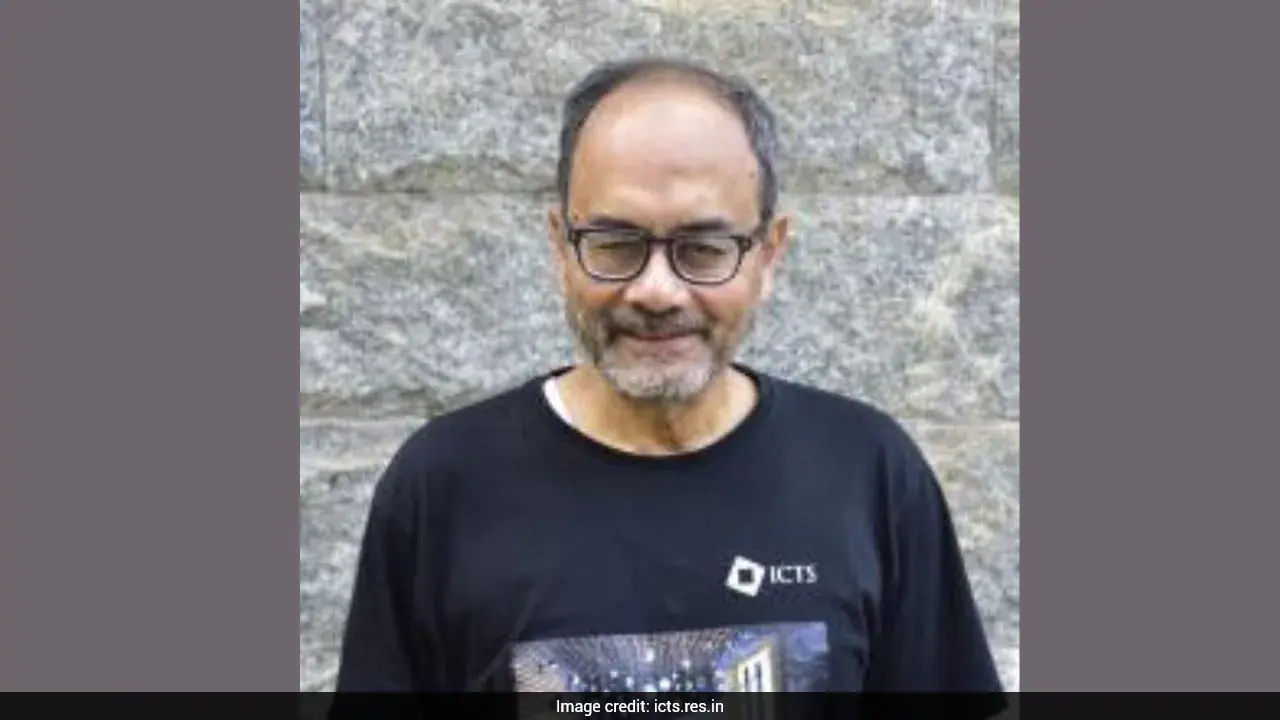
Indian theoretical physicist Professor Ashoke Sen received the 2026 Oskar Klein Medal, becoming the first Indian physicist to receive the honour. He delivered the memorial lecture “Gravity from Strings and Strings from Gravity” at Stockholm University on 22 October 2026.
About the Oskar Klein Medal
- Established in 1988, the Oskar Klein Medal honours Swedish theoretical physicist Oskar Klein and recognises distinguished contributions to fundamental physics.
- It is awarded annually through Stockholm University, in association with the Nobel Committee for Physics of the Royal Swedish Academy of Sciences.
- The award is associated especially with major advances in theoretical physics, cosmology and quantum theory.
- The recipient receives the Oskar Klein Medal and is invited to deliver the annual Oskar Klein Memorial Lecture at Stockholm University.
- The lecture provides a platform to present important developments in fundamental physics to the international academic community.
- No fixed cash prize is given for the award.
- Earlier recipients include eminent physicists such as Chen-Ning Yang, Steven Weinberg and Hans Bethe.
About Professor Ashoke Sen
- Ashoke Sen is an ICTS-Infosys Madhava Chair Professor at the International Centre for Theoretical Sciences (ICTS-TIFR), Bengaluru.
- He is internationally known for his research in string theory and quantum gravity.
- His work has explored deeper mathematical connections among different formulations of string theory and the quantum properties of black holes.
What is String Theory?
- String theory proposes that the fundamental constituents of nature are extremely small one-dimensional strings, rather than point-like particles.
- Different vibration patterns of these strings can appear as different elementary particles.
- It seeks to provide a common framework for quantum mechanics and gravity, two theories that successfully describe very different physical scales.
- It is therefore regarded as one of the leading theoretical frameworks for developing a quantum description of gravity.
- However, string theory remains a theoretical framework and has not yet received direct experimental confirmation.
Applications of String Theory
- Quantum gravity: Helps study gravity at extremely small scales where quantum theory and general relativity are difficult to combine.
- Black-hole physics: Supports study of the microscopic origin of black-hole entropy and other quantum properties.
- Early universe: Provides models for conditions in the very early universe, where both quantum effects and strong gravity were important.
- Unification of forces: Explores whether different particles and interactions can emerge from a single underlying framework.
- Mathematics: Has generated important ideas in geometry, topology and related areas of advanced mathematics.
Major Scientific Contributions of Ashoke Sen
- S-duality: Showed that strong- and weak-coupling descriptions can represent the same underlying physics.
- Black-hole entropy: Advanced the microscopic counting of black-hole entropy, strengthening quantum understanding of black holes.
- String field theory: Made major contributions to explaining the interactions and dynamics of strings.
- Collectively, his work helped reveal deeper connections and unifying structures within string theory.
FAQs
Q1. Who became the first Indian physicist to receive the Oskar Klein Medal?
Professor Ashoke Sen in 2026.
Q2. Which institution is Ashoke Sen associated with?
ICTS-TIFR, Bengaluru.
Q3. What does the Oskar Klein award include?
The Oskar Klein Medal and an invitation to deliver the annual Oskar Klein Memorial Lecture.
Q4. What is Ashoke Sen best known for?
His contributions to string theory, S-duality and black-hole physics.
Q5. What is the basic aim of string theory?
To provide a possible framework for combining quantum mechanics with gravity.