Context
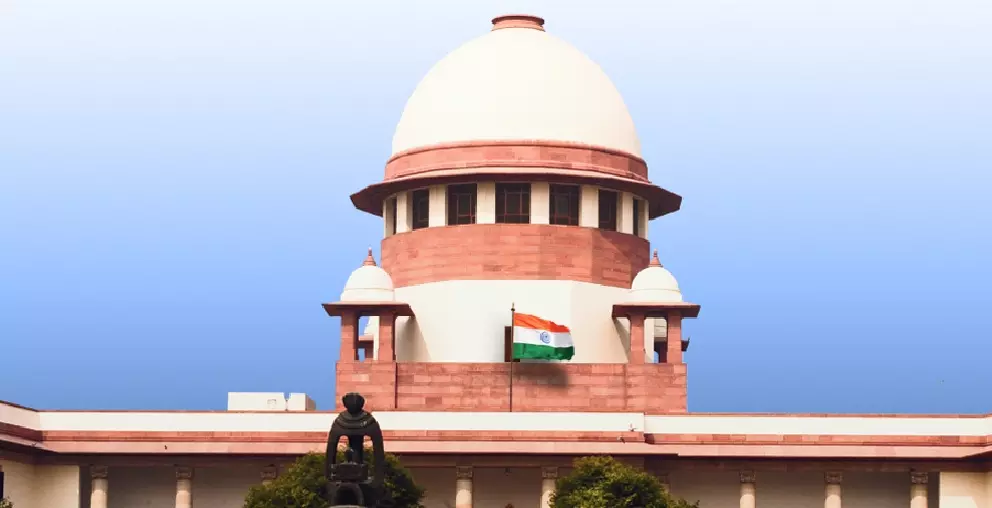
The Supreme Court is reviewing petitions challenging Ministry of Home Affairs orders mandating the performance of all six stanzas of Vande Mataram. The legal challenge focuses on the balance between national honour laws and protecting religious exemptions from punitive action.
Historical Evolution: From Freedom Slogan to Legal Mandate
The legal battle over the National Song involves a complex history spanning the freedom struggle, post-independence consensus, and recent legislative shifts:
- Literary Origins & Freedom Struggle
- Nineteenth-Century Roots: Bankim Chandra Chatterjee composed Vande Mataram in the 1870s, later incorporating it into his 1882 political novel Anandamath.
- Independence Movement Slogan: The song transformed into a powerful rally cry and anthem of resistance against British colonial rule during the early 20th century.
- The Two-Stanza Consensus
- The 1937 Resolution: The Congress Working Committee formally adopted only the first two stanzas for public functions.
- Constituent Assembly Declaration: On 24 January 1950, President Dr. Rajendra Prasad declared Vande Mataram the National Song, granting it equal status and honour with the National Anthem, Jana Gana Mana.
- 75-Year Practice: For seven decades following independence, state protocol and official ceremonies adhered strictly to rendering only the first two stanzas.
- The 2026 Policy and Legal Shift
- The Twin Mandates: The Ministry of Home Affairs order mandated singing all six stanzas before the National Anthem at designated events, followed by a July 2026 order formalising the official performance rules.
- Criminalization of Disrespect: Parliament passed the Prevention of Insults to National Honour (Amendment) Act, 2026, expanding Section 3 of the original 1971 law to apply criminal penalties for disrespecting the National Song.
The Core Constitutional Challenges
- Violation of Religious Freedom (Article 25): Petitioners, including prominent cultural figures like M. Krishna, argue that the last four stanzas contain explicitly devotional invocations to Hindu deities (such as Durga and Lakshmi). Compelling citizens to sing them amounts to forced religious expression.
- Right to Equality (Articles 14 & 15): The petitions state that prescribing a composition with specific religious imagery places non-adhering citizens at a structural disadvantage, facing criminal penalties for their faith.
- The Right to Silence (Article 19(1)(a)): Legal counsel asserts that the fundamental right to freedom of speech inherently protects a citizen’s right to remain silent and not articulate words that violate their conscience.
- Deficit of Executive Authority: Petitioners argue the Ministry of Home Affairs lacks the constitutional authority to unilaterally alter a 75-year-old protocol, as the specific layout of the National Song was never dictated by an Act of Parliament.
- Coerced Patriotism: The pleas contend that citizens should not be forced into a “ceremony of assent” to prove their loyalty to the nation through mandatory singing.
The Government’s Defensive Stance
- Honouring a Historical Milestone: The Union government frames the orders as a unified way to celebrate the 150th year of the song’s composition, ensuring it is preserved consistently across official events.
- Standardisation of National Protocol: A fixed legal code ensures order and solemnity during state functions, eliminating confusion regarding how national symbols are treated.
- Limited Scope of Punishment: The government maintain that the Prevention of Insults to National Honour (Amendment) Act, 2026 is designed to penalise acts of deliberate disrespect, rather than targeting silent, respectful non-participation.
- Historical Safeguards Shielding Citizens: The Supreme Court has noted that the landmark Bijoe Emmanuel v. State of Kerala (1986) precedent—which protected students who respectfully remained silent during the National Anthem—will serve as the binding benchmark to prevent penal action against conscientious objectors
Way Forward
- Parliamentary Open Debate: Any permanent standardization of the National Song should be decided through open debate in Parliament rather than unilateral Ministry directives.
- Protecting Conscientious Silence: In line with the Bijoe Emmanuel precedent, citizens who abstain from singing due to religious beliefs must be protected from punishment, provided they stand respectfully.
- Preventing Legal Misuse: The Supreme Court needs to explicitly define what constitutes “deliberate disrespect” to prevent local authorities from misinterpreting the 2026 amendment.
- Education Over Coercion: Schools should prioritize historical literacy—teaching why different stanzas were chosen—instead of enforcing mandatory performance under legal threat.
- Final Judgment Awaited: While the Supreme Court has protected religious exemptions during hearings, a binding constitutional ruling on the validity of the 2026 orders remains pending.
FAQs
Q1. Who composed Vande Mataram?
Ans: Vande Mataram is a patriotic song written by Bankim Chandra Chatterjee that inspired many people in the freedom movement. India’s Constituent Assembly gave it equal honour with the National Anthem and it is called the National Song.
Q2. Why were only two stanzas used earlier?
Ans: In 1937, the first two stanzas were chosen because they praise the motherland’s beauty, while the later stanzas contain prayers to Hindu goddesses. This choice kept the song acceptable to people of all faiths.
Q3. What is the Bijoe Emmanuel case?
Ans: In this 1986 case, the Supreme Court ruled that children who did not sing the National Anthem because of their religion could not be punished, since they stood respectfully. The Court said that freedom of speech includes the freedom to remain silent.
Q4. What is judicial review?
Ans: Judicial review is the power of courts to check whether laws and government orders follow the Constitution. If they do not, courts can declare them invalid.