Context
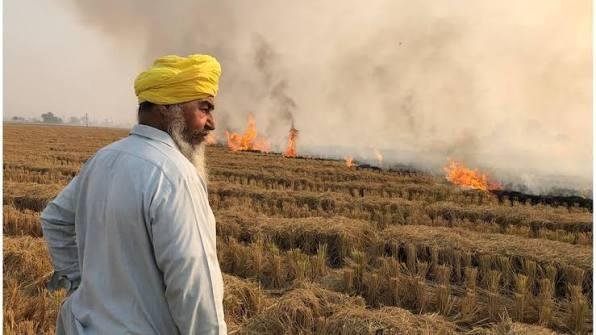
- Stubble burning remains a major concern during the post-monsoon season, when smoke from agricultural fires can worsen air pollution across North India, including Delhi.
- However, the practice cannot be understood merely as farmers choosing to burn crop residue. It is linked to the cropping cycle, groundwater-conservation policies, the cost of machinery, assured procurement and the availability of alternatives.
- The central issue is a mismatch between agricultural incentives and environmental objectives: the existing system encourages water-intensive paddy cultivation, while farmers face considerable time and financial pressure to clear their fields before sowing wheat.
What is Stubble Burning?
- Stubble burning refers to setting fire to the straw, stalks and other crop residues left in agricultural fields after harvesting.
- Season: It is especially common from early October to late November in Punjab, Haryana and parts of Uttar Pradesh.
- Major Crop: Paddy is a principal source of the residue because combine harvesters leave substantial quantities of straw in the field.
- Scale: Punjab and Haryana together produce around 29 million tonnes of paddy straw, creating a major challenge for timely residue management.
How did the problem develop? – A Chronological Perspective.
- Late 1970s–1980s: Mechanised Harvesting: Combine harvesters became widespread in Punjab, leaving large quantities of crop residue in fields and increasing the need for quick and affordable disposal methods.
- 2000s: Groundwater Depletion: Intensive paddy cultivation increased groundwater extraction. A 2009 Nature study estimated that northwestern India lost around 109 cubic kilometres of groundwater between 2002 and 2008.
- 2009: Groundwater Conservation Law: Punjab enacted the Punjab Preservation of Sub-Soil Water Act, 2009, restricting early paddy transplantation to reduce groundwater depletion.
- Delayed Harvesting: The restrictions delayed paddy cultivation and harvesting until late October or early November, leaving farmers only 10–15 days to prepare fields for wheat sowing.
- Stubble Burning as a Quick Solution: Long-duration varieties like PUSA-44, combined harvesting methods and labour-intensive residue removal made stubble burning a quick and inexpensive option for farmers facing tight sowing deadlines.
Why Do Farmers Continue Growing Paddy and Wheat?
- Assured Procurement: Government procurement at MSP makes paddy and wheat relatively secure crops. During 2012–2024, around 87% of Punjab’s paddy and 70% of its wheat production was procured, compared with 37% and 30%, respectively, at the national level.
- Subsidised Electricity: Free electricity in Punjab and heavily subsidised electricity in Haryana reduces the cost of groundwater pumping, encouraging water-intensive paddy cultivation.
- Limited Alternatives: Alternative crops often lack assured buyers, adequate processing facilities and stable prices, making diversification financially risky.
- Established Cropping Pattern: Farmers continue the rice–wheat cycle because they have access to suitable machinery, established markets and familiar farming practices.
Why Is Stubble Burning a Concern?
- Human Health and Air Quality: Burning releases particulate matter, carbon monoxide and other pollutants, worsening smog and increasing respiratory and cardiovascular risks.
- Loss of Soil Fertility: It destroys nutrients such as nitrogen, phosphorus, potassium and sulphur, while reducing soil organic matter and harming beneficial soil organisms.
- Increased Agricultural Costs: Declining soil quality can increase dependence on chemical fertilisers, raising cultivation costs over time.
- Climate and Environmental Impacts: Burning releases greenhouse gases and black carbon, contributing to climate change and environmental degradation.
- Wastage of Resources: Crop residue that could be converted into compost, bioenergy or other useful products is instead burnt, resulting in the loss of valuable biomass.
Existing Solutions and Their Limitations
- In-Situ Management (Within the Field)
- Happy Seeder and Super Seeder: Manage paddy straw and enable wheat sowing without burning.
- Rotavators: Chop and mix crop residue into the soil, improving organic matter.
- Short-Duration Paddy Varieties: Mature earlier, providing more time for wheat sowing.
- Direct Seeding of Rice (DSR): Sows rice seeds directly, potentially reducing water use and changing the crop calendar.
- Limitations: Machinery is expensive, requires suitable tractors and may be unavailable during peak demand. Hiring costs and waiting periods particularly affect small farmers.
- Ex-Situ Management (Use Outside the Field)
- Bioenergy Production: Paddy straw can be used to produce bioethanol, compressed biogas (CBG) and biomass pellets.
- Industrial Use: Crop residue can serve as a raw material for suitable industries.
- Limitations: Collection, baling, transportation and processing increase costs (around ₹1,500–₹2,500 per acre). Uncertain demand, inadequate infrastructure and irregular biomass supplies further discourage adoption.
Government Response: Enforcement and Incentives
- Legal and Regulatory Measures
- NGT and Supreme Court: Issued directions to curb stubble burning, strengthen enforcement and encourage crop diversification.
- CAQM: Coordinates regional action through field monitoring, environmental compensation and measures against non-compliance.
- Monitoring During 2025
- CPCB: Deployed 31 flying squads across Punjab and Haryana to support CAQM’s monitoring.
- State Governments: Punjab deployed around 10,500 field functionaries, while Haryana appointed around 10,000 nodal officers to monitor crop burning.
- Punjab’s Approach: Focuses mainly on in-situ residue management through machinery such as Happy Seeders and Super Seeders.
- Haryana’s Approach
- Provides financial incentives to encourage alternatives to burning
- Additional incentives for panchayats performing well in preventing stubble burning.
Frequently Asked Questions (FAQs)
Q1. What is stubble burning, and when is it most common in North India?
Stubble burning is the burning of crop residues after harvesting. It is especially common from early October to late November in Punjab, Haryana and parts of Uttar Pradesh.
Q2. Why do farmers continue to burn paddy straw?
Tight sowing deadlines, high machinery costs, labour shortages and the need to prepare fields quickly before wheat sowing make burning a convenient, low-cost option.
Q3. What are the major environmental impacts of stubble burning?
It worsens air pollution, releases greenhouse gases and black carbon, reduces soil fertility, harms beneficial soil organisms and wastes biomass that could be used productively.
Q4. What are the major alternatives to stubble burning?
In-situ methods include Happy Seeders, Super Seeders and residue incorporation, while ex-situ options include bioethanol, compressed biogas, biomass pellets and industrial use of crop residue.