Context
On Teachers’ Day (5 September), national awards were presented to outstanding teachers, drawing attention to the crucial role of teachers in shaping India’s demographic dividend. It also renewed discussion on the gaps in India’s government school education system.
Why Government School Education Matters
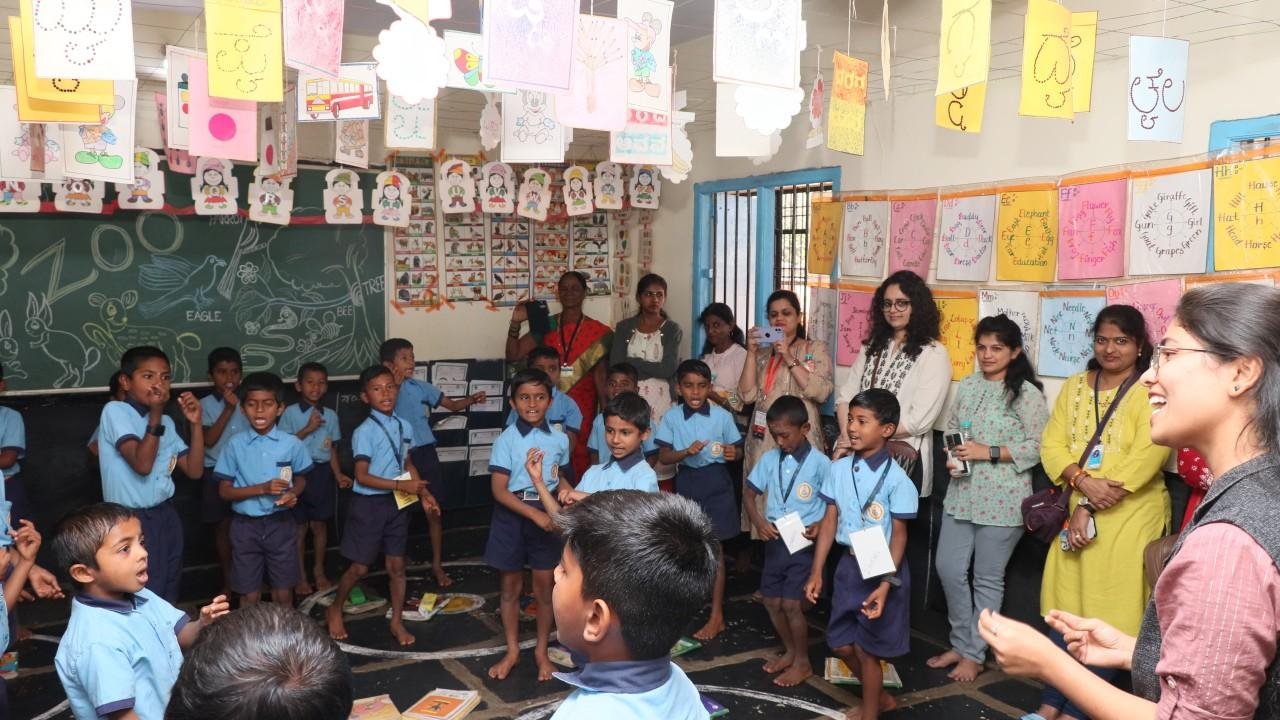
- Education is a tool of equality: Government schools serve children from diverse backgrounds, including poor households, rural communities and first-generation learners.
- Constitutional significance: Quality and accessible education helps realise equality of opportunity under Articles 14 and 15.
- Teachers as nation-builders: Teachers are not merely responsible for academic learning but also for developing values, skills, confidence and social responsibility among children.
Evolution of School Education in India
- Colonial period: British education policies promoted English education partly to create a limited educated workforce for administration and develop demand for British goods.
- Wood’s Despatch (1854): Established a more organised education system, including primary, secondary and higher education, with greater emphasis on English at higher levels.
- Hunter Commission (1882): Recommended greater attention to primary education, vernacular languages, vocational learning and women’s education.
- Wardha Scheme (1937): Gandhi promoted learning through productive activities and vocational education, along with compulsory elementary education.
- Kothari Commission (1964–66): Recommended the 10+2+3 system, neighbourhood schools, the three-language formula and public spending of 6% of GDP on education.
- National Education Policy (1968): Incorporated several recommendations of the Kothari Commission and became India’s first national education policy.
Present Status
- Access has improved: School enrolment and participation, particularly among girls, have increased significantly.
- However, quality, retention and infrastructure remain major concerns.
- The latest UDISE+ data highlights significant differences between states in areas such as Aadhaar coverage, enrolment and dropout rates.
- Dropouts: Preparatory and secondary-level dropouts remain high in several states, while the retention rate falls considerably by the time students reach Class 12.
- Digital divide: Many government schools still lack reliable internet connectivity and digital learning facilities.
Government Initiatives
- National Education Policy (NEP) 2020
- Introduces the 5+3+3+4 structure.
- Focuses on foundational literacy and numeracy.
- Promotes mother tongue/regional language in early education.
- Gives greater importance to vocational education and skill development.
- Introduces PARAKH to improve student assessment.
- National Professional Standards for Teachers (NPST): Seeks to establish professional standards and improve the quality and continuous development of teachers.
- PM SHRI Schools: Aims to develop 14,500+ model schools with better infrastructure, technology, skill-based learning and environmentally sustainable practices.
- Digital and innovative learning: Greater use of ICT, AI-based tools, virtual reality and smart classrooms can help bridge the quality gap between urban and rural schools.
Challenges and Way Forward
| Challenges | Way Forward |
| 1. Low public spending: Education spending remains below the 6% of GDP target recommended by the Kothari Commission. | 1. Increase investment: Move towards the 6% target, with greater focus on school infrastructure and basic facilities. |
| 2. Teacher shortage: Many schools have too few teachers, with some functioning with only one teacher for multiple classes. | 2. Fill vacancies: Ensure timely recruitment, better deployment and regular teacher training. |
| 3. Poor infrastructure: Lack of toilets, drinking water, electricity, digital facilities and accessible infrastructure affect learning. | 3. Improve facilities: Ensure every school has basic amenities, internet access and disability-friendly infrastructure. |
| 4. Rote learning: Excessive focus on memorisation weakens creativity, critical thinking and problem-solving. | 4. Competency-based learning: Focus on understanding, application, creativity and problem-solving rather than memorising facts. |
| 5. Weak teacher accountability: Irregular attendance, poor recruitment practices and ghost teachers reduce teaching quality. | 5. Strengthen accountability: Use transparent recruitment, regular performance assessment and effective monitoring. |
| 6. Social and regional disparities: Poor, rural and disadvantaged children often have less access to quality education. | 6. Targeted support: Provide scholarships, remedial learning and additional resources to disadvantaged regions and communities. |
| 7. Weak vocational focus: School education often has limited connection with practical skills and employment. | 7. Promote skill education: Integrate vocational training, career counselling and practical learning into school education. |
| 8. Digital divide: Many rural and remote schools lack adequate digital connectivity and technology. | 8. Use innovative solutions: Deploy mobile digital/AI/VR learning labs to reach schools where permanent infrastructure is difficult to establish. |
Conclusion
India’s challenge is no longer merely getting children into schools, but ensuring that they learn, remain in school and acquire the skills needed for a changing economy. Strengthening government schools is therefore essential for converting India’s demographic advantage into a genuine demographic dividend.
FAQs
Q1. Why are government schools important in India?
They provide education to children from poor, rural, and first‑generation learner backgrounds, ensuring equality of opportunity under the Constitution.
Q2. How has school education evolved historically?
From colonial policies and Wood’s Despatch (1854) to the Kothari Commission (1964–66) and NEP 1968, reforms shaped access, language policy, vocational focus, and structure.
Q3. What is the current status of government school education?
Access has improved, especially for girls, but dropout rates, retention, quality, and infrastructure remain major concerns, with a persistent digital divide.
Q4. What initiatives are being taken to improve schools?
NEP 2020 (5+3+3+4 structure, literacy focus, PARAKH), NPST (teacher standards), PM SHRI Schools (model schools), and ICT/AI‑based digital learning.