Context
Researchers have found that the cellophane bee (Colletes inaequalis) produces a natural plastic-like material to line its underground nests. This bee-made polyester is flexible, durable and, unlike conventional plastics, can degrade in natural soil within a year. The discovery may offer insights into developing environmentally friendly materials.
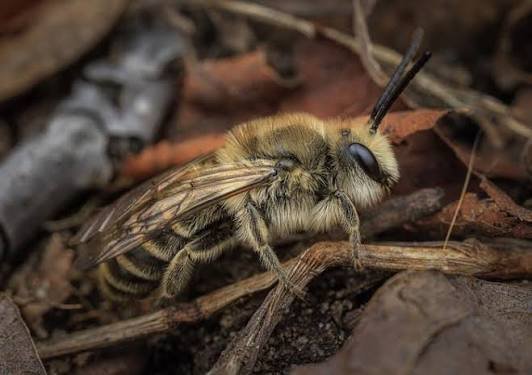
About Colletes inaequalis
- Family: Colletidae.
- Type: Solitary, ground-nesting bee.
- Pollination: Helps pollinate plants such as red maple, willow and apple trees.
- It is commonly called the cellophane bee because it produces a transparent, cellophane–like lining inside its underground nest.
Unique Nesting Capacity: Bee-Made Polyester
- Nest Lining: The bee lines the inner walls of its underground nest with a transparent, cellophane-like film. This lining is translucent, flexible and resilient.
- Composition: The film is made of a natural material containing polyester and silk.
- Production: It is produced by a specialised gland called the Dufour’s gland, which is connected to the bee’s stinger.
- Molecular Structure: The polyester produced by these bees resembles polyethylene in its molecular packing.
Key Findings of the Study
- Semicrystalline Structure: The bee-made polyester has a semicrystalline structure, meaning it contains both:
- Crystalline regions: More regularly arranged molecular structures.
- Amorphous regions: Less regularly arranged molecular structures.
- Rapid Degradation: Unlike conventional plastics, the nest lining breaks down naturally in soil within a relatively short period.
- Degradation in Soil: Within four months, the polyester lining’s share of the nest’s weight decreased from 73% to 40%. By seven months, visible cracks appeared in the lining. By 11 months, the material became brittle and started crumbling.
Significance
- Sustainable Materials: Provides insights into naturally produced polyester that can degrade in the environment.
- Plastic Alternatives: Studying its composition and structure may help researchers develop more environmentally friendly materials.
- Biomimicry: Demonstrates how natural biological processes can inspire solutions to human technological and environmental challenges.
Conclusion
The cellophane bee demonstrates how nature can produce materials that combine strength, flexibility and biodegradability. Studying its nest lining may provide useful insights for developing sustainable alternatives to conventional plastics.
Frequently Asked Questions (FAQs)
Q1. What is Colletes inaequalis?
Colletes inaequalis, commonly called the cellophane bee, is a solitary, ground-nesting bee belonging to the Colletidae family. It helps pollinate plants such as red maple, willow and apple trees.
Q2. Why is Colletes inaequalis called the cellophane bee?
It is called the cellophane bee because it produces a transparent, cellophane-like film to line the inner walls of its underground nest, providing a flexible and resilient protective covering.
Q3. How does the cellophane bee produce its natural polyester lining?
The bee produces the nest lining through a specialised gland called Dufour’s gland, connected to its stinger. The material contains natural polyester and silk and resembles polyethylene in molecular packing.
Q4. What makes bee-made polyester environmentally significant?
Unlike conventional plastics, the bee-made polyester can degrade naturally in soil. It develops cracks within seven months and becomes brittle and starts crumbling by approximately eleven months.