Context
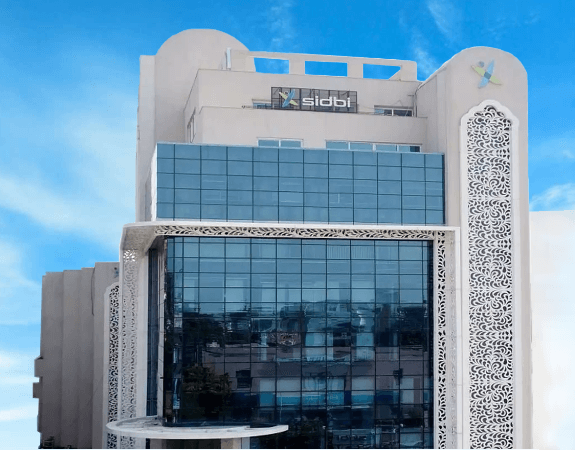
The Small Industries Development Bank of India (SIDBI) held a meeting of Heads of Regional Rural Banks (RRBs) in New Delhi to expand the SIDBI–RRB MSME Co-Lending arrangement and improve credit access for Micro, Small and Medium Enterprises (MSMEs).
About SIDBI
- Established: 2 April 1990 under an Act of Parliament (SIDBI Act, 1989).
- Headquarters: Lucknow, Uttar Pradesh.
- Regulatory Body: Regulated and supervised by the Reserve Bank of India (RBI) as one of the All-India Financial Institutions (AIFIs).
- Ownership: Originally a wholly-owned subsidiary of Industrial Development Bank of India (IDBI) and separated from it in 2000. It is now owned by the Government of India, public sector banks, and insurance companies such as LIC.
- Primary role: It is the principal financial institution for the promotion, financing and development of the MSME sector.
- It also coordinates the activities of institutions working in areas related to MSME development.
Key Functions
- Refinance support: Provides funds to banks and financial institutions for onward lending to MSMEs.
- Direct finance: Provides specialised funding for risk capital, sustainable finance, receivables financing, and the service sector.
- Supports entrepreneurship, technology adoption and MSME growth.
- Provides venture capital and technology-related assistance to eligible enterprises.
- SIDBI also administers the Small Industries Development Fund and National Equity Fund, which were earlier managed by IDBI.
Major SIDBI Schemes and Initiatives
- Fund of Funds for Startups (FFS): Managed by SIDBI to support startups through Alternative Investment Funds (AIFs).
- SIDBI Make in India Loan for Enterprises (SMILE): Provides soft and term loans to MSMEs for expansion, technology upgradation and meeting debt-equity needs.
- Modernization of Rural Enterprises (MoRE): Supports non-farm rural enterprises through cluster-based credit and modernisation assistance.
- SIDBI–RRB Co-Lending Platform: Connects SIDBI and Regional Rural Banks (RRBs) to improve MSME credit in rural and semi-urban areas.
- Micro Credit Card Scheme: Provides Udyam-registered micro enterprises with revolving credit of up to ₹5 lakh, with partial guarantee support.
- SIDBI MSME Exchange – Machinery Portal: Helps MSMEs identify machinery and access institutional finance for investment.
FAQs
Q1. What is the primary mandate of SIDBI?
Ans: Its core mandate is the promotion, financing and development of the MSME sector, along with coordination among related institutions.
Q2. Who regulates SIDBI?
Ans: SIDBI is regulated and supervised by the Reserve Bank of India (RBI) as an All-India Financial Institution (AIFI).
Q3. What is MSME co-lending by SIDBI and RRBs?
Ans: It is an arrangement to combine the lending capabilities of SIDBI and Regional Rural Banks to improve credit availability for MSMEs.
Q4. What is an All-India Financial Institution (AIFI)?
Ans: AIFIs are specialized financial entities regulated by the RBI to provide long-term credit to key sectors of the economy without accepting general public deposits.
Q5. What are Alternative Investment Funds (AIFs)?
Ans: AIFs are privately pooled investment vehicles that collect funds from high-net-worth individuals and institutions to invest in non-traditional asset classes like private equity, venture capital, and real estate. In India, they are regulated by the Securities and Exchange Board of India (SEBI) under the SEBI AIF Regulations.