Context
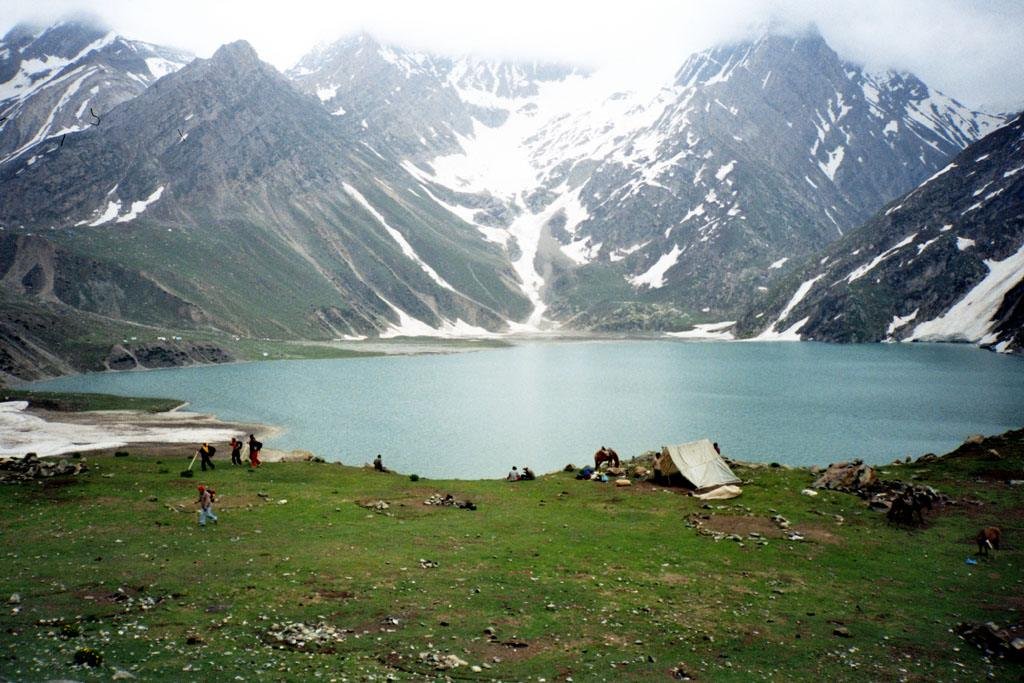
A video allegedly showing excavation near Sheshnag Lake in Anantnag, Jammu and Kashmir, has raised environmental and safety concerns, as the lake is classified as a high-risk glacial lake vulnerable to human disturbance.
About Sheshnag Lake
- Location: Situated near Pahalgam in Anantnag district, Jammu and Kashmir, along the Pahalgam–Chandanwari–Amarnath pilgrimage route.
- Altitude: Located at around 3,590 metres (11,780 feet) above sea level in the Great Himalayan range.
- Lake Type: An oligotrophic alpine lake—naturally low in nutrients, resulting in clear water and minimal algae growth.
- Water Source: Fed mainly by glacial meltwater and snowmelt from surrounding high mountains.
- Topography: Surrounded by steep slopes, loose moraine deposits (unconsolidated rock, gravel, sand, and soil), and the three peaks of Kunyirhayan.
- Drainage: Outflows toward the Lidder River system (specifically linked to the East Lidder drainage), part of the Jhelum River basin.
- Seasonal Behaviour: Remains frozen and snow-covered during winter and much of the year.
- Risk Classification: Identified among the 14 high-risk glacial lakes in Jammu and Kashmir for priority hazard monitoring.
Environmental Vulnerability & GLOF Risk
- Unstable Moraines: Loose glacial debris along steep slopes is prone to erosion, slope failure, and landslides.
- Climate Change: Faster glacial melt can alter lake water levels and increase downstream flood risk.
- Human Interference: Heavy machinery, excavation, debris dumping, and slope cutting can destabilise fragile mountain terrain and disrupt natural drainage.
- GLOF (Glacial Lake Outburst Flood) Risk: Sudden breach of natural moraine barriers—or water displacement from landslides or avalanches—can trigger a GLOF, threatening downstream valleys, settlements, and infrastructure.
FAQs
Q1. What is a Glacial Lake Outburst Flood (GLOF)?
Ans. The sudden release of water from a glacial lake due to the failure of natural barriers or displacement of water by landslides or avalanches.
Q2. Sheshnag Lake belongs to which river system?
Ans. The Jhelum River system, through the Lidder River.
Q3. What is an alpine lake?
Ans. A high-altitude mountain lake, often fed by snowmelt or glacial meltwater.