Context
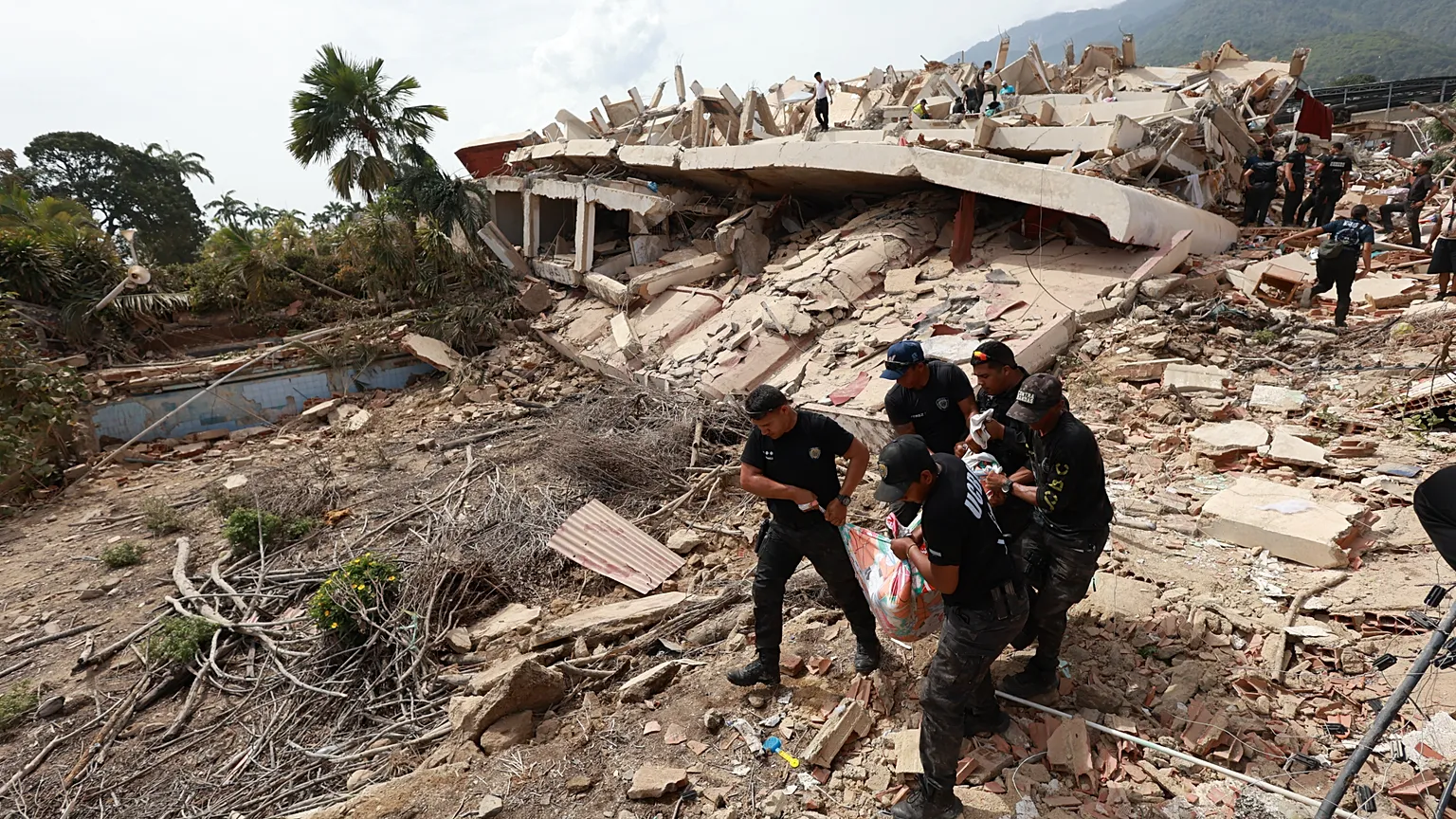
Venezuela was recently struck by two powerful earthquakes within 39 seconds, a rare seismic phenomenon known as a seismic doublet. Measuring 7.2 and 7.5 in magnitude, the earthquakes are estimated by the US Geological Survey (USGS) to be among the country’s deadliest natural disasters.
Earthquake Sequence
- A 7.2-magnitude foreshock occurred near San Felipe in Yaracuy State, about 160 km west of Caracas.
- Within 39 seconds, a 7.5-magnitude mainshock struck near Moron in Carabobo State.
- The second earthquake was the strongest recorded in Venezuela since 1900.
- According to the USGS, the event resulted from the interaction of closely related fault ruptures, giving rise to a seismic doublet.
Seismic Doublet
A seismic doublet is a sequence of two earthquakes of nearly equal magnitude that occur within a short time interval and close geographical proximity due to separate but closely linked fault ruptures. Unlike a typical earthquake sequence, neither event is simply an aftershock of the other.
Difference Between Seismic Doublets and Aftershocks
| Seismic Doublet | Aftershocks |
| Comprises two independent earthquakes of comparable magnitude. | Consists of smaller earthquakes following a mainshock. |
| Caused by separate but closely connected fault ruptures. | Caused by stress redistribution after the main earthquake. |
| Occurs within seconds, minutes or a few hours. | May continue for days, months or even years. |
| Produces repeated high-intensity shaking, increasing damage. | Generally, decline in frequency and magnitude over time.
|
Factors Contributing to High Destructiveness
- Shallow Focus
- The earthquakes originated at a depth of about 10 km, allowing seismic energy to reach the Earth’s surface with minimal loss.
- This generates intense surface shaking, resulting in severe damage to buildings and infrastructure.
- Consecutive Major Earthquakes
- Two strong earthquakes occurring within seconds significantly prolong the duration of severe ground motion.
- Structures weakened by the first event are immediately exposed to another powerful shock, increasing the risk of collapse, casualties and disruption of rescue operations.
Seismic Vulnerability of Venezuela
- Venezuela lies along the Caribbean Plate–South American Plate boundary, one of the most active tectonic regions in northern South America.
- Earthquakes in the region mainly occur due to strike-slip faulting, where tectonic plates slide horizontally past one another.
- The recent earthquakes were triggered by shallow strike-slip movement along this active plate boundary.
Major Types of Faults
- Normal Fault: Formed by extensional forces, causing the hanging wall to move downward.
- Reverse Fault: Formed by compressional forces, causing the hanging wall to move upward.
- Strike-slip Fault: Formed by horizontal displacement of rock masses along the fault plane.
Seismic History of Venezuela
- Venezuela has recorded nearly 1,000 earthquakes of magnitude 4.0 or above over the past decade.
- Before the 2026 event, the 1900 San Narciso earthquake (M 7.7) was the country’s strongest recorded earthquake.
- Although Venezuela lies outside the Pacific Ring of Fire, its location along an active tectonic boundary makes it highly susceptible to earthquakes.
Significance
- Highlights the exceptional destructive potential of seismic doublets.
- Improves understanding of earthquake generation and fault interactions.
- Strengthens scientific assessment of seismic hazards and disaster risk.
- Reinforces the importance of resilient infrastructure, early warning systems and disaster preparedness.
Conclusion
The Venezuela seismic doublet demonstrates how complex tectonic processes can intensify earthquake impacts. Strengthening seismic monitoring, promoting earthquake-resistant infrastructure and integrating disaster risk reduction into development planning are essential to reducing the human and economic costs of future seismic events.