Context
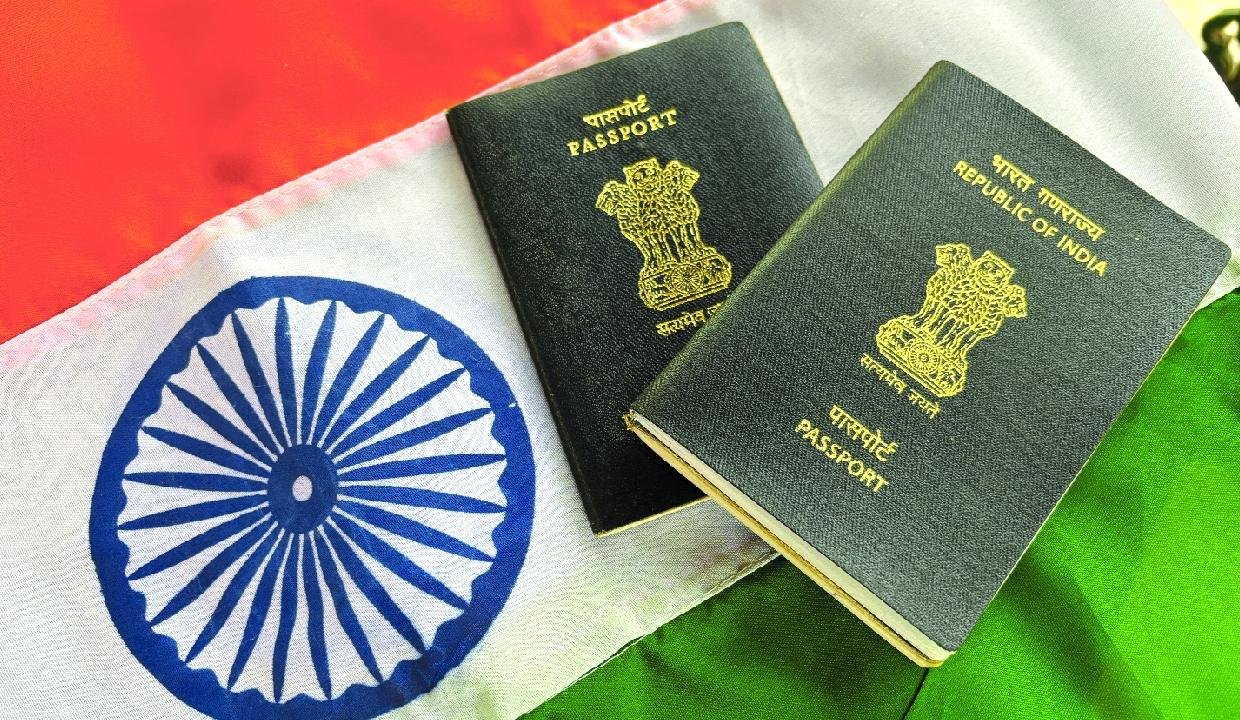
On Passport Seva Divas (24th June), the Ministry of External Affairs (MEA) clarified that an Indian passport is primarily a travel document and not conclusive proof of Indian citizenship. The clarification reaffirmed the legal distinction between citizenship as a legal status and documents that merely provide evidence of it.
Citizenship in India
- Legal Framework
- Articles 5–11 of the Constitution and the Citizenship Act, 1955 govern Indian citizenship.
- Citizenship is acquired through birth, descent, registration, naturalisation or incorporation of territory.
- It is a legal status determined by law, and no single document is recognised as definitive proof of citizenship.
- Government-issued documents provide evidence of citizenship but are not conclusive proof in law.
- MHA Clarification (2020)
- In a reply to Parliament, the Ministry of Home Affairs (MHA) clarified that Aadhaar, Passport, Voter ID, PAN Card and Birth Certificate are not legally designated as proof of citizenship.
- Citizenship is determined strictly in accordance with the Citizenship Act, 1955.
Legal Status of a Passport
- Passport as Evidence of Citizenship
- A passport is issued only after the government verifies an applicant’s eligibility for Indian citizenship.
- However, it neither confers citizenship nor serves as conclusive proof if, citizenship is disputed before a competent authority or court.
- Section 20 of the Passports Act, 1967
- Section 20 empowers the Central Government to issue passports or travel documents to non-citizens in exceptional circumstances where public interest so requires.
- The provision enables the government to facilitate international travel for specified categories of non-citizens, including certain stateless persons, Tibetan refugees and Sri Lankan Tamil refugees.
- Thus, a passport is fundamentally a travel document and not a certificate of citizenship.
International Practice and Judicial Interpretation
- International Practice
- Countries such as the United Kingdom and the United States issue passports only after verifying citizenship.
- They also maintain dedicated citizenship certificates and robust civil registration systems, making citizenship verification more streamlined.
- Judicial Interpretation
- During hearings on Bihar’s Special Intensive Revision (SIR) of electoral rolls, the Supreme Court observed that passports and birth certificates possess high evidentiary value but are not conclusive proof of citizenship.
Key Judicial Decisions
- Sarbananda Sonowal v. Union of India (2005): The burden of proving citizenship rests on the individual claiming it.
- State of Andhra Pradesh v. Abdul Khader (1962): A passport is relevant evidence, but citizenship must ultimately be determined on constitutional and statutory criteria.
- Bombay High Court (2013): Possession of documents alone is insufficient unless the legal requirements for citizenship are satisfied.
National Register of Indian Citizens (NRC)
- Legal Framework
The Citizenship Rules, 2003 provide for:
- A National Register of Indian Citizens (NRIC).
- National, State and Local Citizenship Registers.
- Issuance of citizenship identity cards.
- Aadhaar and NRC
- The MHA has consistently maintained that Aadhaar establishes identity and residence, not citizenship.
- The proposed NRC was envisaged to create an authenticated database of Indian citizens.
- Assam NRC Experience
- During the Assam NRC (2015–2019), applicants had to establish links with legacy records predating 24 March 1971.
- Nearly 19 lakh applicants were excluded due to missing records, documentary inconsistencies and difficulties in establishing family lineage.
- The proposal for a nationwide NRC later became politically contentious, particularly after the Citizenship (Amendment) Act (CAA).
Challenges and Way Forward
| Challenges | Way Forward |
| Absence of a universal citizenship document: Citizens by birth are not issued a dedicated citizenship certificate, unlike those acquiring citizenship through registration or naturalisation. | Strengthen civil registration: Ensure universal birth registration and strengthen the Civil Registration System to maintain reliable citizenship records. |
| Fragmented documentary evidence: Citizenship is established through multiple official records, increasing the possibility of inconsistencies and disputes. | Integrate identity and citizenship databases: Develop a secure and interoperable digital framework with adequate privacy and data protection safeguards. |
| Legacy documentation gaps: Many older citizens continue to rely on incomplete or inconsistent records due to historically uneven civil registration. | Modernise record management: Digitise and standardise legacy records to improve accessibility and minimise documentation gaps. |
| Verification challenges: Documentary inconsistencies complicate citizenship verification, as reflected during the Assam NRC exercise. | Adopt a transparent verification mechanism: Establish a fair, legally robust and uniform process that upholds due process and natural justice. |
| Institutional limitations: The absence of a comprehensive citizenship database can lead to administrative disputes and legal uncertainty. | Safeguard constitutional rights: Ensure that citizenship verification mechanisms uphold privacy, transparency, accountability and constitutional guarantees. |
Significance
- Reinforces the distinction between citizenship as a legal status and identity documents as supporting evidence.
- Highlights gaps in India’s citizenship documentation framework.
- Underscores the need for a transparent, reliable and rights-based citizenship verification mechanism.
Conclusion
The controversy highlights the need for a robust and transparent citizenship documentation framework. Strengthening civil registration, leveraging digital governance and ensuring fair verification mechanisms can improve administrative efficiency while upholding constitutional values and protecting the rights of genuine citizens.