Context
The Jharkhand High Court recently ruled that Santhal tribal daughters cannot be denied inheritance of their father’s property solely on the basis of customary practices, unless such restrictions are supported by reliable legal evidence.
About Santhal Tribe
- Population Rank: India’s third-largest ST (Scheduled Tribe) community, after the Bhils and Gonds, under traditional Census classifications.
- Geographic Spread: Concentrated in Jharkhand, West Bengal, Odisha, and Bihar, alongside smaller populations in Assam.
- Language: Speaks Santhali, part of the Munda branch of the Austroasiatic language family.
- Script: Uses Ol Chiki script, created by Pandit Raghunath Murmu in 1925.
- Eighth Schedule Status: Included in the Eighth Schedule of the Constitution of India via the 92nd Constitutional Amendment Act, 2003 (along with Bodo, Dogri, and Maithili).
Socio-Cultural Features
1. Religious Beliefs: Practises nature worship, reveres spirits known as Bongas, and holds rituals at sacred groves called Jaher Than.
2. Village Governance: Traditional council led by a Manjhi (village headman), assisted by a Naeke (village priest) and other elders.
3. Key Festivals:
- Sohrai: Major harvest festival honouring agriculture, cattle, and livestock.
- Baha: Spring festival celebrating blooming flowers, nature, and renewal.
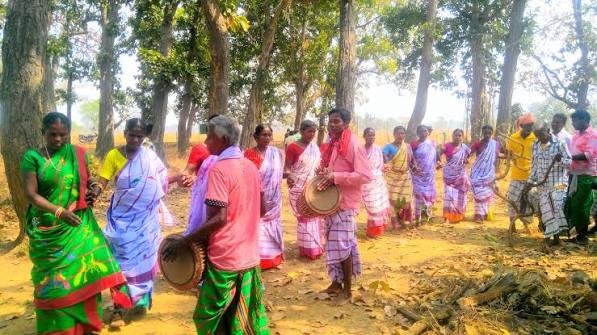
4. Arts & Performing Traditions: Features traditional community dances (Enej) and folk songs/music (Sereng) during festivals and gatherings.
5. Livelihood: Relies mainly on settled agriculture, supported by minor forest produce, animal husbandry, and seasonal wage work.
Historical Significance
- Santhal Hul (1855–56): Major tribal rebellion against British colonial rule, exploitative zamindars/moneylenders (Dikus), and harsh revenue/police practices.
- Key Leaders: Led by brothers Sidhu and Kanhu Murmu, alongside Chand, Bhairav, Phulo, and Jhano.
- Hul Diwas: Commemorated every year on 30 June to mark the launch of the 1855 uprising at Bhognadih in present-day Jharkhand.
FAQs
Q1. Where is the Santhal tribe mainly found?
Ans. Primarily in Jharkhand, West Bengal, Odisha and Bihar, with populations also in Assam.
Q2. Which constitutional amendment included Santhali in the Eighth Schedule?
Ans. 92nd Constitutional Amendment Act, 2003, along with Bodo, Dogri and Maithili.
Q3. What are the major festivals of the Santhal tribe?
Ans. Sohrai (harvest and cattle festival) and Baha (spring flower festival).