Context
- At the 81st United Nations General Assembly (UNGA) in New York, External Affairs Minister S. Jaishankar called for stronger multilateral cooperation amid geopolitical competition, conflicts and concerns over the effectiveness of existing mechanisms of international cooperation.
- He co-chaired the inaugural Partners for Multilateralism, International Law, Peace & Prosperity (P4M) Summit with European Council President Antonio Costa.
- India’s position is rooted in the need to align global institutions with the changing distribution of economic and geopolitical power.
Reformed Multilateralism
- Reformed multilateralism seeks to make global institutions more representative, participatory and transparent.
- Its principal elements include:
- Wider participation in international decision-making.
- Greater representation of contemporary global realities.
- Transparent and inclusive deliberations.
- Respect for international law, rules and norms.
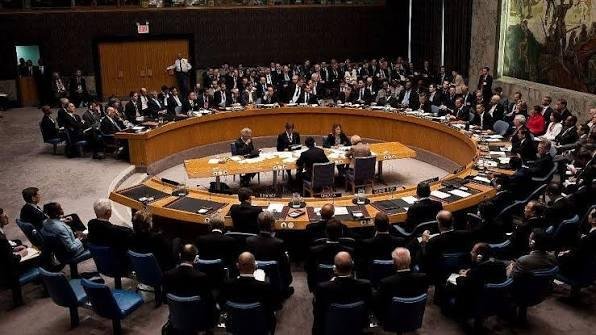
- UN Security Council (UNSC) reform, including India’s demand for permanent membership, is a key component of this agenda.
- India also advocates a stronger voice for the Global South, particularly developing and least developed countries.
Global Order and Areas of Cooperation
- The global balance of economic and geopolitical power is changing, creating pressure for institutions to adapt.
- Strategic competition and conflicts can weaken collective responses to challenges that cross national borders.
- India has identified several areas requiring sustained international cooperation:
- International peace and security
- Climate action and climate justice
- Emerging technologies
- Development finance
- Counter-terrorism
- Global supply chains
- Disaster resilience
- Pandemic preparedness
The 4F Crisis
- The “4F crisis” — fuel, food, fertiliser and finance — illustrates the interconnected vulnerabilities of the global system.
- Disruptions in energy supplies can affect fertiliser availability, agricultural production and food security, while financial instability can intensify these pressures.
- India has therefore emphasised de-risking and diversification of critical dependencies through multiple suppliers, markets and supply routes.
- These measures can strengthen resilience against geopolitical shocks and support India’s pursuit of strategic autonomy, meaning independent foreign-policy decision-making.
India’s Diplomatic Engagements
- P4M Summit
- The P4M Summit brought together the themes of multilateralism, international law, peace and prosperity.
- It provided a platform for discussing ways to sustain international cooperation amid geopolitical competition.
- V4+India Framework
- India participated in the first V4+India Foreign Ministers’ Meeting with the Visegrád Group (V4) comprising Czech Republic, Hungary, Poland and Slovakia.
- Cooperation covered:
- Political and diplomatic affairs
- Economy and trade
- Defence and security
- Technology and space
- Connectivity
- People-to-people relations
- Slovakia supported India’s bid for permanent UNSC membership and highlighted India’s role as a Global South country and an emerging Indo-Pacific power.
- The mechanism provides an additional platform for India’s engagement with Central Europe.
Wider Diplomatic Engagement
- During the UNGA visit, Jaishankar met the foreign ministers of France, Ukraine, Hungary and Moldova.
- Discussions covered the Ukraine and Gulf crises, bilateral cooperation, UNSC reform, peace efforts and the Black Sea.
- The Black Sea discussions also addressed freedom of navigation and its implications for global food security.
- These engagements demonstrate India’s effort to maintain dialogue with diverse partners while retaining independent policy choices.
Significance for India
- Institutional reform: More representative institutions can strengthen the legitimacy of global decision-making.
- Global South: India can articulate the concerns of developing countries within multilateral forums.
- Strategic autonomy: Issue-specific partnerships allow India to cooperate with different countries while avoiding permanent alignment with a single geopolitical bloc.
- Rules-based order: International law provides a common framework for interstate cooperation.
- Economic resilience: Diversified supply chains can reduce exposure to geopolitical disruptions and strategic chokepoints.
Challenges
- Geopolitical rivalry can impede consensus on institutional reforms.
- Major powers may have divergent interests regarding changes to existing global institutions.
- Conflicts and strategic competition can weaken collective responses to transnational challenges.
- Critical supply chains remain vulnerable to geopolitical shocks.
- Multilateral reform requires agreement among states with different strategic and economic priorities.
Way Forward
- Translate calls for institutional reform into concrete discussions on representation, decision-making and accountability.
- Strengthen cooperation on climate change, emerging technologies, pandemics, terrorism, food and energy security.
- Preserve international law, rules and norms as foundations of multilateral engagement.
- Expand diversified and resilient supply chains to reduce vulnerability to external disruptions.
- Use Global South engagement, issue-based coalitions and strategic autonomy to broaden India’s contribution to global governance.
FAQs
Q1. Why does India link institutional reform with changes in the global order?
The distribution of economic and geopolitical power has evolved. India therefore seeks global institutions that better reflect contemporary realities.
Q2. How are the four elements of the 4F crisis interconnected?
Disruptions in fuel can affect fertiliser production, agricultural output and food security. Financial instability can further intensify these pressures.
Q3. What is meant by issue-based coalition-building?
It involves cooperating with different countries on specific issues rather than forming permanent alignments, while retaining independent policy choices.
Q4. What does the V4+India framework add to India’s diplomacy?
It provides an additional platform for engagement with Central Europe across diplomacy, trade, defence, technology, space, connectivity and people-to-people relations.
Q5. Why is the Global South important to India’s multilateral approach?
It enables India to raise the concerns of developing and least developed countries and seek greater representation in global institutions.
Q6. How can supply-chain diversification improve economic security?
Multiple suppliers, markets and routes can reduce dependence on individual sources and strategic chokepoints, limiting the effects of geopolitical disruptions.
Q7. Why is international law central to effective multilateralism?
It provides common rules for interstate conduct and supports predictable cooperation among states, particularly during geopolitical competition