Context
In November 2026, researchers reported red ochre rock paintings, estimated to be approximately 4,000 years old, at Karadimalai in Ottampattu Thandari village, Villupuram district, Tamil Nadu.
About Red Ochre
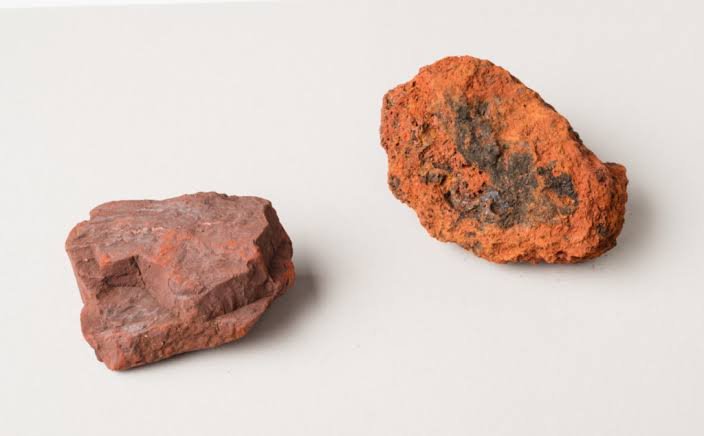
- Definition: Red ochre is a natural earth pigment primarily coloured by iron oxide, particularly hematite (Fe₂O₃), which gives it its characteristic reddish appearance.
- Colour variation: Ochre pigments range from yellow to deep red depending on mineral composition; yellow ochre commonly contains goethite (FeOOH).
- Natural occurrence: Found in iron-rich soils and mineral deposits worldwide, ochre was readily available to prehistoric communities for preparing pigments.
- Chemical stability: Hematite is relatively resistant to chemical alteration, helping red ochre retain its colour over long periods under favourable environmental conditions.
- Historical importance: Ochre is among the earliest pigments used by humans, with archaeological evidence of its use extending back hundreds of thousands of years.
Historical and Cultural Uses of Red Ochre
- Prehistoric paintings: Early communities used red ochre to depict animals, human figures and geometric patterns on rock surfaces, reflecting ancient artistic traditions.
- Body decoration: Its use in body and face painting suggests personal adornment and possible social or ritual expression, although specific meanings remain uncertain.
- Burial practices: Ochre deposits discovered in some prehistoric graves suggest possible ceremonial significance associated with burial traditions.
- Modern applications: Its distinctive colour and durability support continued use in traditional painting, ceramics and architectural coatings.
Red Ochre in Prehistoric Rock Art
- Karadimalai, Tamil Nadu: Recently reported paintings depict deer-like animals, a wild boar, bovids, plant-like figures and geometric patterns, providing evidence of prehistoric artistic activity.
- Geometric motifs: Square and rectangular patterns with parallel strokes may represent enclosures or settlements, although their precise meanings remain uncertain.
- Associated discoveries: Nearby rock depressions at Karadichunai may have been used for sharpening or polishing stone tools, suggesting additional prehistoric activities.
- Other notable sites:
-
- Bhimbetka, Madhya Pradesh: Prehistoric rock paintings depict animals, hunting scenes and daily activities using mineral-based pigments.
- Lascaux, France: Palaeolithic cave paintings demonstrate the use of mineral pigments, including iron-oxide-based colours.
Archaeological Significance of Red Ochre
- Symbolic behaviour: Deliberate pigment use provides evidence of early human creativity and possible symbolic communication.
- Environmental reconstruction: Depictions of animals and vegetation may offer clues about prehistoric environments and human interactions with nature.
- Technological knowledge: Preparation and application of mineral pigments demonstrate early skills in processing natural materials.
- Heritage conservation: The durability of iron-oxide pigments helps preserve prehistoric artwork, although exposed paintings remain vulnerable to environmental damage.
FAQs
Q1. What is red ochre?
A natural earth pigment primarily coloured by iron oxide, particularly hematite.
Q2. Which mineral gives red ochre its characteristic colour?
Hematite (Fe₂O₃).
Q3. Why was red ochre widely used in prehistoric paintings?
Because of its natural availability, distinctive colour and relative chemical stability.
Q4. Which UNESCO World Heritage Site in India is famous for prehistoric rock paintings?
The Bhimbetka Rock Shelters in Madhya Pradesh.
Q5. Where were approximately 4,000-year-old red ochre paintings recently reported?
At Karadimalai in Villupuram district, Tamil Nadu, in November 2026.