Context
India and Ecuador held the sixth round of Foreign Office Consultations on 10 November 2026 in New Delhi, reviewing bilateral relations and regional and global developments. The delegations were led by Rudrendra Tandon (India) and Alejandro Dávalos (Ecuador).
About Ecuador
- Location: Ecuador lies on the northwestern coast of South America, straddling the Equator and extending into both Northern and Southern Hemispheres.
- Land boundaries: It borders Colombia to the north and Peru to the east and south, sharing the northern Andean region with both countries.
- Maritime location: The Pacific Ocean lies to its west, providing access to maritime trade routes along South America’s western coast.
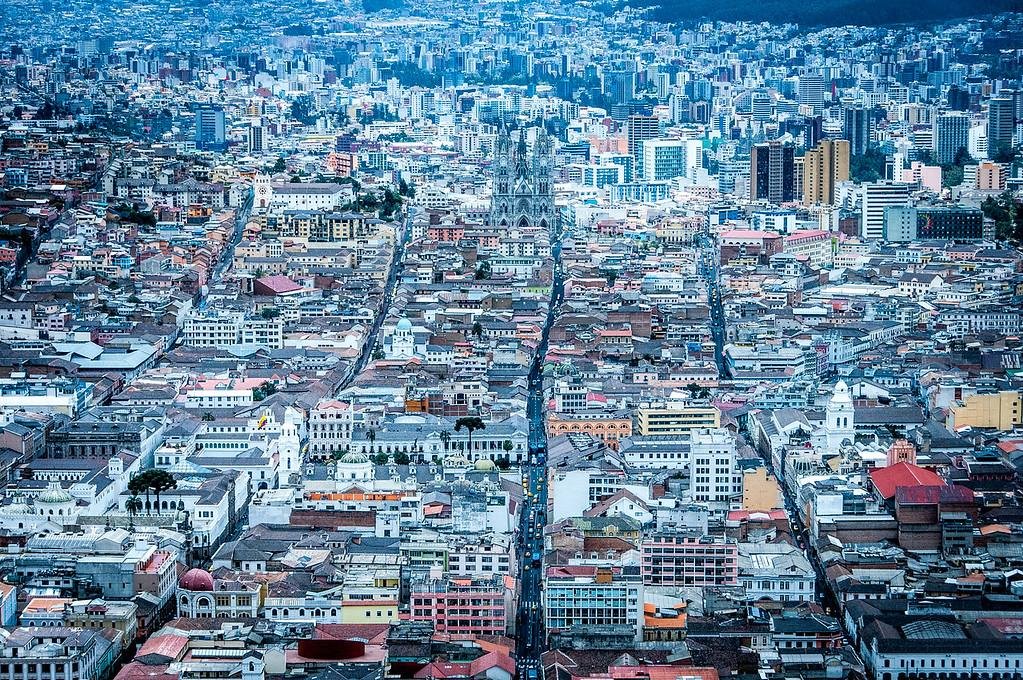
- Capital: Quito, situated in the Andean highlands, is among the world’s highest national capitals.
- Commercial centre: Guayaquil, near the Gulf of Guayaquil, is an important port city supporting international trade.
Major Geographical Regions of Ecuador
Ecuador comprises four natural geographical regions:
- Coastal Region (Costa): Western lowlands with fertile plains and river valleys, supporting agriculture and coastal settlements.
- Andean Highlands (Sierra): Central mountainous region containing the Cordillera Occidental and Cordillera Oriental, with elevated valleys and volcanic landscapes.
- Amazon Region (Oriente): Eastern tropical lowlands forming part of the Amazon Basin, characterised by dense rainforests and extensive river networks.
- Insular Region (Galápagos Islands): Volcanic islands approximately 1,000 km west of mainland Ecuador, known for endemic wildlife and their contribution to evolutionary studies.
Major Physical Features of Ecuador
- Highest peak: Mount Chimborazo, approximately 6,263 m high, has the summit farthest from Earth’s centre due to the planet’s equatorial bulge.
- Volcanic activity: Cotopaxi, approximately 5,897 m high, is an active volcano formed within the Andean volcanic belt by the subduction of the Nazca Plate beneath the South American Plate.
- River systems: The Guayas River drains towards the Pacific, while the Napo and Pastaza flow into the Amazon system, forming two major drainage directions.
- Climate: Tropical conditions prevail in coastal and Amazonian lowlands, while temperatures decrease with altitude in the Andes, producing varied climatic zones.
- Natural resources: Petroleum, fisheries, timber and hydropower potential support Ecuador’s energy sector and resource-based economic activities.
FAQs
Q1. Where is Ecuador located?
On the northwestern coast of South America, bordering Colombia, Peru and the Pacific Ocean.
Q2. What is the capital of Ecuador?
Quito.
Q3. What is Ecuador’s highest mountain?
Mount Chimborazo, approximately 6,263 m high.
Q4. Which volcanic archipelago belongs to Ecuador?
The Galápagos Islands, located in the Pacific Ocean.
Q5. Which two mountain ranges form Ecuador’s Andean highlands?
The Cordillera Occidental and Cordillera Oriental.