Context
Following heavy rainfall in Himachal Pradesh, water levels in the Ravi River have risen. Researchers from IIT Gandhinagar analysed around three decades of river discharge data and satellite images to study changes in the river and its floodplain. The study examined conditions before and after the Ranjit Sagar Reservoir became operational in 2001.
About the Ravi River
- Nature: A transboundary river flowing through northwestern India & northeastern Pakistan.
- Indus River System: It is one of the five major tributaries of the Indus River that give Punjab its name, meaning Land of Five Rivers.
- Historical names: Iravati and Parushni/Purushni in Vedic times. Hydraotes during the ancient Greek period.
- Length: The river is approximately 720 km long (320 km in India and 400 km in Pakistan)
- River of Lahore: It is often called the River of Lahore, as the historic city of Lahore lies on its eastern bank.
- Hydrological Features: The river’s flow is influenced by two major factors:
- Spring snowmelt: Melting snow from the Himalayas contributes to river discharge.
- South Asian monsoon: Heavy rainfall between June and September increases water levels and river flow.
- Major Tributaries: Siul, Baira and Ujh
- Major Dams and Projects: Thein Dam (Ranjit Sagar Dam) and Chamera Dam in Chamba, Himachal Pradesh. Shahpurkandi Dam in Pathankot, Punjab. Ujh Dam in Kathua, Jammu and Kashmir. Ravi-Beas Link (Proposed project)
- Other important infrastructure: Upper Bari Doab Canal: An irrigation canal system in Punjab.
Course of the River
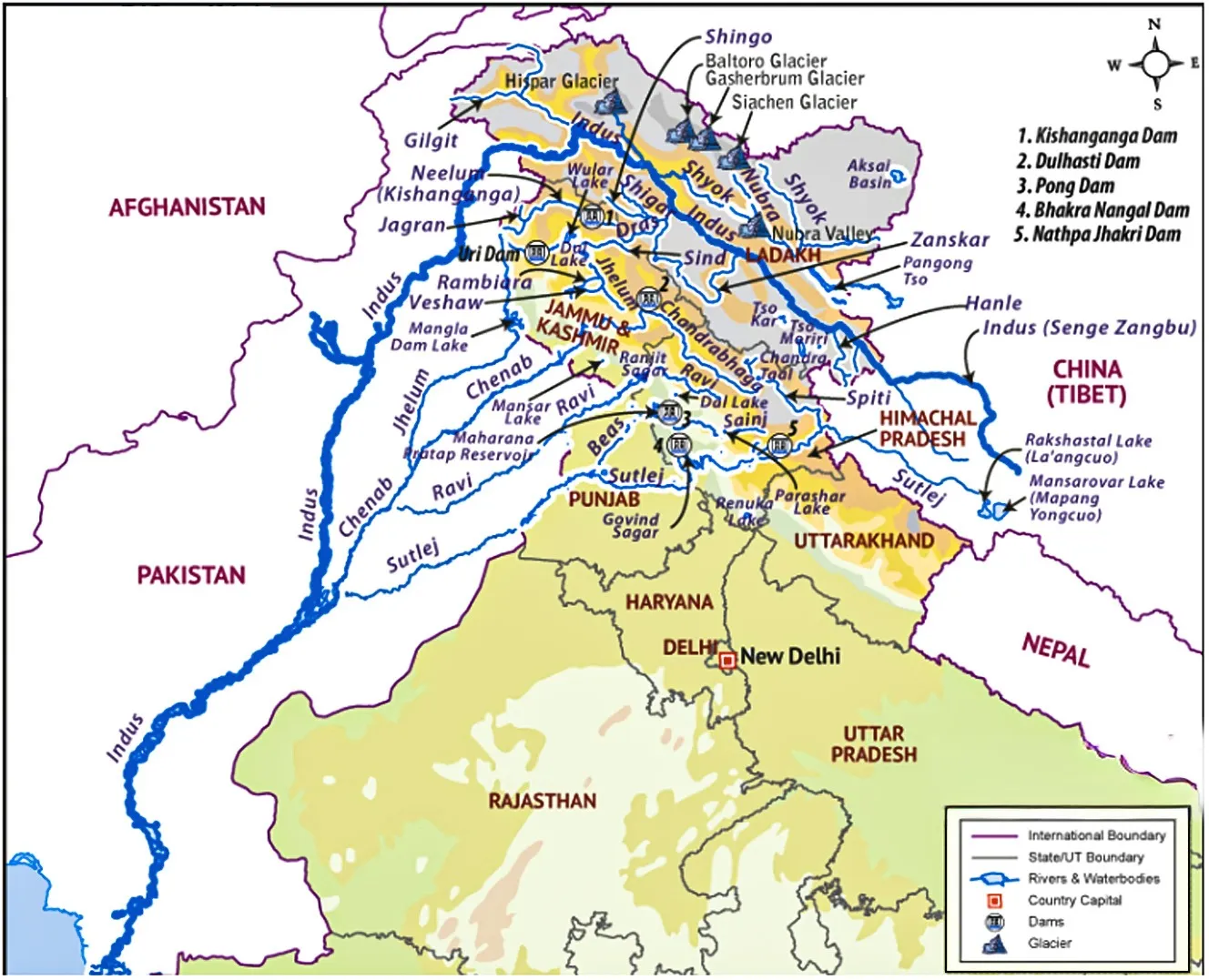
- Origin: The Ravi originates from the northern side of Rohtang Pass in Himachal Pradesh.
- Initial course: It flows through the Himalayan ranges in two channels – Budhil and Tantgari.
- Himachal Pradesh: After the two channels join, the river flows through Himachal Pradesh, particularly the Chamba district, where several tributaries meet it.
- Punjab: It then flows southwards through the Indian state of Punjab.
- Pakistan: The river enters Pakistan and eventually joins the Chenab River, which is a major tributary of the Indus.
Ravi River and the Indus Waters Treaty, 1960
- The Indus Waters Treaty (IWT), 1960 was signed between India and Pakistan.
- Under the treaty, the three eastern rivers – Ravi, Beas and Sutlej – were allocated to India.
- The three western rivers – Indus, Jhelum and Chenab – were allocated to Pakistan, subject to the treaty’s specified provisions.
Frequently Asked Questions (FAQs)
Q1. What is the Ravi River, and why is it significant in the Indus River System?
The Ravi is a transboundary river flowing through northwestern India and northeastern Pakistan. It is one of the five major tributaries of the Indus River, which give Punjab its name, meaning ‘Land of Five Rivers’.
Q2. Where does the Ravi River originate, and what is its course?
It originates from the northern side of Rohtang Pass in Himachal Pradesh. It flows through Himachal Pradesh and Punjab, enters Pakistan and eventually joins the Chenab River.
Q3. What are the major tributaries and dams associated with the Ravi River?
Major tributaries include Siul, Baira and Ujh. Important dams and projects include Ranjit Sagar (Thein) Dam, Chamera Dam, Shahpurkandi Dam, Ujh Dam and the proposed Ravi-Beas Link.
Q4. What factors influence the water flow of the Ravi River?
Its flow is influenced by Himalayan spring snowmelt and the South Asian monsoon. Heavy rainfall between June and September increases river discharge and water levels.