Context
The Union Ministry of Culture, through a notification dated 4 November 2026, declared Raniwas Mound in Bihar’s East Champaran district an archaeological site of national importance under the Ancient Monuments and Archaeological Sites and Remains (AMASR) Act, 1958.
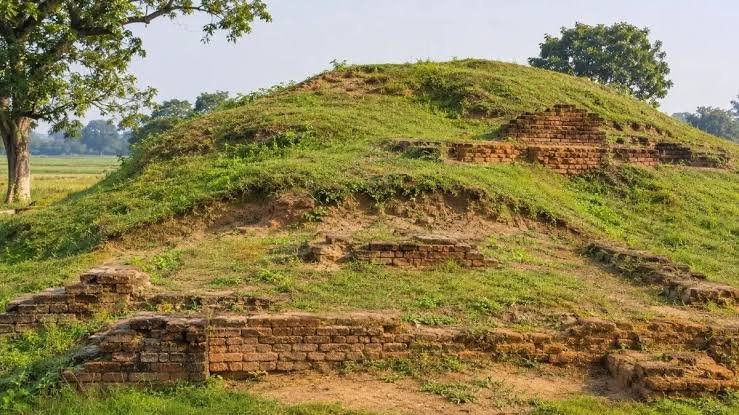
About Ranivas Mound
- Location: Raniwas Mound is situated at Kesariya in East Champaran district, Bihar, near the historically significant Buddhist site of Kesariya Stupa.
- Area and ownership: The notified archaeological site covers approximately 1.63 acres and is owned by the Government of Bihar.
- Historical exploration: Alexander Cunningham explored the site in 1861–62 and documented remains of an ancient Buddhist establishment, including a shrine housing a large Buddha image.
- Archaeological findings: Excavations conducted by the Archaeological Survey of India (ASI) in 2018–19 revealed structural remains associated with a Buddhist monastery.
- Historical significance: The findings indicate the presence of Buddhist religious activity around Kesariya, contributing to understanding the region’s ancient monastic heritage.
Declaration as an Archaeological Site of National Importance
- Legal framework: The AMASR Act, 1958, empowers the Central Government to declare ancient monuments and archaeological sites of national importance, enabling statutory protection.
- Preliminary notification: Under Section 4(1), the government issued a notification on 8 June 2026, providing a two-month period for objections to the proposed declaration.
- Final declaration: Following the notification process, the site was declared nationally important under Section 4(3) on 4 November 2026, granting it centrally protected status.
- Statutory protection: The designation enables regulated conservation and archaeological management, helping safeguard the site’s historical remains from damage.
- Construction restrictions: The AMASR framework generally provides a 100-metre prohibited area and an additional 200-metre regulated area around centrally protected sites, subject to applicable statutory provisions.
Key Facts about the Archaeological Survey of India (ASI)
- Establishment: The ASI was established in 1861, with Alexander Cunningham appointed its first Archaeological Surveyor; he subsequently became Director General in 1871.
- Administrative status: It functions under the Union Ministry of Culture, with its headquarters in New Delhi.
- Core responsibilities: ASI conducts archaeological surveys, scientific excavations, epigraphic studies and conservation of centrally protected monuments.
- Heritage preservation: It undertakes structural and chemical conservation of monuments and archaeological remains, supporting the long-term protection of India’s cultural heritage.
FAQs
Q1. Where is Ranivas Mound located?
At Kesariya in East Champaran district, Bihar.
Q2. Which important Buddhist monument is located near Ranivas Mound?
The Kesariya Stupa.
Q3. Who explored Ranivas Mound in 1861–62?
Alexander Cunningham, the first Archaeological Surveyor of India.
Q4. Which law governs the declaration of archaeological sites of national importance?
The Ancient Monuments and Archaeological Sites and Remains Act, 1958.
Q5. Under which provision was Ranivas Mound declared an archaeological site of national importance?
Section 4(3) of the AMASR Act, 1958.