Context
The 2026 BRICS New Delhi Declaration, adopted under India’s chairship, calls for exploring pathways to bring plurilateral initiatives into the WTO legal framework. This is significant as India had opposed the inclusion of the Investment Facilitation for Development Agreement (IFDA) at the WTO’s 14th Ministerial Conference (MC14) in March 2026.
About Plurilateral Trade Agreements
- A plurilateral agreement is a trade agreement negotiated among a group of WTO members rather than the entire membership, with rules binding mainly on participating countries.
- Under Annex 4 of the Marrakesh Agreement, its inclusion in the WTO legal framework requires consensus of all WTO members.
- Multilateral agreements, in contrast, involve the broader WTO membership.
India’s Traditional Position
- India has opposed plurilaterals on the ground that they may allow a group of countries to make WTO rules without the participation of all WTO members.
- It has called for common safeguards or “guardrails” before such agreements are added to the WTO rulebook, to protect the interests of developing countries and least-developed countries (LDCs).
- The 2026 BRICS New Delhi Declaration, however, calls for exploring pathways to bring plurilateral initiatives into the WTO legal framework, including on development-related issues.
- At the same time, it reaffirms the WTO-centric multilateral trading system, including Most-Favoured-Nation (MFN) treatment and Special and Differential Treatment (S&DT) for developing countries.
- The Declaration also supports restoring the two-tier WTO dispute settlement system and filling vacancies in the Appellate Body.
- Thus, the declaration suggests greater openness to plurilateral initiatives, but does not amount to India’s acceptance of any specific agreement.
Key WTO Cases: IFDA and E-Commerce
- Investment Facilitation for Development Agreement (IFDA)
- The IFDA aims to simplify investment procedures by improving transparency, predictability and efficiency to facilitate foreign direct investment (FDI).
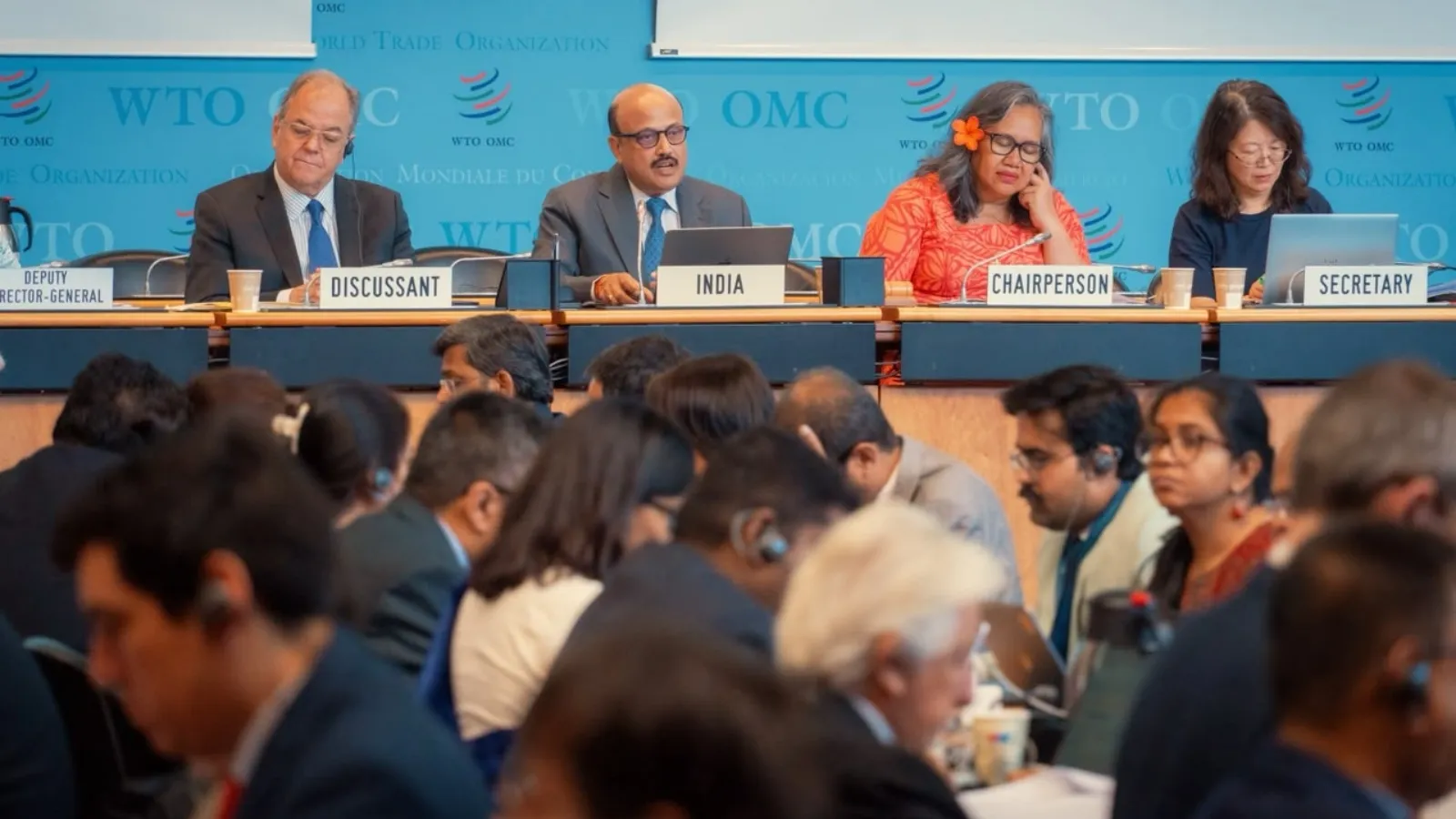
- At MC14, 129 WTO members supported its inclusion in Annex 4, but consensus was not achieved due to India’s reservations.
- India has sought common safeguards before plurilateral agreements are incorporated into the WTO framework.
- E-Commerce Agreement
- The WTO Agreement on Electronic Commerce (ECA) seeks to facilitate cross-border digital trade through common rules.
- At MC14, 67 members, accounting for around 70% of global trade, adopted interim arrangements to advance its implementation.
- India has questioned the legal basis of these arrangements, including the WTO Director-General’s role as
Significance for India
- Rule-making: Greater engagement can help India shape emerging rules on digital trade and services.
- Developing-country interests: India can seek Special and Differential Treatment (S&DT), policy flexibility and transparency in new agreements.
- WTO reform: The debate is important for developing rules on e-commerce, investment and environmental issues.
- Strategic balance: India needs to participate in emerging rule-making while protecting inclusive, consensus-based multilateralism.
Key Challenges
- WTO fragmentation: Plurilaterals may speed up rule-making but could weaken inclusive, consensus-based negotiations.
- Development concerns: Rules led by advanced economies may not adequately reflect the needs of developing countries and LDCs.
- Lack of common framework: Admitting individual plurilaterals without agreed rules or guardrails could create an uncertain precedent.
- Unequal capacities: Differences in digital infrastructure and regulatory capacity may make new digital trade rules difficult for some countries to implement.
- Sensitive sectors: Areas such as agriculture, food security and subsidies have wider developmental implications and may require broader negotiations.
Way Forward
- Common Framework: Establish transparent and agreed criteria for incorporating plurilaterals into the WTO.
- Inclusive Participation: Ensure meaningful participation and implementation support for developing countries and LDCs.
- Protect WTO Principles: Ensure that new plurilateral arrangements remain consistent with MFN, S&DT, consensus and non-discrimination.
- Complementary Approach: Use plurilaterals to supplement, not weaken, the multilateral trading system.
- India’s Engagement: Participate in emerging rule-making while safeguarding developmental interests and policy space.
FAQs
Q1. What is a plurilateral trade agreement?
Ans. A plurilateral agreement is a trade agreement negotiated among a group of WTO members, with obligations mainly applying to participating members.
Q2. Why has India opposed plurilateral agreements?
Ans. India has concerns that they may allow a limited group of countries to frame WTO rules without the participation of all members.
Q3. Does the BRICS Declaration mean India has accepted plurilateral agreements?
Ans. Not necessarily. The declaration signals greater openness to exploring pathways, but it does not amount to India’s acceptance of any particular plurilateral agreement such as the IFDA or E-Commerce Agreement.
Q4. What is Annex 4 of the Marrakesh Agreement?
Ans. Annex 4 contains WTO plurilateral agreements, whose inclusion in the WTO framework requires consensus of all WTO members.
Q5. What does S&DT mean in the WTO?
Ans. Special and Differential Treatment (S&DT) provides developing and least-developed countries with certain flexibilities and longer implementation periods under WTO rules.
Q6. What is Most-Favoured-Nation (MFN) treatment?
Ans. MFN treatment requires a WTO member to provide the same trade advantage to all WTO members as it gives to any one member, subject to permitted exceptions.