Why in News?
- A recent study estimated the Total Economic Value (TEV) of the Pichavaram mangrove ecosystem at around ₹2,485 crore. The valuation highlights the economic importance of services provided by mangroves, such as coastal protection, fisheries, biodiversity and tourism.
About Pichavaram Mangrove Forest
- Location: Situated in Cuddalore district, Tamil Nadu, near Chidambaram on the southeast coast of India.
- Geographical setting: Located between the Vellar Estuary in the north and Coleroon Estuary in the south.
- The two estuaries form the Vellar–Coleroon estuarine complex, which includes the Killai backwaters and Pichavaram mangroves.
- Ramsar Site: Designated as a Wetland of International Importance in 2022.
- These have the distinction of being 2nd largest mangrove in the world after Sundarbans.
- The ecosystem contains creeks, channels, mudflats, sandy areas and mangrove forests, creating diverse habitats.
Biodiversity
- Pichavaram supports around 86 plant species, including 14 mangrove species.
- The wetland supports about 115 bird species, including herons, egrets, cormorants, spoonbills and pelicans.
- It also supports fish, prawns, crabs, molluscs and seaweeds and serves as a breeding and nursery ground for several aquatic species.
- Threatened species recorded from the site include the Great White-bellied Heron, Spoon-billed Sandpiper, Spotted Greenshank and Olive Ridley Turtle.
Ecological and Economic Importance
- Coastal protection: Mangroves act as a natural barrier against erosion, waves, tides and storm surges.
- Fisheries: Their dense root systems provide shelter and breeding grounds for fish, prawns and crabs.
- Livelihoods: The ecosystem supports the livelihoods of around 1,000 families, particularly through fishing and other natural-resource-based activities.
- Carbon storage: Mangrove vegetation stores carbon in both biomass and waterlogged soils, contributing to climate-change mitigation.
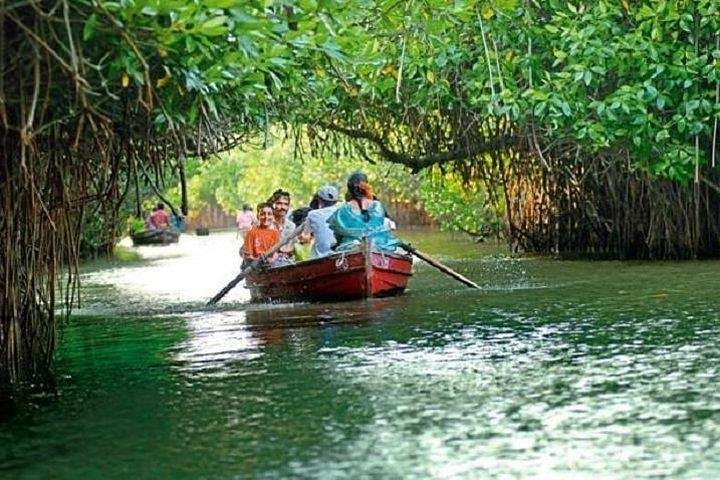
- Tourism: The network of waterways and mangrove vegetation also supports eco-tourism and recreation.
FAQs
Q1. Where is Pichavaram Mangrove Forest located?
Ans. It is located in Cuddalore district of Tamil Nadu, near Chidambaram, between the Vellar and Coleroon estuaries.
Q2. When was Pichavaram declared a Ramsar Site?
Ans. It was designated a Ramsar Site in 2022 and is listed as Ramsar Site No. 2482.
Q3. How do mangroves protect coastal areas?
Ans. Their dense roots reduce the force of waves and currents, control coastal erosion and provide protection against storm surges and cyclones.
Q4. What is Total Economic Value (TEV) of an ecosystem?
Ans. TEV measures the overall economic value of an ecosystem by considering benefits such as resources, ecological services, recreation and other benefits provided to society.
Q5. Why is Pichavaram important for fisheries?
Ans. Its mangrove habitat provides feeding, breeding and nursery grounds for fish, prawns and crabs, thereby supporting coastal fisheries and local livelihoods.