Context
Iran is expected to join the New Development Bank (NDB), according to Iranian Central Bank Governor Abdolnaser Hemmati in. Iran had joined BRICS in 2024 and has been seeking closer financial cooperation with member countries.
About New Development Bank
- It is a multilateral development bank created by Brazil, Russia, India, China and South Africa (BRICS) to finance development needs in emerging economies.
- It was established through the Agreement on the New Development Bank, signed at the BRICS Summit in Fortaleza, Brazil, in 2014, and became operational in 2015.
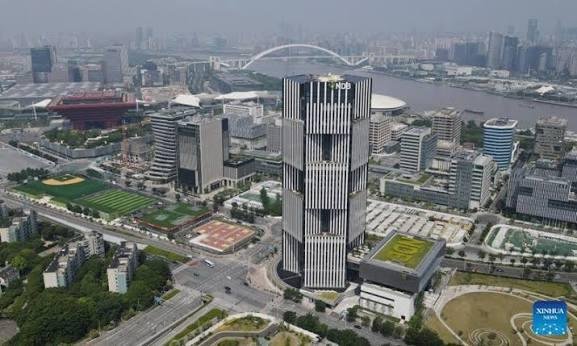
- Headquarters: Shanghai, China. It also has regional offices, including in South Africa and Brazil.
- Its main purpose is to finance infrastructure and sustainable development, complementing existing multilateral and regional development institutions.
- Major areas include clean energy, transport, water and sanitation, environmental protection, social infrastructure and digital infrastructure.
Capital and Membership
- NDB has an authorised capital of USD 100 billion with initial subscribed capital of USD 50 billion equally, giving each an equal initial stake.
- Membership is open to UN member countries, including both borrowing and non-borrowing members.
- Besides the founding BRICS members, NDB’s members include Bangladesh, UAE, Egypt, Algeria and Uzbekistan (joined 2026).
Uruguay, Colombia, Ethiopia and Angola are listed as prospective members by the NDB.
Governance and Voting
- The Board of Governors is the highest decision-making body, with one governor at the ministerial level from each member country.
- The Board of Directors handles the Bank’s general operations.
- Voting power is linked to subscribed shares. The founding members hold equal voting power, and no single founding member has veto power.
- The 55% Rule: The collective voting power of the original founding BRICS members (Brazil, Russia, India, China, South Africa) must remain at 55% or higher, even as new members join.
Significance for India
- Infrastructure Financing: Provides an additional source of funds for infrastructure and sustainable development.
- South-South Cooperation: Strengthens cooperation among developing and emerging economies.
- Greater Global Voice: Increases the role of emerging economies in global development finance.
- BRICS Cooperation: Promotes stronger financial and economic ties among BRICS members.
- Sustainable Growth: Supports projects in clean energy, transport, water and digital infrastructure.
- Financial Diversification: Reduces excessive dependence on traditional institutions such as the World Bank and ADB.
UPSC FAQs
Q1. What is the New Development Bank?
Ans: NDB is a multilateral development bank established by Brazil, Russia, India, China and South Africa. It finances infrastructure and sustainable development projects.
Q2. When and where was the NDB established?
Ans: The founding agreement was signed at the 2014 BRICS Summit in Fortaleza, Brazil. The Bank became operational in 2015.
Q3. How is NDB different from the World Bank and ADB?
Ans: NDB gives the founding members equal voting power and does not give any single founding member veto power. This reflects greater emphasis on equality among emerging economies.
Q4. Is NDB membership limited to BRICS countries?
Ans: No. Its membership is open to UN member countries, subject to the Bank’s admission procedures. Several non-BRICS countries are already members.
Q5. What are the major sectors financed by NDB?
Ans: Key sectors include clean energy, transport, water and sanitation, environmental protection, social infrastructure and digital infrastructure.