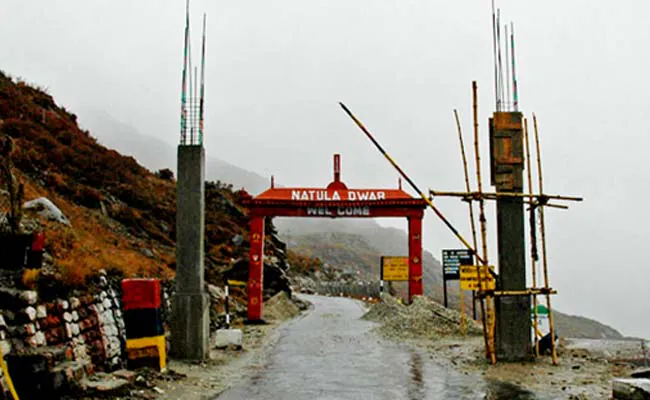
Context
Border trade through Nathu La in Sikkim resumed after a six-year suspension. The reopening is expected to support border livelihoods and local economic activity.
About Nathu La
- Location: Sikkim, connecting India with China’s Tibet Autonomous Region.
- Altitude: About 4,310 metres above sea level.
- Meaning: In Tibetan, “Nathu” means “listening ears” and “La” means “pass.”
- It forms part of an offshoot of the ancient Silk Route and is strategically important in the eastern Himalayas.
Border Trade
- Nathu La was closed after the 1962 India–China War and reopened for trade in 2006.
- The 1991 Memorandum on Resumption of Border Trade and 1992 Protocol on Entry and Exit Procedures provide the basic framework.
- The 2003 Memorandum on Expanding Border Trade specifically provided for using Nathu La for India–China trade.
- It is one of India’s three designated border trade points with China, alongside Lipulekh (Uttarakhand) and Shipki La (Himachal Pradesh).
- Sherathang is the Indian trade mart, while Renqinggang in Tibet is the designated mart for Indian traders.
FAQs
1. Where is Nathu La located?
It is a high-altitude pass in Sikkim connecting India with Tibet Autonomous Region.
2. What is its altitude?
Approximately 4,310 metres above sea level.
3. When was Nathu La reopened for trade?
It reopened for border trade in 2006 and resumed operations again on 1 August 2026 after a six-year suspension.
4. Which agreements govern border trade through Nathu La?
The key frameworks are the 1991 Memorandum, 1992 Protocol and 2003 Memorandum on Expanding Border Trade.
5. What are the other India–China border trade points?
Lipulekh Pass in Uttarakhand and Shipki La in Himachal Pradesh.
6. Why is Nathu La important?
It is significant for border trade, connectivity, local livelihoods and strategic security.