Context
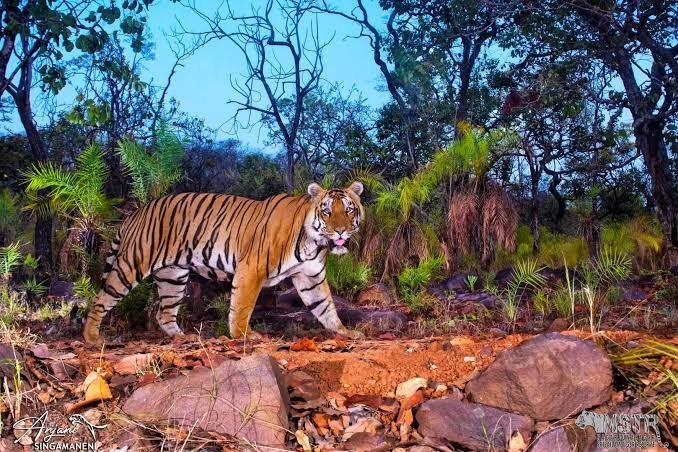
The Central and Andhra Pradesh governments have proposed an alternative elevated road corridor near the Nagarjunasagar-Srisailam Tiger Reserve (NSTR) to improve night-time connectivity while minimising wildlife disturbance and addressing vehicle movement restrictions.
About Nagarjunasagar-Srisailam Tiger Reserve (NSTR)
- Location: Situated in the Nallamala Hills of Andhra Pradesh, forming part of the Eastern Ghats.
- Area: Covers about 3,568 sq km, making it India’s largest tiger reserve by notified area, with the largest CTH (Critical Tiger Habitat).
- Establishment: Declared a wildlife sanctuary in 1978 and included under Project Tiger in 1983.
- Protected Areas: Encompasses the Rajiv Gandhi Wildlife Sanctuary and Gundla Brahmeswaram Wildlife Sanctuary.
- Topography: Characterised by rugged plateaus, ridges, deep valleys, and gorges.
- River System & Dams: Drained by the Krishna River (along with tributaries Dindi and Peddavagu); houses the Nagarjuna Sagar and Srisailam dams.
- Tribal Communities: Inhabited by the Chenchu — a PVTG (Particularly Vulnerable Tribal Group) — and Lambada communities.
Vegetation and Biodiversity
- Forest Type: Predominantly Tropical Dry Deciduous Forests, interspersed with bamboo, grasses, and scrub.
- Major Flora: Teak, along with endemic plants such as Andrographis nallamalayana, Eriolaena lushingtonii, and Dicliptera beddomei.
- Carnivores: Bengal tiger, leopard, dhole (wild dog), Indian wolf, and jackal.
- Herbivores: Sambar, chital (spotted deer), chousingha (four-horned antelope), chinkara (Indian gazelle), mouse deer, and wild boar.
- Other Fauna: Porcupines, reptiles, and a wide variety of bird species.
Conservation and Significance
- Tiger Conservation: Safeguards a major contiguous dry-forest tiger habitat in the Eastern Ghats.
- Wildlife Connectivity: Links with Amrabad Tiger Reserve (Telangana) and forest corridors extending toward the Seshachalam Hills.
- Religious Significance: Houses the Mallikarjuna Swamy Temple at Srisailam, one of the 12 Jyotirlingas.
- Conservation Challenge & Solution: Heavy road traffic causes wildlife disturbance and roadkills; proposed elevated corridors aim to ensure safe animal movement.
FAQs
Q1. Where is Nagarjunasagar-Srisailam Tiger Reserve located?
Ans. Nallamala Hills of Andhra Pradesh, part of the Eastern Ghats.
Q2. Which major river flows through Nagarjunasagar-Srisailam Tiger Reserve?
Ans. Krishna River, associated with the Nagarjuna Sagar and Srisailam reservoirs.
Q3. What is the predominant forest type in the reserve?
Ans. Tropical Dry Deciduous Forest, with bamboo, grasses and scrub vegetation.
Q4. Which Particularly Vulnerable Tribal Group is associated with the reserve?
Ans. Chenchu tribe, traditionally inhabiting the Nallamala forests.