Context
India’s female workforce participation has increased significantly, but concerns persist over women’s concentration in self-employment, unpaid family work and jobs with limited social protection. The Periodic Labour Force Survey (PLFS) 2025 highlights the need to assess employment quality alongside rising workforce participation.
Key Data on Women’s Employment
| Indicator | Official data |
| Female Worker Population Ratio (15+) | 22.0% (2017–18) → 38.8% (2025) |
| Female Labour Force Participation Rate (15+) | 40.0% (2025) |
| Rural female self-employment | 70.7% (2025) |
| Rural female helpers in household enterprises | 32.9% (2025) |
| Female regular wage/salaried employment | 16.6% (2024) → 18.2% (2025) |
| Unpaid domestic work (ages 15–59) | Women: 305 minutes; Men: 86 minutes daily (2024) |
Quality of Women’s Employment
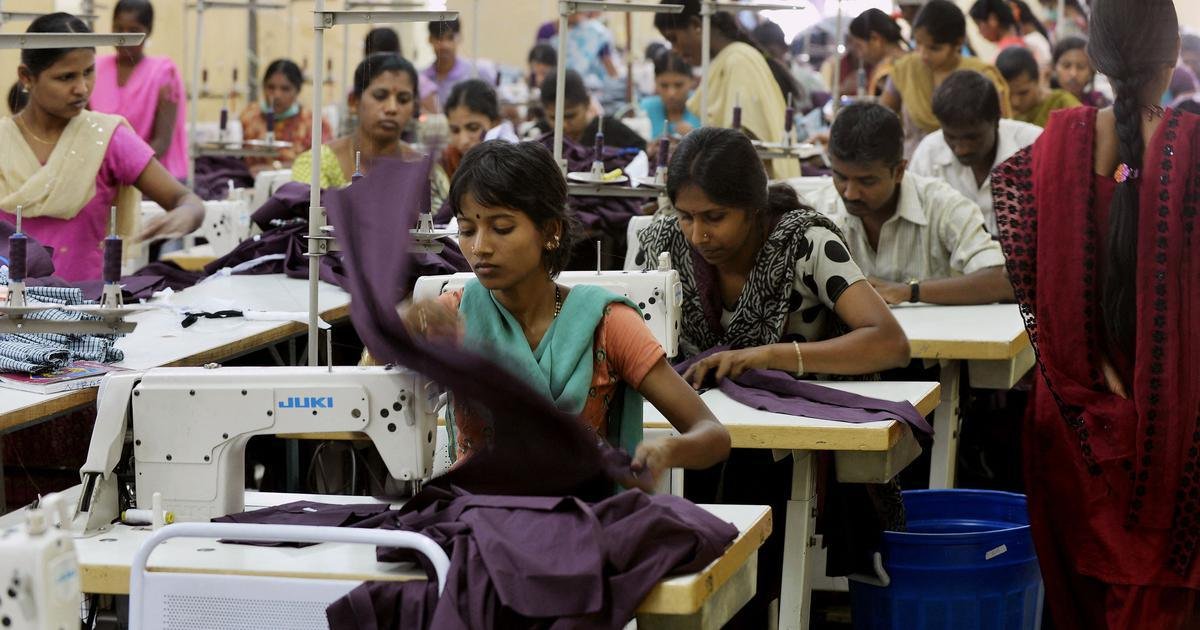
- Participation–quality gap: Rising female employment includes substantial self-employment and unpaid family work, indicating that higher participation does not necessarily ensure adequate earnings or job security.
- Feminisation of agriculture: Male migration and limited rural non-farm opportunities can increase women’s agricultural responsibilities without corresponding gains in land ownership, income or decision-making power.
- Occupational segregation: Women’s concentration in certain low-paying occupations restricts access to higher-productivity employment and limits career advancement.
- Gender earnings gap: Differences in occupational opportunities, working hours and access to productive resources contribute to earnings disparities, weakening financial independence.
- Limited salaried employment: Despite improvements in regular wage employment, its relatively low share highlights the need for more secure and remunerative employment opportunities.
Structural Barriers to Women’s Employment
- Unpaid care economy: Disproportionate responsibility for childcare, eldercare and household work limits women’s availability for paid employment and career progression.
- Time poverty: Women spend considerably more time on unpaid domestic work than men, reducing opportunities for skill development, income generation and leisure.
- Mobility and safety constraints: Inadequate public transport, unsafe commuting conditions and limited workplace facilities restrict access to suitable employment opportunities.
Measures to Improve Women’s Employment
- Care economy as infrastructure: Affordable childcare, functional crèches and shared parental leave can reduce caregiving burdens, enabling sustained participation in paid employment.
- Gender-responsive urban planning: Safe public transport, street lighting and working women’s hostels can improve mobility and access to employment.
- Employment formalisation: Written contracts, social-security coverage and effective labour protections can strengthen income security and reduce workplace vulnerability.
- Skill-led occupational mobility: Market-linked training, digital literacy and access to emerging industries can help women enter higher-productivity and better-paid occupations.
- Economic empowerment: Greater access to credit, markets, land rights and productive assets can improve women’s earnings and bargaining power, particularly in self-employment.
FAQs
Q1. What is the Female Labour Force Participation Rate (FLFPR)?
It is the percentage of women in the relevant population who are employed, seeking work or available for work.
Q2. What is the feminisation of agriculture?
It refers to the increasing participation and responsibilities of women in agricultural activities.
Q3. What is the unpaid care economy?
It includes unpaid domestic work, childcare and eldercare, disproportionately performed by women.
Q4. What is time poverty?
It refers to limited discretionary time due to excessive paid and unpaid work responsibilities.
Q5. What is the major concern regarding rising female employment in India?
The participation–quality gap, where increased employment does not necessarily translate into adequate earnings, job security or social protection.