Context
Indian Railways has approved the deployment of Kavach Version 4.0 over 600+ route km in the Lucknow Division of North Eastern Railway, highlighting the ongoing expansion of India’s indigenous train-protection system.
About Kavach
- Nature & Purpose: An indigenous Automatic Train Protection (ATP) system that monitors train movement and automatically intervenes to prevent collisions and Signal Passing at Danger (SPAD).
- Development: Developed by Research Designs and Standards Organisation (RDSO) and adopted as India’s National ATP system in July 2020.
- Communication: Uses secure Ultra High Frequency (UHF) radio for real-time communication between locomotives and trackside systems.
- Location & Track Data: Radio Frequency Identification (RFID) tags help identify train location, while wayside units provide real-time data on signals, track occupancy, points and routes.
Key Safety Features
- SPAD Prevention: Automatically applies brakes when a train approaches a signal showing Danger.
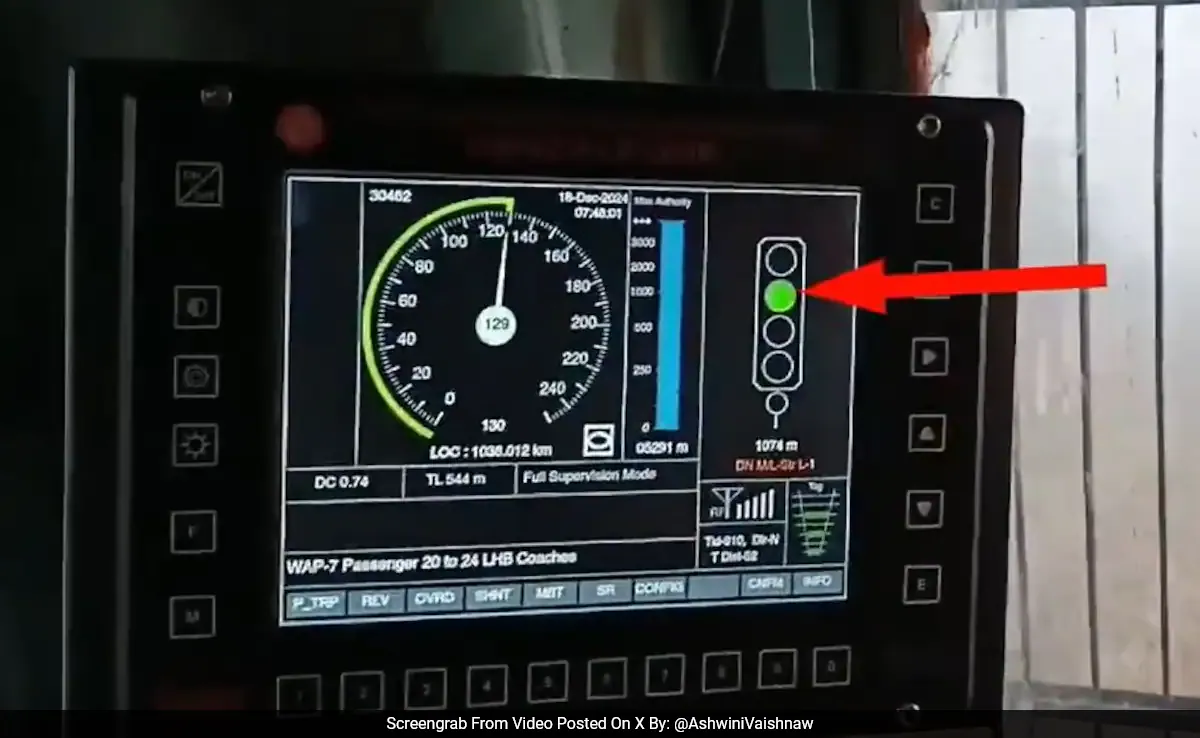
- Cab Signalling: Displays movement authority, target distance, speed and signal status to the loco pilot.
- Collision Prevention: Helps prevent head-on, rear-end and side-on collisions.
- Movement Protection: Prevents unintended forward or backward movement, including on gradients and during halts.
- Level Crossing Safety: Automatically activates the horn near designated level crossings.
- Emergency Stop: Enables transmission of SoS messages during critical situations.
- Real-Time Monitoring: Network Management System (NMS) centrally monitors train movements.
Significance
- Safety: Reduces risks from human error and unsafe train movements.
- Indigenous Capability: Strengthens India’s capacity in railway signalling and train-protection technology.
- Modernisation: Supports safer and technology-enabled railway operations across India.
FAQs
Q1. What is Kavach?
Ans: Kavach is an indigenous Automatic Train Protection (ATP) system of Indian Railways. It is designed to prevent collisions and unsafe train movements.
Q2. Which organisation developed Kavach?
Ans: Research Designs and Standards Organisation (RDSO) developed Kavach.
Q3. What is SPAD?
Ans: Signal Passing at Danger (SPAD) occurs when a train passes a signal showing a stop or danger indication.
Q4. What communication technology does Kavach use?
Ans: Kavach uses secure Ultra High Frequency (UHF) radio communication for continuous data exchange between locomotives and trackside systems.