Context
The centuries-old Bidriware craft of Bidar, Karnataka, is facing renewed pressure from rising prices of silver, copper and zinc, the key metals used in its production.
Higher input costs matter because Bidriware is a labour-intensive handmade craft. Artisans cannot always pass the full increase in raw-material prices to buyers without making the products less competitive.
About Bidriware
- Bidriware is a traditional metal handicraft associated with Bidar district in Karnataka.
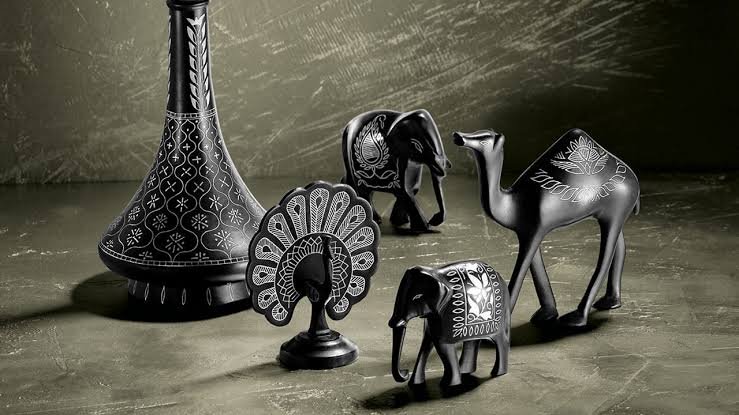
- It is known for striking silver inlay work on a blackened metal surface.
- The craft has received a Geographical Indication (GI) tag.
- The name “Bidri” is derived from Bidar, its principal centre of production.
- The base material is mainly a zinc-copper alloy, while silver is used for decorative inlay.
Historical Origin
Bidriware developed in the Deccan under the Bahmani rulers, particularly around Bidar during the 14th–15th centuries.
Its artistic vocabulary reflects an interaction of:
- Persian influences;
- Turkish and Arabic decorative traditions;
- local Deccani craftsmanship.
This cultural synthesis gave Bidriware its distinctive identity as a Deccan court craft adapted by local artisans.
How Is Bidriware Made?
- Alloy Preparation
The basic object is cast from a zinc-rich alloy containing copper.
- Engraving
Artisans draw or engrave floral, geometric and calligraphic patterns using fine tools.
- Silver Inlay
Thin silver wire or strips are carefully hammered into the engraved grooves.
This creates the characteristic contrast between bright silver patterns and the dark background.
- Blackening
The object is treated using a traditional process involving soil associated with Bidar Fort along with other materials.
The treatment darkens the base alloy while leaving the silver inlay bright, producing the distinctive black-and-silver appearance.
- Finishing
The surface is polished and buffed to enhance smoothness and contrast.
Why Is Bidriware Significant?
Cultural Heritage
Bidriware preserves a distinctive Deccani metalworking tradition shaped by centuries of cultural interaction.
Artisan Livelihoods
Its survival supports skilled craft communities whose knowledge is transmitted through practice and apprenticeship.
GI-Based Local Economy
The GI tag links the product with Bidar’s geographical and cultural identity, helping distinguish authentic products from imitations.
Export and Tourism Potential
Distinctive handmade crafts can contribute to:
- cultural tourism;
- premium handicraft markets;
- exports;
- place-based branding.
Therefore, heritage protection also has an economic-development dimension.
FAQs
Q1. What is Bidriware?
A traditional metal-inlay handicraft from Bidar, Karnataka, known for silver designs on a blackened alloy surface.
Q2. Which metals are mainly used in Bidriware?
A zinc-copper alloy forms the base, while silver is used for decorative inlay.
Q3. Why is Bidriware black in colour?
Its dark surface is produced through a traditional blackening process, associated with soil from the Bidar region.
Q4. Does Bidriware have a GI tag?
Yes. Bidriware is a Geographical Indication-protected handicraft associated with Bidar.
Q5. Why are rising metal prices a threat to the craft?
Because they raise production costs, reduce artisan margins and can make handmade products more expensive for consumers.