Context
Three contract workers died during maintenance of an Effluent Treatment Plant (ETP) at Tata Electronics’ Hosur facility in Tamil Nadu, prompting investigations by state authorities.
What Happened?
- Incident Cause: Workers reportedly inhaled suspected toxic gas while cleaning or inspecting a nano-filtration tank (an enclosed wastewater-treatment unit).
- Employment Structure: The ETP (Effluent Treatment Plant) is run by Nalco Water (a subsidiary of US-based Ecolab), while the workers were hired through a subcontractor.
- Safety Concerns: Probes are checking confined-space entry procedures, PPE (Personal Protective Equipment), and contract-worker supervision to confirm the exact cause.
India’s Role in Apple’s Supply Chain
- Entry & Expansion: Apple began iPhone assembly in India in 2017, expanding quickly to reduce dependence on China and use the PLI (Production Linked Incentive) Scheme.
- Key Manufacturers: Foxconn and Tata Group lead iPhone manufacturing in India; Tata expanded by acquiring Wistron’s Indian operations (2023) and Pegatron’s Indian business.
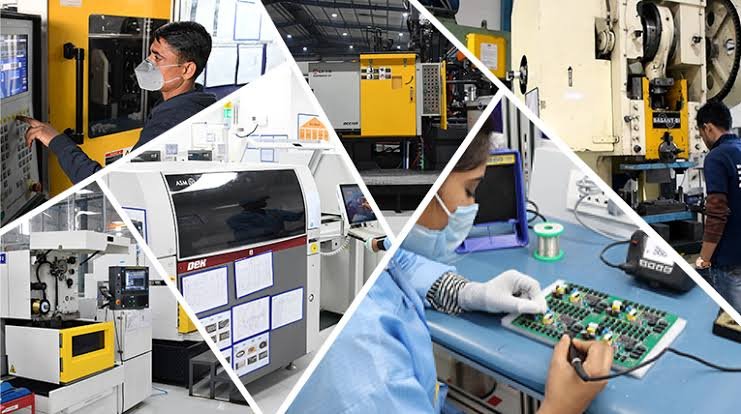
- Value Addition: Tata’s Hosur facility makes precision metal casings and back panels, showing India’s move from basic assembly to component manufacturing.
Key Challenges & Governance Concerns
- Safety Gaps: Rapid factory growth is outpacing safety checks, training, and enforcement—seen in fires at Tata’s Hosur unit (2024), Pegatron’s plant (2023), and Foxlink’s facility (2023).
- Contract Labour Oversight: Multi-layered hiring through contractors and subcontractors weakens supervision and accountability in risky workplaces.
- Labour Welfare & Hiring Issues: Disputes over wages, housing, food safety, and hiring bias—such as Foxconn’s hostel protests (2021) and married-women hiring row (2024–25), and Wistron’s wage violence (2020)—affect migrant and women workers.
- Environmental Concerns: High water use and industrial waste require strict checks, highlighted by TNPCB (Tamil Nadu Pollution Control Board) concerns over alleged groundwater pollution near Tata’s Hosur plant (2026).
- Data Security Risks: Exposure of confidential designs and supplier data remains a threat, shown by a reported ransomware attack in June 2026.
Legal & Regulatory Framework
- OSH (Occupational Safety, Health and Working Conditions) Code, 2020: Enforced on 21 November 2025 (with Central Rules notified on 8 May 2026), it sets workplace safety standards, regulates contract labour, and fixes welfare duties on the principal employer.
- Confined-Space Safety Rules: Enclosed tanks and sewers can trap toxic gases like hydrogen sulphide () or lack oxygen, requiring gas testing, proper ventilation, work permits, PPE (Personal Protective Equipment), and emergency rescue readiness.
- Supply-Chain Accountability: Global brands like Apple must monitor supplier ESG (Environmental, Social, and Governance) and safety standards, as lapses can harm India’s image as a reliable manufacturing hub.
Way Forward
- Clear Accountability: Fix direct responsibility on principal employers for safety across all contractor and subcontractor networks.
- Strict Safety Protocols: Enforce confined-space permits, gas testing, PPE, and emergency rescue arrangements.
- Regular Audits: Strengthen independent safety and environmental inspections with transparent reporting.
- Worker Protection: Ensure proper training, fair contracts, and effective grievance redressal, especially for migrant and women workers.
- Global Standards: Align supplier practices with international labour, safety, and environmental standards to sustain global trust.
FAQs
Q1. Who operated the effluent treatment plant?
Ans. Nalco Water, a subsidiary of US-based Ecolab, operated the ETP, while the workers were engaged through its subcontractor.
Q2. Why is India important to Apple’s supply chain?
Ans. India is an expanding iPhone manufacturing base, helping Apple diversify beyond China and benefit from India’s PLI scheme.
Q3. What is a confined space and why is it dangerous?
Ans. An enclosed area such as a tank or sewer where toxic gases or low oxygen can accumulate, making entry without safety measures potentially fatal.
Q4. Which law covers workplace safety in India?
Ans. The Occupational Safety, Health and Working Conditions Code, 2020, effective from 21 November 2025, consolidates several labour laws, including the Factories Act.