Context
India’s position as the world’s largest rice exporter has raised concerns over groundwater depletion, greenhouse gas emissions and the hidden water cost of exports, highlighting the need to balance export earnings with sustainable farming and water conservation.
India’s Rice Production and Exports
- Global Position: India has been the world’s largest rice exporter since 2012, accounting for around 30–35% of global exports.
- Total Production: Rice output for 2025–26 is estimated at 154.02 million tonnes.
- Major Producing States: Uttar Pradesh, Telangana, West Bengal, Punjab, Chhattisgarh, Odisha, Madhya Pradesh, Bihar, Andhra Pradesh, and Tamil Nadu.
- Major Export Markets: Saudi Arabia, Iran, Iraq, Benin, and the UAE (United Arab Emirates).
About Rice
- Scientific Name: Oryza sativa.
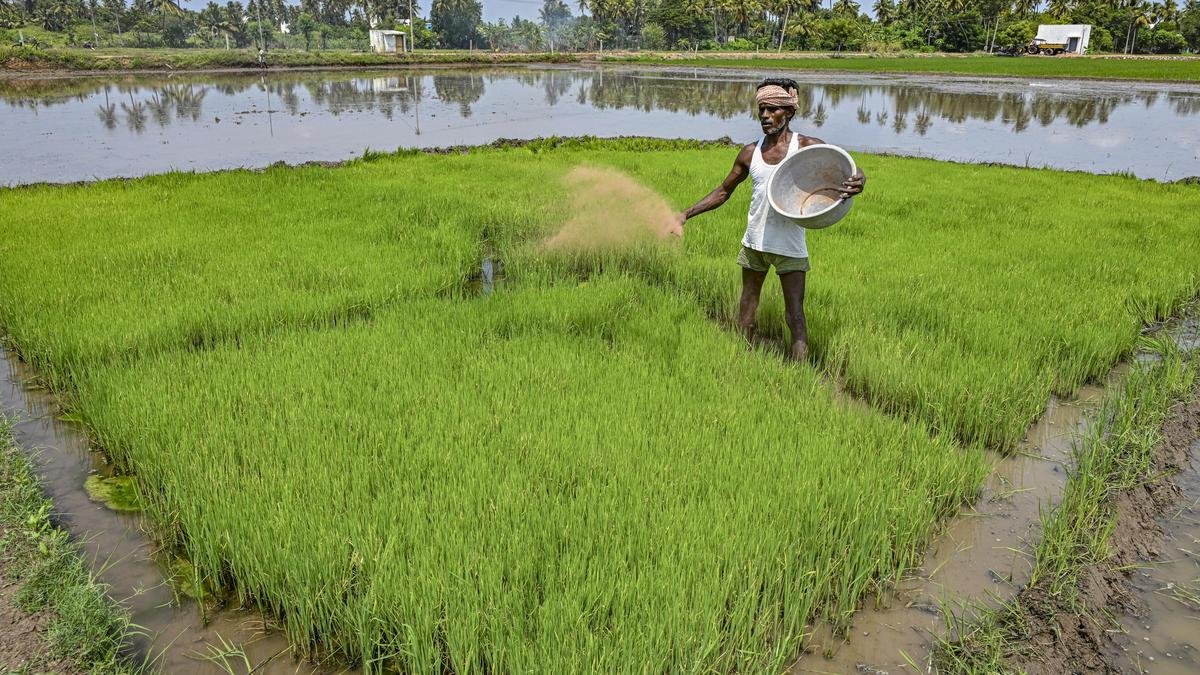
- Crop Type: Primarily a Kharif crop in India, also grown in Rabi and summer seasons based on regional climate and irrigation.
- Climatic Requirements: Needs a warm, humid climate with temperatures around 20–35°C, adequate moisture, and abundant rainfall or assured irrigation.
- Soil: Best suited to clayey and clay-loam soils with good water-retention capacity; alluvial soils are also widely used.
- Three Growing Seasons (Eastern India / West Bengal):
- Aus: Pre-monsoon / early monsoon rice.
- Aman: Main monsoon or winter-harvested rice.
- Boro: Dry-season / summer rice grown with irrigation.
Institutional Framework
- APEDA (Agricultural and Processed Food Products Export Development Authority): A statutory body under the Ministry of Commerce and Industry, created under the APEDA Act, 1985 (effective 13 February 1986).
- Role: Promotes exports of agricultural and processed food products (including rice), supporting export quality standards, registration, packaging, and marketing.
Basmati vs Non-Basmati Rice Exports (2025–26)
| Indicator | Basmati Rice | Non-Basmati Rice |
| Export Quantity | 6.52 million tonnes | 15.04 million tonnes |
| Export Earnings | ₹50,138 crore | ₹51,892 crore |
| Major Growing Regions | Punjab, Haryana, western Uttar Pradesh, and Himalayan foothills | Eastern, central, and southern India |
| Market Characteristics | Premium, aromatic rice | Staple food, price-sensitive |
Economic Significance of Rice Exports
- Global Market Dominance: As the world’s largest rice exporter (30–35% share), India plays a critical role in ensuring global food security, particularly across Asia and Africa.
- Foreign Exchange Earnings: Rice exports serve as a major source of agricultural export revenue, strengthening India’s trade balance.
- Farmer Income Support: Global demand helps stabilise domestic farm prices and provides remunerative returns to millions of paddy farmers.
- High Value Realisation: Basmati rice earns significantly more per tonne despite having a lower export volume than non-basmati rice.
- Value Addition Potential: Focusing on quality, processing, branding, and GI (Geographical Indication) protection can boost export earnings without needing a proportionate rise in production.
Virtual Water Exports: The Hidden Water Cost
- Concept: Virtual water refers to the total water consumed to produce a commodity; exporting rice indirectly transfers domestic water to importing countries.
- Types of Water Used:
- Green Water: Rainwater stored in soil and absorbed by crops.
- Blue Water: Surface water and groundwater drawn for irrigation.
- Regional Water Stress: Intensive irrigation in Punjab, Haryana, and western Uttar Pradesh heavily strains scarce blue water (groundwater) reserves, though water usage varies across regions based on rainfall, soil, and farming practices.
Environmental Challenges
- Groundwater Depletion: Excessive pumping shrinks underground aquifers and threatens long-term farm productivity.
- Greenhouse Gas (GHG) Emissions:
- Methane (): Flooded paddy fields create oxygen-poor conditions that generate methane.
- Nitrous Oxide (): Inefficient use of nitrogen fertilisers releases this potent greenhouse gas.
- High Energy Demand: Pumping groundwater requires heavy electricity and diesel use, adding to carbon emissions.
- Crop Residue Burning: Burning paddy straw causes severe seasonal air pollution, especially in northern India.
Sustainable Rice Cultivation Practices
- AWD (Alternate Wetting and Drying): Periodic draining and re-flooding of fields cuts water use and methane emissions.
- DSR (Direct-Seeded Rice): Sowing seeds directly without traditional transplantation saves both irrigation water and farm labour.
- INM (Integrated Nutrient Management): Combines organic manure, biofertilisers, and chemical fertilisers to improve soil health and fertiliser efficiency.
- Crop Diversification: Shifting farmers in water-stressed regions toward pulses, oilseeds, and millets reduces dependence on water-intensive paddy.
- Region-Specific Planning: Aligning rice cultivation with local rainfall, soil type, and groundwater availability.
Way Forward: Water–Carbon–Value Approach
- Shift to Value Over Volume: Transition from maximising export quantities to maximising economic returns per unit of scarce water used.
- Track Sustainability Metrics: Monitor export earnings per cubic metre of blue water, groundwater consumption per tonne, GHG emissions per kg, and district-level groundwater trends alongside export data.
- Policy Alignment: Link government procurement, irrigation subsidies, and diversification schemes with water-efficient farming practices.
- Boost Export Value: Promote GI protection, traceability, modern processing, and premium branding to raise farmer incomes without expanding cultivation area.
- Balanced Policy Goal: Align India’s rice export strategy to simultaneously safeguard foreign exchange earnings, farmer livelihoods, groundwater conservation, and climate sustainability.
FAQs
Q1. What is virtual water export?
Ans. It refers to the indirect export of water used to produce goods, such as rice, that are sold to other countries.
Q2. Why is blue water more important in assessing rice export sustainability?
Ans. Blue water includes river, reservoir and groundwater resources; excessive use can deplete aquifers and worsen water scarcity.
Q3. Why does Basmati rice generate higher export value per tonne?
Ans. Its premium quality, distinctive aroma and strong international demand allow it to fetch higher prices.
Q4. How does rice cultivation contribute to climate change?
Ans. Flooded paddy fields release methane, while nitrogen fertilisers, irrigation energy use and crop residue burning add to greenhouse gas emissions.
Q5. What is Alternate Wetting and Drying (AWD)?
Ans. A water-saving technique involving alternate periods of irrigation and field drying, which can reduce water use and methane emissions.
Q6. What is Direct-Seeded Rice (DSR)?
Ans. A cultivation method in which seeds are sown directly in fields instead of transplanting seedlings, reducing water and labour requirements.