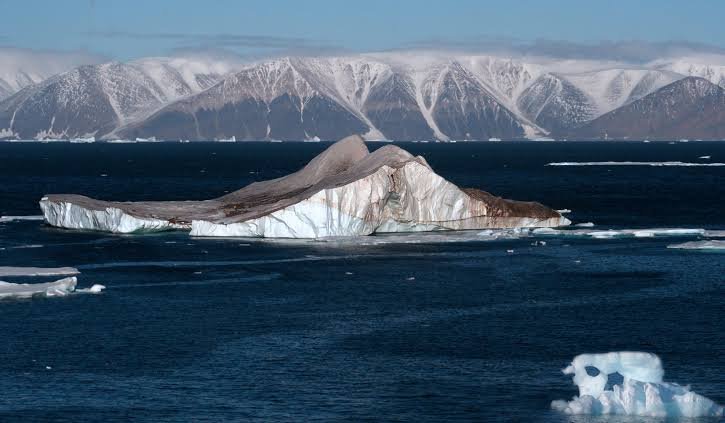
The Arctic is increasingly important for India because developments in the region have implications for climate change, maritime connectivity, critical minerals and geopolitics. A recent Parliamentary Standing Committee report has identified gaps in India’s capabilities and recommended measures to strengthen its long-term engagement with the region.
Parliamentary Committee’s Assessment
- The Standing Committee on External Affairs presented its report, India’s Role and Presence in the Arctic and Antarctic Regions.
- India is an Observer State in the Arctic Council since 2013. The Committee recommended that India pursue full-fledged membership if the Council reviews its membership framework.
- It recommended appointing a Polar Ambassador to strengthen coordination and India’s polar diplomacy.
- The Committee suggested that India advocate recognition of the Arctic as a “Quasi-Global Commons”, while recognising the sovereignty of the eight Arctic states.
- It also called for stronger cooperation with Arctic states and other Observer countries.
Arctic Council
The Arctic Council is the leading intergovernmental forum for cooperation on issues concerning the Arctic region, particularly environmental protection and sustainable development.
- Established: 1996 through the Ottawa Declaration.
- Headquarters/Secretariat: Tromsø, Norway.
- Members: 8 Arctic states — Canada, Denmark, Finland, Iceland, Norway, Russia, Sweden and the United States.
- Permanent Participants: Six organisations representing Indigenous peoples of the Arctic.
- Observers: Non-Arctic states and organisations can participate as Observers, but they do not have the same decision-making role as the eight member states.
- India: Became an Observer in 2013.
- Decision-making: Decisions are taken by consensus among the eight Arctic states.
- Focus: Climate change, biodiversity, pollution, sustainable development, emergency preparedness and Arctic scientific cooperation.
India’s Arctic Engagement
- India’s association with the Arctic dates back to the Svalbard Treaty of 1920, under which it became an original signatory while under British rule.
- India began its modern scientific engagement through its first Arctic expedition in 2007.
- Himadri, India’s Arctic research station at Ny-Ålesund, Svalbard, was established in 2008.
- India’s Arctic Policy, 2022 provides a framework for cooperation in scientific research, climate change, environmental protection, sustainable development and connectivity.
- The Parliamentary Committee has recommended adding “Geopolitics and Strategy” as a distinct pillar of the Arctic Policy.
Strategic and Climate Significance
- Climate and monsoon: Arctic changes can influence atmospheric and oceanic circulation. The possible Arctic–Indian monsoon teleconnection remains an important area of scientific research.
- Sea-level rise: Changes in the Arctic cryosphere have wider implications for global climate and India’s coastal regions.
- Northern Sea Route: This maritime route along Russia’s Arctic coast could provide an alternative connection between Asia and Europe. India and Russia are working to increase cargo movement through the route to 5 million tonnes by 2030.
- Critical minerals: Arctic mineral resources could contribute to India’s resource and supply-chain security. The Committee recommended making mineral resources an important component of India’s engagement with Arctic countries.
- Geopolitics: Growing activity by major powers has increased the Arctic’s importance for shipping, energy, resources and strategic competition.
Capability Gaps
- Research access: Access to several Arctic areas is subject to the jurisdiction of Arctic states, while extreme climatic conditions create additional logistical challenges.
- Svalbard restrictions: The Committee noted restrictions affecting research activities in Svalbard, where Himadri is located, and recommended that the Ministry of External Affairs engage with Norway to address these concerns.
- Research infrastructure: India does not yet have an indigenous ice-class polar research vessel, limiting the flexibility and continuity of Arctic expeditions.
- Funding and manpower: Shortages of scientific and technical personnel and limited financial resources constrain the expansion of polar research.
- The Committee recommended a 30% increase in the outlay for the ongoing polar research scheme and additional permanent posts at the National Centre for Polar and Ocean Research (NCPOR).
Way Forward
- Strengthen polar diplomacy by appointing a Polar Ambassador and improving institutional coordination.
- Expand research capacity through an indigenous ice-class polar research vessel, higher funding and additional scientific and technical personnel at NCPOR.
- Address research-access issues through sustained engagement with Norway and other Arctic states.
- Deepen international partnerships with Arctic states and other Observer countries in areas such as science, connectivity and resource security.
- Advance India-Russia cooperation on the Northern Sea Route and work towards the 2030 cargo target.
- Integrate climate, geopolitical and critical-mineral considerations more explicitly into India’s Arctic strategy.
Conclusion
India has a long-standing association, established scientific presence and dedicated policy framework in the Arctic. The priority now is to translate these foundations into stronger research capabilities, polar diplomacy and strategic partnerships, enabling India to respond more effectively to the region’s growing climate and geopolitical significance.
FAQs
- What is India’s status in the Arctic Council?
India is an Observer State in the Arctic Council. The Parliamentary Committee has recommended pursuing full-fledged membership if the Council reviews its membership framework.
- What is Himadri?
Himadri is India’s Arctic research station located at Ny-Ålesund in Svalbard, Norway. It supports India’s scientific research in the region.
- What is the Northern Sea Route?
The Northern Sea Route is a maritime route along Russia’s Arctic coast connecting the Pacific and Atlantic regions. India and Russia are working to increase cargo movement through it to 5 million tonnes by 2030.
- Why are Arctic critical minerals important for India?
Arctic mineral resources can contribute to India’s resource and supply-chain security. The Parliamentary Committee has recommended making them an important component of India’s engagement with Arctic states.
- What are the major challenges facing India’s Arctic research?
Key challenges include limited access, research restrictions, inadequate funding, shortage of scientific personnel and the absence of an indigenous ice-class research vessel.
- What did the Parliamentary Committee recommend for polar research?
It recommended a 30% increase in the ongoing polar research scheme, additional permanent posts at NCPOR, and the development of a dedicated ice-class polar research vessel.
- What does “Quasi-Global Commons” mean in the Arctic context?
It refers to the Committee’s proposed approach that, although the Arctic largely falls under the sovereignty of the eight Arctic states, its environmental significance has consequences beyond national boundaries.