Context
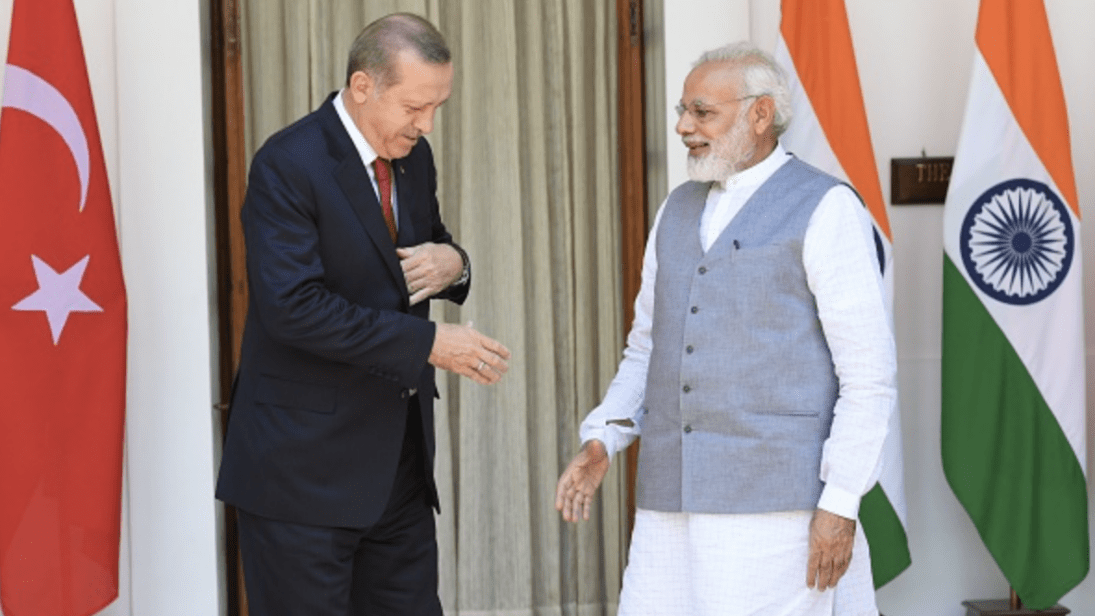
India and Turkey are witnessing a gradual revival of bilateral engagement after a prolonged period of diplomatic strain arising from Ankara’s position on Jammu & Kashmir and its defence cooperation with Pakistan. Recent diplomatic interactions indicate a pragmatic effort by both countries to rebuild ties despite continuing strategic differences.
Evolution of Bilateral Relations
Bilateral relations strengthened during the early 2000s through expanding political engagement, trade, cultural exchanges, and business cooperation. However, ties deteriorated after Turkey repeatedly criticised India’s constitutional changes in Jammu & Kashmir following the abrogation of Article 370 in 2019 and consistently supported Pakistan’s position on the issue.
Factors Behind Diplomatic Strains
- Kashmir Issue: Turkey’s continued support for Pakistan’s position on Kashmir in international forums became the principal source of bilateral tensions. Differences widened further after Turkey criticised Operation Sindoor following the Pahalgam terrorist attack.
- Defence Cooperation with Pakistan: India expressed concerns over Turkey’s expanding defence partnership with Pakistan, particularly reports regarding the use of Turkish-origin defence equipment by Pakistan, which raised security concerns in New Delhi.
Impact on Bilateral Engagement
The deterioration in relations affected both diplomatic and economic engagement.
- Diplomatic Measures
- Reduction in high-level diplomatic interactions.
- Expansion of India’s strategic engagement with Greece and Cyprus.
- Economic Repercussions
- Suspension of selected commercial, academic, and aviation-related collaborations.
- Decline in tourism and moderation in bilateral trade.
- Revocation of the security clearance of a Turkish airport services company on national security grounds.
Recent Confidence-Building Measures
Recent engagements indicate a gradual restoration of bilateral dialogue through:
- Resumption of Foreign Office Consultations after a prolonged gap.
- Discussions on trade, investment, technology, energy, tourism, education, and counter-terrorism cooperation.
- Cooperation in law enforcement, including Turkey’s assistance in extraditing a fugitive wanted by Indian authorities.
- Confidence-building measures aimed at restoring mutual trust and sustaining diplomatic engagement.
Drivers of Turkey’s Policy Recalibration
Turkey’s renewed engagement with India is driven by:
- The need to preserve economic ties with one of the world’s fastest-growing major economies.
- Expanding opportunities in trade, investment, infrastructure, and tourism.
- Efforts to diversify strategic partnerships while strengthening engagement with emerging Asian economies.
India’s Strategic Priorities
Maintaining constructive engagement with Turkey serves India’s strategic and economic interests by enabling:
- Greater diplomatic outreach in the Islamic world.
- Improved access to European and Central Asian markets.
- Support for regional connectivity initiatives and diversified trade routes.
- Enhanced cooperation in trade, technology, energy, and multilateral forums.
Way Forward
Strengthening bilateral relations requires:
- Sustained diplomatic dialogue to manage differences.
- Expanding economic and investment partnerships.
- Enhancing cooperation in counter-terrorism and security.
- Promoting collaboration in connectivity initiatives and multilateral forums.
- Respecting each other’s core strategic concerns while expanding areas of mutual interest.
Conclusion
India–Turkey relations are gradually moving towards pragmatic engagement. While differences over sensitive political issues continue, sustained dialogue, stronger economic cooperation, and mutual respect for each other’s core interests can help build a stable, balanced, and mutually beneficial partnership.