Context
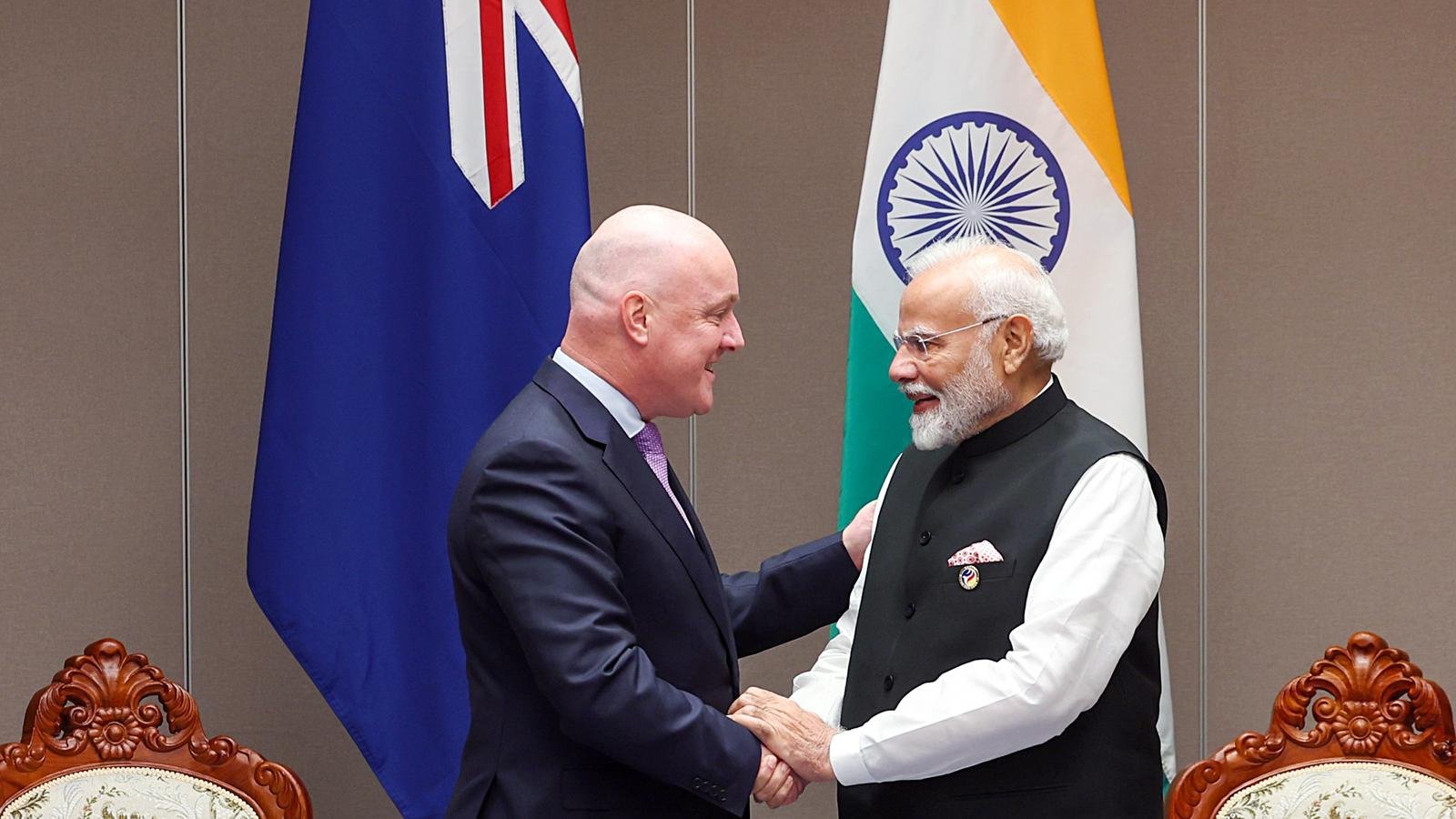
India and New Zealand are working towards ratification and implementation of their Comprehensive FTA, signed on 27 April 2026, to boost bilateral trade and investment.
About the Agreement
- Nature: A Free Trade Agreement (FTA) designed to eliminate tariffs and trade barriers across goods, services, and investments.
- Scope: Covers 20 comprehensive chapters incorporating dispute resolution, MSMEs, and women-led enterprises.
- Signatories: Signed by Piyush Goyal (Union Commerce Minister, India) and Todd McClay (Trade Minister, New Zealand).
- Target: Double bilateral trade to US$ 5 billion by 2030.
Key Features
- Duty-Free Access: New Zealand provides 100% duty-free market access to Indian exports, while India safeguards sensitive domestic sectors like dairy
- FDI Pledge: New Zealand facilitates US$ 20 billion FDI (Foreign Direct Investment) into India over 15 years in renewable energy, agritech, and manufacturing.
- Services Sector: Covers 118 services sub-sectors, including IT, healthcare, education, finance, and AYUSH (Ayurveda, Yoga & Naturopathy, Unani, Siddha, Homeopathy).
- Labour Mobility: Offers 5,000 TEE (Temporary Employment Entry) visas for skilled workers (up to 3 years) and 1,000 Work and Holiday Visas.
- Student Mobility: Permits Indian students to work 20 hours per week with extended post-study work rights.
- Pharma Fast-Tracking: Accepts inspection reports from recognized regulators, cutting duplicate compliance for pharmaceutical exports.
Significance
- Closing Trade Gap: Addresses the skewed trade balance by expanding Indian merchandise exports beyond the current US$ 1.2 billion trade volume.
- Level Playing Field: Eliminates tariff disadvantages for Indian exporters against regional competitors with pre-existing trade deals.
- Boosting Labour-Intensive Sectors: Drives export growth in textiles, leather, footwear, and carpets, generating employment for MSMEs.
- Higher-Value Manufacturing: Opens new export avenues for Indian engineering goods, machinery, and automobiles.
- Expanding Services Trade: Elevates India’s services export footprint in New Zealand from the current sub-3% baseline.
- Strategic Indo-Pacific Alignment: Deepens India’s economic footprint in the Indo-Pacific region while expanding its network of FTAs (Free Trade Agreements) with developed economies.
Challenges
- Low FTA Utilisation: Limited awareness and weak distribution networks prevent MSMEs from leveraging trade concessions.
- Strict Non-Tariff Barriers: High SPS (Sanitary and Phytosanitary) and quality standards raise compliance costs for Indian exporters.
- Investment Delivery Risk: Realising the US$ 20 billion FDI pledge depends on project viability, investor confidence, and speedy clearances.
- Ratification Hurdles: Complex domestic legislative approvals in both nations risk operational delays.
Way Forward
- Export Promotion & Capacity Building: Educate MSMEs on ROO (Rules of Origin), tariff preferences, and market standards.
- B2B Infrastructure: Establish robust distribution channels and institutional trade ties in New Zealand.
- Investment Facilitation: Create a dedicated fast-track desk to streamline cross-border capital flows and technology transfer.
- Quality Upgradation: Modernize supply chains and align domestic manufacturing with international quality standards.
FAQs
Q1. What is a Free Trade Agreement?
Ans. An agreement between countries to reduce or eliminate trade barriers on goods and services.
Q2. When was the India–New Zealand FTA signed?
Ans. It was signed on 27 April 2026.
Q3. What market access does India get for goods?
Ans. New Zealand provides 100% duty-free access to Indian exports.
Q4. What investment has New Zealand committed?
Ans. New Zealand will facilitate US$20 billion in FDI into India over 15 years.