Context
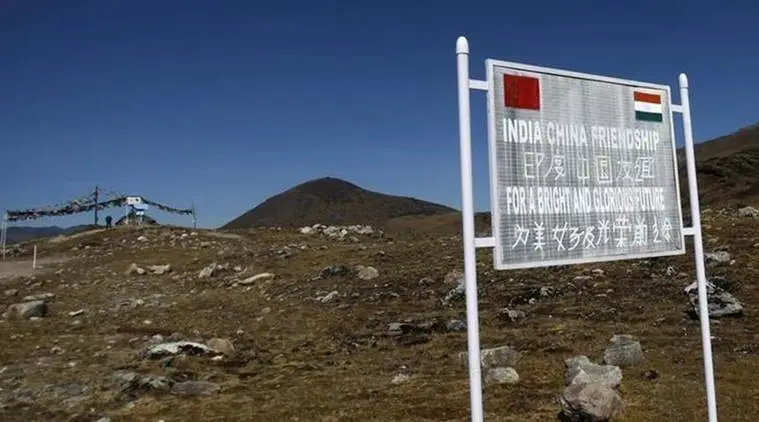
The 2017 Doklam standoff and 2020 eastern Ladakh crisis highlighted gaps in India’s border infrastructure, military mobilisation and logistics. China’s continued infrastructure expansion along the disputed border has increased the need for a coordinated Indian strategy focusing on national security, technology and border-area development.
Historical Roots & Causes of India’s Border Infrastructure Deficit
- Post-1962 Caution: After the 1962 India–China War, building roads and links near the border was often restricted due to security concerns that an enemy might use forward routes.
- Tough Mountain Terrain: High altitude, permafrost (permanently frozen ground), landslides, extreme cold, and short working seasons drive up costs and delays.
- Scattered Approvals: Multiple ministries, State governments, and agencies cause coordination and clearance delays.
- Reactive Approach: Projects have often been reactionary—driven by immediate border tensions rather than long-term strategic planning.
- Narrow Execution Base: Heavy reliance on a single agency with limited use of other public bodies and private firms constrains execution scale.
Strategic Context: China’s Push & India’s Major Projects
- China’s Build-Up: Tibet’s Five-Year Plan (2021–25) earmarked over 600 billion yuan for infrastructure, while China’s Land Border Law (2022) backs border works and civilian settlements.
- India’s Key Projects: Focus on all-weather passes, highways, and border villages to boost mobility and retention:
| Project | Key Role & Location |
| Atal Tunnel | Himachal Pradesh; improves Manali–Lahaul–Spiti connectivity and access toward Ladakh. |
| Sela Tunnel | Arunachal Pradesh; offers all-weather access toward Tawang. |
| Zoji La Tunnel | Enhances year-round link between Kashmir Valley and Ladakh. |
| Shinku La Tunnel | Strengthens Himachal Pradesh–Ladakh link via the Nimmu–Padum–Darcha route. |
| Arunachal Frontier Highway (NH-913) | Connects remote areas of Arunachal Pradesh near the international border. |
| Vibrant Villages Programme (VVP) | Boosts border village growth and curbs out-migration. |
Key Operational & Strategic Concerns
- Budget & Cost Pressures: BRO (Border Roads Organisation) funding rose from ₹10,179.5 crore (2023–24) to ₹12,107.41 crore (2024–25), yet high-altitude costs demand steady long-term funding.
- Rail Bottlenecks: Delays on the Bilaspur–Manali–Leh and Missamari–Tenga–Tawang railway lines keep military logistics heavily reliant on roads.
- Border Village Gaps: China has built Xiaokang (moderately prosperous) border villages, whereas several Indian border villages still face gaps in power, telecom, and basic services.
- Airlift Edge: India’s comparatively lower-altitude airbases support higher aircraft payload capacity and troop/cargo airlift.
Government Initiatives & Role of BRO
- BRO Profile & Mandate: Set up on 7 May 1960 under the Ministry of Defence, the BRO builds and maintains strategic roads, bridges, tunnels, and border works at home and in friendly neighbouring countries, aiding defence readiness, connectivity, and local growth.
- ICBR Programme: The ICBR (Indo-China Border Roads) programme builds strategic border roads for troop movement and logistics.
- BIM Scheme: The BIM (Border Infrastructure and Management) scheme—a Central Sector Scheme under the Ministry of Home Affairs—supports border roads, fencing, floodlighting, and security assets.
- Vibrant Villages Programmes: VVP-I (2023) is a Centrally Sponsored Scheme for select northern border villages (₹4,800 crore for 2022–23 to 2025–26); VVP-II (2025) is a Central Sector Scheme for select other international land border villages (₹6,839 crore for 2024–25 to 2028–29).
Way Forward
- Unified Oversight & Priority Index: Consider a Border Infrastructure Act and a dedicated Border Infrastructure Development Authority, backed by a Composite Frontier Infrastructure Index to rank gaps and projects.
- Clearer Agency Roles: Let the BRO focus on sensitive forward zones, while NHAI (National Highways Authority of India) and private firms handle suitable highways and rear/hinterland links.
- Multimodal & Tech Push: Link roads, rail, tunnels, airfields, and comms, using modern tunnelling, permafrost engineering, technical audits, and ISRO (Indian Space Research Organisation) satellite monitoring.
- Habitable Villages & Ecology: Upgrade electricity, digital access, health, schools, and livelihoods to stop depopulation, alongside climate-resilient engineering, disaster checks, and ecological safeguards.
FAQs
Q1. What are Xiaokang villages?
Ans. Moderately prosperous settlements built by China along border areas to boost civilian presence, connectivity, and territorial control.
Q2. Which ministry administers the Border Roads Organisation?
Ans. The Ministry of Defence administers the BRO (Border Roads Organisation).
Q3. What is the objective of the Vibrant Villages Programme?
Ans. It boosts socio-economic growth, basic infrastructure, and local livelihoods while curbing migration from border villages.
Q4. Why is railway connectivity important for border security?
Ans. It enables large-scale movement of troops, heavy equipment, and supplies while easing over-reliance on roads.