Context
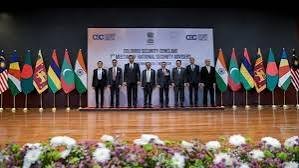
The Maldives hosted the 8th NSA-level meeting of the Colombo Security Conclave (CSC), attended by India’s NSA Ajit Doval. Member countries adopted the Roadmap of Cooperation 2026–27 to strengthen regional security cooperation against emerging threats in the Indian Ocean Region (IOR).
Origin, Institutional Setup & Membership
- Origin & Revival: Started in 2011 as a trilateral maritime security grouping of India, Sri Lanka, and Maldives; revived in 2020 as the CSC (Colombo Security Conclave) with a wider security mandate.
- Purpose & Secretariat: Aims to boost regional peace, stability, and security via intelligence-sharing, capacity-building, and operational coordination, with its Secretariat in Colombo, Sri Lanka, and Vice Admiral (Retd.) S.N. Ghormade as its first Secretary-General.
| Category | Countries |
| Founding Countries (2011) | India, Sri Lanka, and Maldives |
| Full Members | India, Sri Lanka, Maldives, and Mauritius |
| Membership Approved | Bangladesh (completing internal formalities) and Seychelles (approved at the 7th NSA-level meeting in November 2025) |
| Guests at 8th Meeting | Australia and Malaysia |
Five Pillars of CSC Cooperation
- Maritime Safety and Security: Maritime surveillance, anti-piracy, curbing illegal fishing, and safeguarding sea lanes.
- Counterterrorism and Radicalisation: Tackling terrorism, extremism, and radicalisation.
- Trafficking and Transnational Organised Crime: Checking drug trafficking, human trafficking, and organised crime.
- Cybersecurity and Critical Infrastructure: Countering cyber threats and protecting essential infrastructure and communication links.
- HADR (Humanitarian Assistance and Disaster Relief): Coordinating responses to natural disasters and humanitarian crises.
Recent Milestones: 7th & 8th NSA-Level Meetings
- 7th Meeting Review: Reviewed progress on outcomes from the 7th NSA (National Security Advisor)-level meeting held in New Delhi on 20 November 2025 (where Seychelles received full-membership approval).
- Roadmap 2026–27: India, Maldives, Mauritius, and Sri Lanka adopted a 2026–27 cooperation roadmap spanning all five pillars.
- Capacity & Joint Action: Focused on joint training, knowledge-sharing, institutional links, and collective action against shared threats.
Strategic Significance for India
- Neighbourhood First & MAHASAGAR: Reinforces Neighbourhood First Policy ties with maritime neighbours and advances the MAHASAGAR (Mutual and Holistic Advancement for Security and Growth Across Regions) vision announced in Mauritius in March 2025.
- Trade, Energy & First-Responder Role: Protects key sea lanes, maritime trade, and energy supply lines, while positioning India as a dependable security partner and first responder.
- IOR Geopolitics & Minilateralism: Supports regional security amid China’s growing footprint in the IOR (Indian Ocean Region) through focused minilateral cooperation.
- Capacity Building & Regional Trust: Builds practical security skills among smaller island and coastal states while easing diplomatic friction through regular security dialogue.
- Wider Indo-Pacific Outreach: Engaging guest nations like Australia and Malaysia helps link Indian Ocean security with Southeast Asian and broader Indo-Pacific partners.
Key Challenges
- Different National Priorities: Aligning diverse domestic and foreign-policy priorities while respecting sovereignty.
- Capacity & Tech Gaps: Bridging institutional, technical, and capability gaps across member states.
- Geopolitical Pressures & Cross-Border Threats: Managing wider regional rivalries and evolving transnational, maritime, and cyber threats.
- Execution Gaps: Turning agreements into steady on-ground implementation.
- Domestic Political Shifts: Handling changes in member governments that can slow joint security projects.
- Climate & Disaster Risks: Coping with rising sea levels, extreme weather, and compound disasters across vulnerable island and coastal nations.
Way Forward
- Shared Vision with Sovereignty: Build consensus-driven security initiatives that respect each member’s sovereignty.
- Training, Tech & Intelligence: Expand joint training, technology-sharing, technical help, and timely intelligence-sharing.
- Trust & Tracked Delivery: Strengthen open dialogue and transparency, backed by regular reviews and clear targets under the Roadmap 2026–27.
- Link with Other Regional Bodies: Coordinate CSC work with IORA (Indian Ocean Rim Association), BIMSTEC (Bay of Bengal Initiative for Multi-Sectoral Technical and Economic Cooperation), and regional disaster networks to avoid duplication.
- Dedicated Funding & Secretariat Strength: Ensure steady financial backing and stronger institutional support at the Colombo Secretariat so multi-year deliverables stay on track.
FAQs
Q1. Where is the Secretariat of the Colombo Security Conclave located?
Ans. Colombo, Sri Lanka.
Q2. Which country hosted the 8th NSA-level meeting of the CSC?
Ans. Maldives, on 25 November 2026.
Q3. Who is the first Secretary-General of the Colombo Security Conclave?
Ans. Vice Admiral (Retd.) S.N. Ghormade.
Q4. Is the Colombo Security Conclave a military alliance?
Ans. No. It is a regional security cooperation platform based on consensus, sovereign equality and mutual respect.